Joyce Fegan: How does a woman in power really make you feel?
Be it young, dancing female prime ministers, high-profile, well-paid female broadcasters, or prolific producers of top-quality entertainment, there are some of us who are comfortable with women and power, and there are some of us who are not.
Joyce Fegan: How does a woman in power really make you feel?

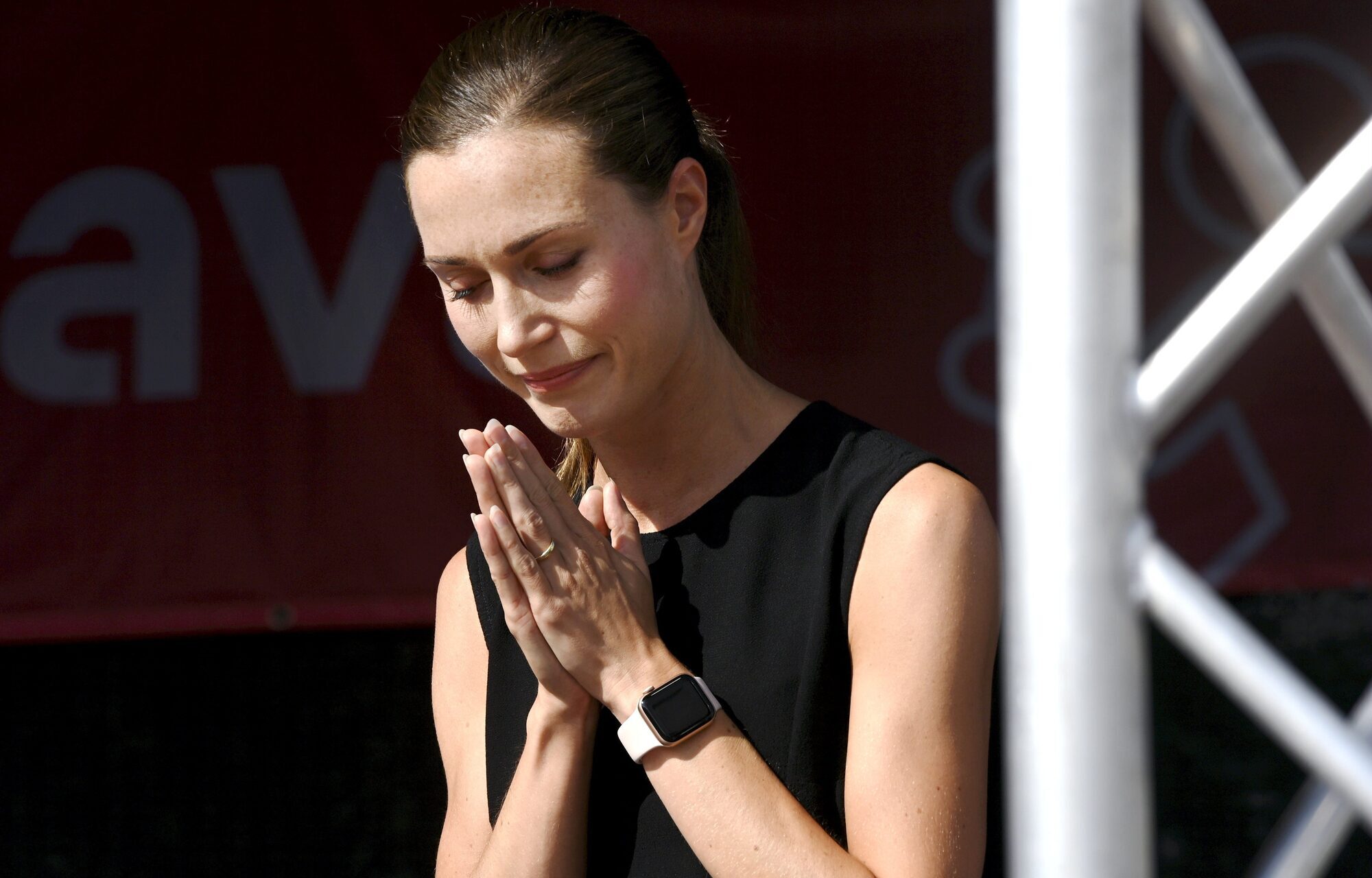
Finnish prime minister Sanna Marin was reduced to tears after her private dancing was made public this week. Only her tears came at a public lectern, where she stood to defend moving her body in sync to melody and rhythm. Photo: Heikki Saukkomaa/Lehtikuva via AP

Brian Friel had his women dance: There are the five unmarried Mundy sisters of Dancing at Lughnasa and there is the clinically blind Molly of Molly Sweeney. None of these women had any business dancing; they were neither eligible maidens nor had they great cause to celebrate, but dance they did.

He has the five women of 1936 Ireland dancing out of rhythm to their untrustworthy Marconi radio, moving in circle, in part headlock, part rugby scrum. Legs fly, breath is fast, there is “defiance” and there is “aggression”. 

There are stamping Wellington boots and flour-dusted hands — all the women had been “at work” before their shared moment of abandonment. And there are screams let out with heads flung back. And when it’s all over, when the radio gives way without notice, there is self consciousness. 

Sure, why should these women be dancing? His dancing sorority of sisters “avoid looking at each other” come the abrupt end. Where once there was connection and release, there is now shame. To dance is to show yourself, to be seen for who you are.

In Molly Sweeney, he has the blind Molly take off around the house of a neighbour the night before her failed eye surgery. She demands that a man at the gathering play “a mad, fast hornpipe”. She, too, “shouted” and “screamed”, and she, too, reveals “anger” and “defiance”. 

“Mad and wild and frenzied” is how Molly describes herself, until the music stopped. Her husband, Frank, pulled the plug, asking Tom the musician to stop playing. Molly worries she has terrified people when she finds the room “hushed” and she breaks into anxious tears.

Finnish prime minister Sanna Marin also was reduced to tears after her private dancing was made public this week. Only her tears came at a public lectern, where she stood to defend moving her body in sync to melody and rhythm.

“I am human. And I, too, sometimes long for joy, light and fun,” said the 36-year-old. 

It’s private, it’s joy, and it’s life.

Our master playwright Friel knew this and he also knew of the perils of dancing for women, that to publicly embody pleasure and joy, no matter the decade, came with its judgements, from self and other.

Just look at the slack that Irish broadcaster Laura Whitmore received as host of the UK’s Love Island, a gig from which she stepped aside this week after three series. Everything from her pay packet (she’s not in receipt of public monies) to her clothing got put under the public microscope of social media.

You’d wonder if UK prime minister Boris Johnson received as much scrutiny when he was on a public-funded salary and in charge of an entire nation’s affairs. But that woman danced and she smiled and strutted, and she, too, was defiant in the face of judgement. There’s something about being a woman in the public eye that so often throws them into the eye of a storm.

Whitmore described the scrutiny as “exhausting”. It felt exhausting to witness; one cannot imagine just how exhausting it must have been to field.

Professor of classics at the University of Cambridge, Mary Beard, no stranger to Twitter abuse herself, wrote in Women and Power: “You can’t easily fit women into a structure that is already coded as male; you have to change the structure.”

Prof. Beard’s short book takes a 3,000-year long look at the public voice of women. And you can exchange that word voice for power, too.

Her short story is that the pen, the mic, the seat, the floor, and the stage are to be held by men and when they’re not, it’s jarring, it’s as subversive as it is transgressive. Should you hold any of those forms of public power, you have violated a social boundary and should you as much as move in the direction of a wrong step, the baying waiting mob’s scrutiny will come thick and fast.

Actor, writer, producer, and mother Sharon Horgan took both the pen, the stage, and the seat, even heading up her own company. And this week her latest offering, Bad Sisters, hit our screens. The show is home to a constellation of stars and their on-screen harmony has won rave reviews and many five stars, from heavy-hitting critics on both sides of the Atlantic.

The five Irish sisters don’t exactly dance, but they do move, in the form of sea swimming. But one sister, the one in the abusive, controlling marriage, is precluded from the shared act of connection and abandonment. The same woman takes her daughter dancing to a Lizzo concert, and when the controlling husband finds out, he is, of course, far from pleased.

But both are an aside: What matters here is that Horgan has seized power and then some, creating hit show after show, bringing so much creative talent together, getting deal after deal over the line, winning friends and influencing us all. She’s been in front of the camera, behind the camera, and funding the rolling of them.

She has successfully subverted our predilection for the public voice coming from the male voice box, gaze, chair, and pen.

The Guardian has described Bad Sisters as “wonderful”, declaring Horgan “on top form, as both writer and director”.

“This is a fine addition to the growing collection of stories told unapologetically for, by, and about women on mainstream television. Sorority takes many forms,” reads The Guardian’s Bad Sisters review.

It’s this take by The Guardian that stands out in all the reviews, stating the show’s clearly-intended audience and subject.

The story centres around sisterhood in the looming shadow of domestic abuse and coercive control.

It’s not exactly dancing, nor something to dance about, but its success, its reception, shows how there are many people who are more than happy to see women hold the pen, the power, the mic, the stage, and the floor — and they not only enjoy it, they reward it and they pay for it.

Be it young, dancing female prime ministers, high-profile, well-paid female broadcasters, or prolific producers of top-quality entertainment, there are some of us who are comfortable with women and power, and there are some of us who are not.

x

More in this section

Revoiced

Newsletter

Sign up to the best reads of the week from irishexaminer.com selected just for you.

Cookie Policy Privacy Policy Brand Safety FAQ Help Contact Us Terms and Conditions

© Examiner Echo Group Limited