Emma deSouza: Ireland will remain in the crosshairs of British government no matter who wins Tory leadership
Emma deSouza: Ireland will remain in the crosshairs of British government no matter who wins Tory leadership

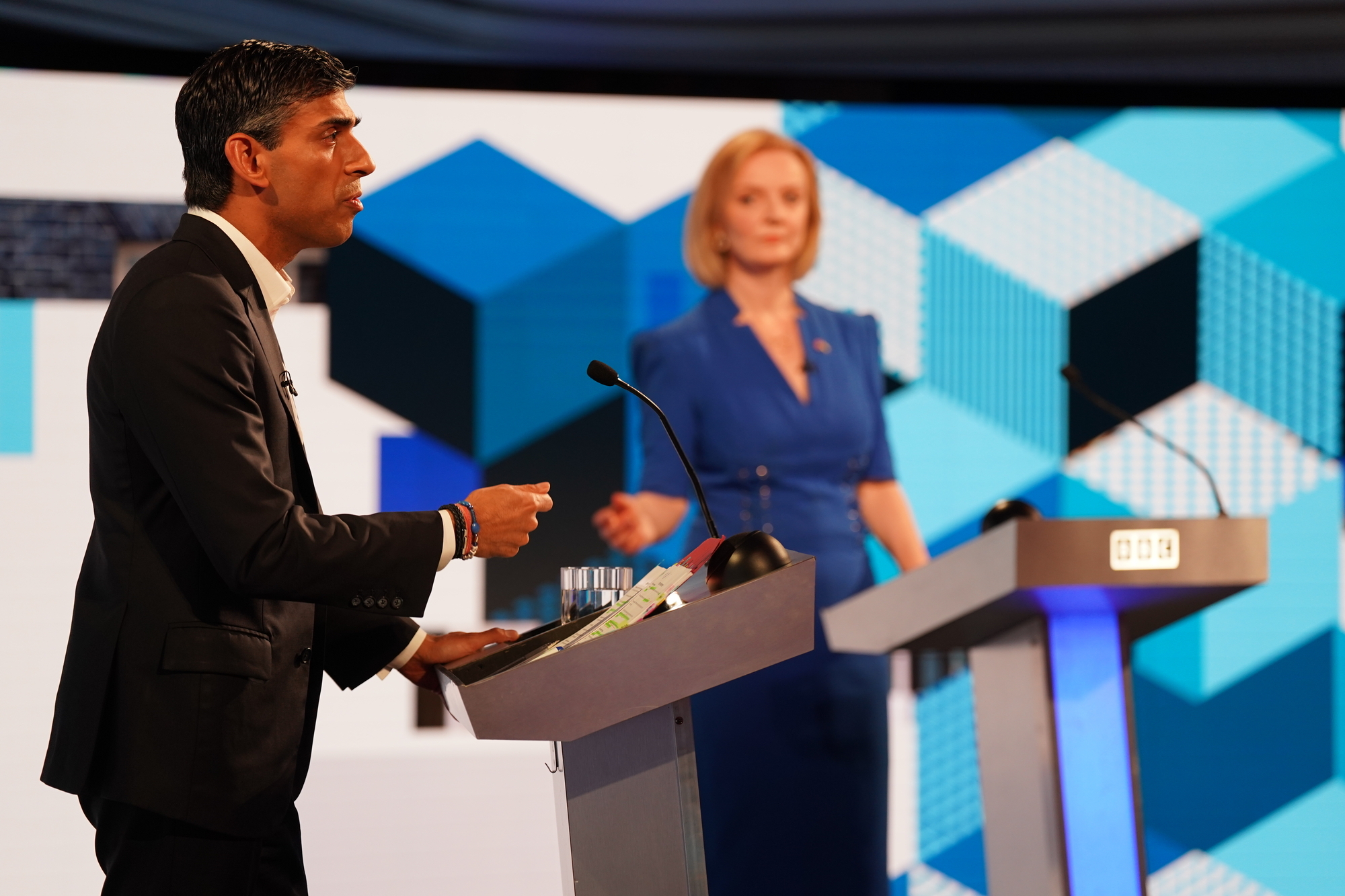
Rishi Sunak and Liz Truss taking part in the BBC Tory leadership debate, Our Next Prime Minister, presented by Sophie Raworth, a head-to-head debate at Victoria Hall in Hanley, Stoke-on-Trent, between the Conservative party leadership candidates. 

On September 5, those living in the United Kingdom will have a new prime minister foisted upon them by 150,000 eligible conservative members. 

They make up 0.29% of the population. Irrespective of whether their vote favours Truss or Sunak, the island of Ireland will remain in the crosshairs of the British government, as a raft of new legislation closes in, threatening to place both British-Irish relations, and the peace process, under mounting strain.

From as early as the 12th century, the relationship between Ireland and what would one day form the modern United Kingdom has, at best, been marred by persistent struggle.

However, exemplified by the signing of theGood Friday Agreement in 1998, the Irish and the British governments have formally committed to building a foundation of co-operation as co-guarantors of the globally revered peace treaty. 

That hasn’t stopped the Conservative Party from chipping away at that foundation, with added vigour since the Brexit vote in 2016, British-Irish relations are at a historic low, with Foreign Minister Simon Coveney stating: “We need to find a way to arrest this rot in relationships”. 

This “rot”, as he phrased it, will not depart with Johnson; rather, it will continue to spread, and eat into decades of established, successful, sustained relationships that worked to improve the lives of people across the island of Ireland.

'We need to find a way to arrest this rot in relationships' - Simon Coveney. Picture: Leah Farrell/RollingNews.ie

Both Truss and Sunak are wedded to some of the Conservatives’ most odious policies, including shipping asylum seekers to Rwanda, and in turn, opting out of the European Convention on Human Rights to do so. 

Johnson may be on his way out, but his legacy lives on in a party dead-set on continuing to devour itself in the name of Brexit.

The processing tent erected next door to the Hope Hostel accommodation in Kigali, Rwanda, where migrants from the UK were expected to be taken when they arrived in June.

As Brexiteers continue in their pursuit of a Brexit utopia, several bills have been tabled that show wanton disregard for Ireland. 

The first legislative red flag was the Nationality and Borders Bill, which requires non-British and non-Irish citizens who do not have immigration status in the UK to obtain an Electronic pre-Travel Authorisation (ETA) before crossing the border from Ireland into Northern Ireland. 

The Irish Government, alongside the UK House of Lords, pressed hard against the implementation of this policy on the island of Ireland, but the British government persisted in its bid to “take back control”, disregarding the very real impact such a policy would have on Ireland.

Whilst the British government claims there will be no immigration checks along the Irish border, the fact remains that should an individual who requires an ETA cross the threshold between the two jurisdictions without this new immigration status, they will be committing a crime which carries a penalty of up to four years in prison, irrespective of whether the individual crosses the border on their way to work, to school, whilst shopping, or as they walk the length of their own backyard. 

It is an inherently unworkable system, totally detached from the road infrastructure holding this island together in spite of its tedious geopolitical structures, and one which will place many people who call Ireland "home" in an undeniably precarious position when it’s rolled out in 2023.

Following the introduction of this bill was the tabling of the Legacy Bill, opposed by nearly all of Northern Ireland’s political parties, as well as the Irish Government and the victim and survivor groups on both side of the "divide". 

Liz Truss is campaigning to be leader of the Conservative Party and the next prime minister.

The bill creates a de facto amnesty, protecting perpetrators and delivering on the Conservative Party pledge to shield British soldiers from investigation and prosecution. 

The move unilaterally departs from the Stormont House Agreement, and once again ignores the pleas of the Irish Government. The Northern Ireland Human Rights Commission has stated that the bill stands to breach article 2 of the European Convention on Human Rights (ECHR) – the Tories have a plan for that, by further weakening the application of the ECHR via the British Bill of Rights that was published shortly before the summer recess.

Then there’s the Northern Ireland Protocol Bill; Both Sunak and Truss are committed to furthering this legislation, which, if ratified, will breach the UK’s obligations under international law — one cannot unilaterally depart from commitments made in an international agreement. 

This bill is painted as a protection for the Good Friday Agreement by its architects and unionist supporters. 

Rishi Sunak is the other candidate in the run for Conservative Party leader and UK prime minister.

However, it has the potential to place the Agreement, and the delicate equilibrium which sustains relationships in Northern Ireland, under further strain. Brexit means borders, and if the UK’s dual regulatory system — with which it seeks to replace the protocol — is brought forward, there will be a risk to the EU’s single market, which will see the border in Ireland under further scrutiny. 

The bill won’t deliver political or business security; it will however provide British ministers with sweeping power to override large parts of the Northern Ireland Protocol. The objective here is not to protect the peace process or people in Northern Ireland — it’s to aid the selfish, strategic aims of Brexiteers.

As we approach the 25th anniversary of the Good Friday Agreement, we face the greatest challenge to not only protect the gains already made, but to continue advancing peace and reconciliation on the island. 

British-Irish relations are central to advancing that aim, but as evidence continues to demonstrate, one side in no longer acting in good faith.

Regardless of who enters Number 10 next month, the rot in British-Irish relations will continue to fester.

More in this section

Revoiced

Newsletter

Sign up to the best reads of the week from irishexaminer.com selected just for you.

Cookie Policy Privacy Policy Brand Safety FAQ Help Contact Us Terms and Conditions

© Examiner Echo Group Limited