Alison O'Connor: Coming winter will see issues on food security and fuel availability
Only a few years ago the very idea of food security was far from everyone's mind at EU level, writes Alison O'Connor
Alison O'Connor: Coming winter will see issues on food security and fuel availability

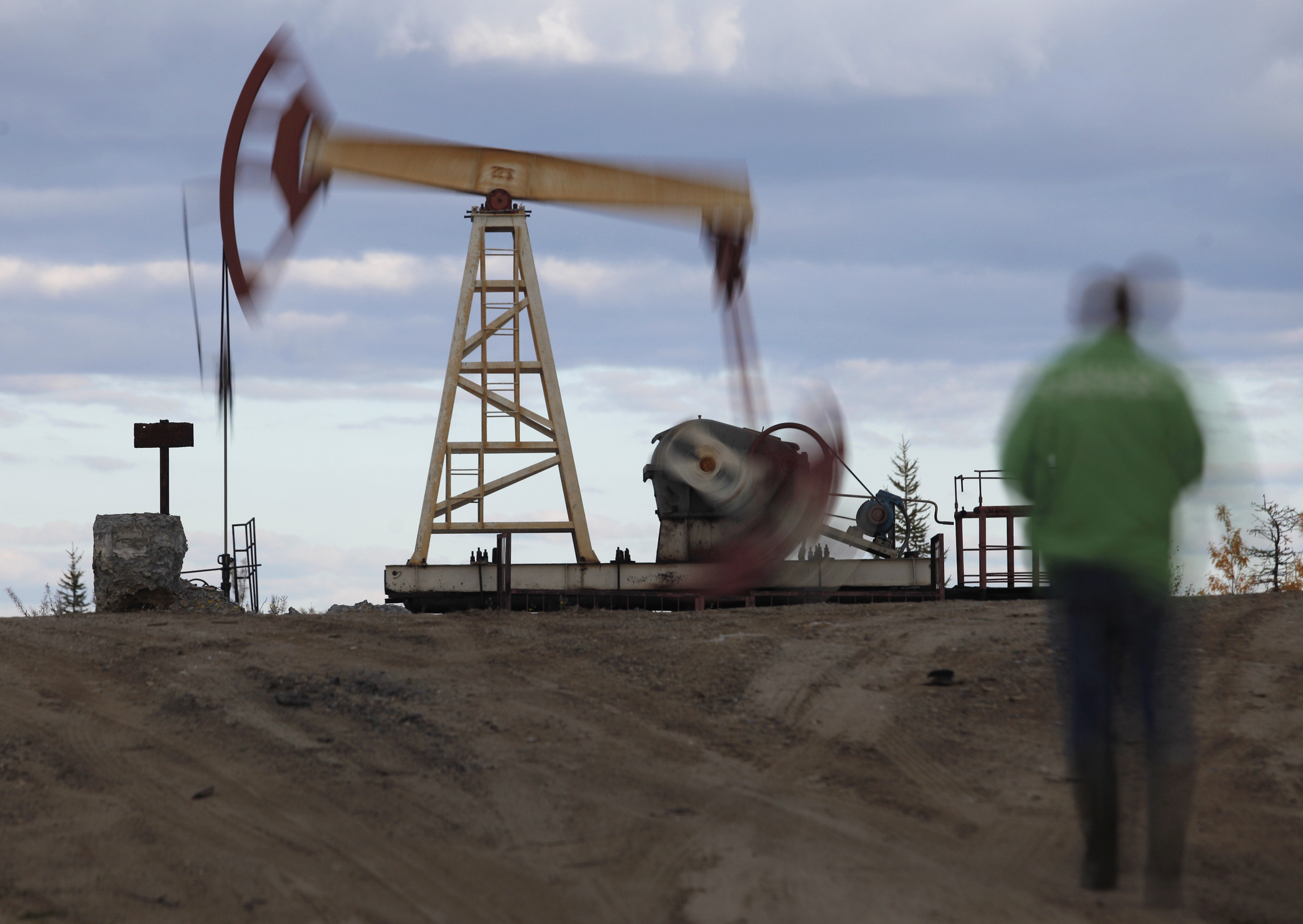
An oil rig near the town of Usinsk, 1,500 kilometres northeast of Moscow. The “weakness in the EU's system” of over-relying on Russian gas and oil has been laid bare. Picture: Dmitry Lovetsky/AP

Winter already felt like a depressing and expensive prospect, but a trip to EU headquarters in Brussels this week cemented the idea that animals who have the ability to hibernate are to be envied.

After a lengthy hiatus caused by the pandemic, groups of journalists are once again visiting the EU Commission and parliament for briefings on the current state of play.

Needless to say, the war in Ukraine and the bite of sanctions being felt is top of the agenda. Trying to prepare for next winter in terms of the very basics of human existence are under discussion — food security and fuel availability.

On food, it was made clear that, price issues aside, EU countries are in no danger of shortages. Overall, the world has enough grain but the difficulty lies in getting it to those who simply cannot afford higher prices for it.

But what about all the warnings of possible shortages? Why do some shops have a limit, for instance, on the number of bottles of vegetable oil shoppers can buy? Apparently, retailers told the EU Commission they had taken such steps to prevent hoarding — although it’s a fine line as signs like that might even prompt it. 

More positively more oil than expected has been gotten out of Ukraine, and Spain has had a very good olive oil harvest. But Russia has “weaponised grain” and some other countries are hugely vulnerable. 

In the EU we spend on average about 15% of our disposable income on food, but that can be as high as 50% in poorer countries — in North Africa and the Middle East.

“We have been net exporters since 2010 with a huge trade surplus of agriculture products,” a spokesman explained.

Fianna Fáil MEP Billy Kelleher said that only a few years ago the very idea of food security was far from everyone’s mind at EU level, given the huge surpluses of the past. Remember the butter mountains and the wine lakes?

Fuel shortages

But on the looming energy crisis, EU Commissioner Mairead McGuinness said the “weakness in our system” of over-relying on Russian gas and oil, has been laid bare.

Energy rationing “could be a reality” in EU countries that have traditionally relied too much on Russian fossil fuels if the screws are further tightened on supply. The Commission is trying to avoid it but it “would be rather naïve not to plan for the worst”.

There’s a concern, she said, about Ireland’s energy security because of tight supply and our “particular issues”. Ireland gets the majority of its gas supplies from the UK. She said there has to be “targeted measures” to support the vulnerable this winter, including fuel allowances.

“You can’t discount that the winter could be difficult, particularly if we don’t prepare well enough now,” she said.

A commission spokesman explained that each EU country would already have a plan in place for fuel shortages with a “hierarchy”, of protected customers, such as households and essential public services such as hospitals.

The Government has previously played down fuel shortage fears saying it does not envisage having to implement any such plans as we’re reasonably well insulated from direct supply shocks. Few imports of crude oil and only a comparatively small proportion of our refined product originate in Russia.

Back at the commission, the spokesman said it is looking at the consequences of a major disruption. At present EU gas storage stands at 43% so it’s target of 80% by winter is going to be a tough ask.

Obviously, the success of the EU in buying Covid vaccines comes to mind. “If a significant number of countries are cut off from supplies we should have solidarity arrangements.” Attempts are being made to co-ordinate national plans. “It’s complicated ... something we have not had to face before.”

But vaccine success aside, countries opening their tanks to share fuel with neighbours at a time of scarcity, really will be a big ask.

The effect on reducing emissions

At every turn this week it was stressed the EU does remain committed to its road plan on how to reduce emissions “Fit for 55”. The aim of this is a cut of at least 55% until 2030, as the next phase of the European Green Deal, the core EU strategy to fight climate change.

Earlier in the week, EU Commission President Ursula von der Leyen warned of “backsliding” in the dirty fossil fuels, but to instead move forward to future-proof energies. Right now this is a tough ask in the current challenges.

In response to the looming fuel crisis, Germany is re-opening coal-fired power plants. The EU is sourcing alternative gas supplies from places such as the US, Qatar, and Africa. A multi-million euro deal has also been done for Israeli gas to be shipped to Europe.

Green TD Grace O’Sullivan made clear her unhappiness with that arrangement saying Ursula von der Leyen signed that lucrative deal just weeks after the EU “condemned” the killing of Al Jazeera correspondent Shireen Abu Akleh.

The EU has advised member states to increase gas storage options, and liquefied natural gas (LNG). We don’t — as has been the subject of much controversy — have a liquefied natural gas terminal.

Mairead McGuinness made the point that in a crisis of this enormity you have to be pragmatic and realistic, while not forgetting other issues. A commission spokesman later explained how Spain has a number of floating LNG hubs and Germany is installing one to be completed by the end of the year.

But regardless of the current “situation”, the Green Party, which has intensely opposed the proposed LNG terminal in north Kerry, remains opposed. Green MEP Ciaran Cuffe said, when questioned, he did not think moves on LNG are necessary because Ireland has sufficient supply for what we need in the short and medium term.

Time will tell on all these matters; how long the war progresses, how tough the winter will actually be; how we think the EU is performing during these challenging times.

Attitude to EU membership

At the beginning of a briefing on the latest Eurobarometer survey, published on Wednesday, a spokesman remarked, light-heartedly, that it would be “quite boring” for Irish journalists given we are always on the top of the leader board when it comes to European attitudes; the latest result shows little change: According to 86% of Irish people our membership is a “good thing”.

Overall, the survey clearly suggested EU citizens supported the actions taken by the EU since the beginning of the Ukraine war and further strengthened public support for the union. Almost six in 10 people are satisfied with the response, while eight in 10 agree with the economic sanctions.

However, there are uncertainties and worries, understandably. Uncertainty is the predominant feeling among citizens with 87% saying the war has already, or will, affect their living standards. A high number say they are not ready to face higher prices for food or energy.

It’s coming down the track. Brace yourself for the winter.

The National Women’s Council of Ireland (NWCI) has asked us to clarify that it issued a statement to the Liveline programme on June 9 which stated: “NWCI advocates for inclusive language in legislation and policy. NWCI recommended the use of women and people in the amendments to the maternity legislation.”

NWCI has also asked us to clarify that it has “consistently advocated for the inclusion/retention of the word “woman” in government legislation and policy documents”.

x

CLIMATE & SUSTAINABILITY HUB

More in this section

Revoiced

Newsletter

Sign up to the best reads of the week from irishexaminer.com selected just for you.

Cookie Policy Privacy Policy Brand Safety FAQ Help Contact Us Terms and Conditions

© Examiner Echo Group Limited