Terry Prone: JD Vance left poverty behind — and promptly betrayed everything he once held dear

Journalists and sociologists tried to make sense of the Trump phenomenon but none came as close to understanding the rage of poor white people as the author of 'Hillbilly Elegy'
Terry Prone: JD Vance left poverty behind — and promptly betrayed everything he once held dear

JD Vance climbed out of an appallingly challenging childhood and kicked it away as a rung in his ladder and cosied up to Donald Trump, who he had previously dismissed as a ‘moron’. Picture: Drew Angerer/Getty


His single mother was a drug addict, so he spent a lot of his childhood with his grandparents, which sounds idyllic, except that this couple weren’t exactly God’s gift to grandparenting. The old man was a violent alcoholic and ‘Mamaw’, the granny, did violence without even needing alcohol. And we’re not talking about the odd defensive thump.

This grandmother watched her drunken husband passed out in the house and considered her options before dousing him with petrol and setting fire to him. He lived but, for the grandson, this bizarre horror was just one more inexplicable act in a chaotic Appalachian childhood that broke all the rules. 

The kid notched up adverse childhood events (ACEs), the way other kids add up stars on their copybooks. ACEs don’t go away. They are like spiritual scars and the more you have, the more you’re likely to suffer a wide range of serious physical and mental illnesses.

But the boy, named JD Vance, survived, and, seeking some kind of order in his life, joined the US Marines. The Marines deliver order, a sense of responsibility to the marine in front of you and to the one behind you, and a set of values: Semper Fi. The boy with the miserable past shaped up and, when he shipped out, with the help of Uncle Sam, got himself a law degree at Yale. Cue cries of “fair dues, all the same”.

He then decided to write a book about what he had lived through, and a publisher accepted it. The publisher had no great expectations that it would sell, and so printed only 10,000 copies, which, in the US, is a minuscule run. Except that the book, Hillbilly Elegy, happened to come out at a time — 2016 — when liberal America, transfixed by the possibility that Donald Trump might become president, was mystified by the numbers of disaffected white Americans who saw The Donald as their saviour.

These were people who had lost jobs and self-respect when manufacturing moved to Mexico and China. People driven by injuries, despair, and the determined marketing of the Sackler company into opiate addiction. People who, despite living in areas with groundwater poisoned by industrial pollutants, nonetheless hated environmentalists and environmental regulators. People Hillary Clinton — lethally for her presidential campaign — lumped together as “deplorables”.

Journalists sent to Appalachia and the ‘rust belt’ produced books filled with quotes and characters, but generated little understanding of the complexity of contradictions into which Trump tapped and out of which he created a weirdly effective tribe. A couple of sociologists produced important examinations of the moral wounds that had left poor whites enraged and bitter.

But none of them could touch the book by JD Vance, who seemed to simultaneously personify that disaffection and surmount it. The book was heartbreaking and many, — baffled by poor voters as they saw it, falling for an unprincipled multimillionaire with no track record of interest in the poor — fell on it as the ultimate explanation. It sold. It climbed onto The New York Times bestseller list and every other bestseller list. It hit a million copies sold. Two million. Three million. Vance — now married and a father twice over — became a social commentator on CNN and a venture capitalist.

JD Vance's book, 'Hillbilly Elegy' was published in 2016, when liberal America was transfixed by the very notion that Donald Trump could become president. Picture: Drew Angerer/Getty

His theses did meet with some opposition. Some suggested he extrapolated too easily from his own life and held a “pull up your bootstraps and go to work” view of poor, white America predicated on a barely-concealed belief that the poor didn’t want to work and that anyone who joined the Marines and studied hard could be as successful as Vance was.

But it’s fair to say that, for every dissenting voice, a hundred more approving readers lined up, loving Vance, not just because of the book, but because, while announcing himself as a Republican voter and while presenting a solid explanation as to why people with elements of his own background became Maga supporters, he nonetheless described Trump as a moron.

At the time, anyone who so described Trump was acceptable to a particular mindset in the US (and wider). It was almost inevitable that he should then move into politics. However, anyone who expected him to be a younger Bernie Sanders, fighting for the poor, was to be disappointed. He had climbed out of poverty and kicked it away as a rung in his ladder, instead prioritising being against abortion and globalism.

And his campaign had money. Lots of money. 

Now, how does a guy coming from so poor a background, even if he has written a bestseller, collect the money to run a campaign for the Senate? 

Answer: From one of the investors in his business, a tech billionaire named Peter Thiel.

PayPal co-founder Peter Thiel bankrolled JD Vance, along with a dozen other candidates for the US Senate. File picture: Ben Margot/AP

Thiel is like Elon Musk — a guy with more money than is good for anybody, a couple of labels that don’t mean much (such as ‘radical libertarianism’), an expressed hatred of liberal democracy, a matching disregard for the electoral process, an articulated love of nationalism, and a willingness to inject vast money, not just into Vance’s campaign, but into the campaigns of more than ten other would-be senators.

Oh, and we must not forget his friendship with Donald Trump.

Remember Vance calling Trump a “moron”? Forget it. Erase it. Thiel set up a meeting between Vance and Trump which led to Vance abandoning his former posture and Trump endorsing the guy who had dissed him. 

Last week, Vance romped home to beat the favourite in the primary and become the Republican nominee for November's Ohio Senate election, with Trump’s endorsement credited as a powerful contributor.

Looked at one way, this is America at its best: A man from a grievously constringent background reaching the top. Poor boy not only makes good, but becomes one of the nation’s law makers. 

Looked at another way, this is a man betraying what he recently held dear, a betrayal felt particularly acutely by those who bought his book and fell in love with the writer.

Falling in love with a writer is always a mistake. 

Indeed, sometimes even meeting a writer can be a mistake, Richard Llewellyn being a case in point. 
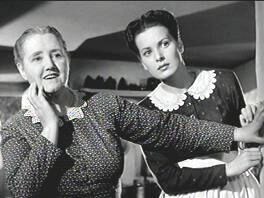
Sara Allgood and Maureen O'Hara in the movie adaptation of Richard Llewellyn's 'How Green Was My Valley'. Having profited from his depiction of Welsh mining communities, Llewellyn turned into a bigoted right-winger with nothing but contempt for the people he'd portrayed.

Llewellyn’s novel How Green was My Valley and the film based on it, introduced readers to the community spirit and shared deprivation of Wales’s coal miners, just as Vance’s introduced readers to the deprivation of Appalachia.

In his old age, Llewellyn was a bigoted right winger with nothing but contempt for the miners he had immortalised (and made money out of). 

JD Vance seems to be travelling the same route. His key funder exemplifies shallow performative isolationism.

 Thiel would have America run along the lines of a corporation, with the rich guys at the top making the key decisions.

You might think Vance, given where he came from, would be repelled by such a view. He clearly isn’t, and is unlikely to do another U-turn in the foreseeable future. Conversion to the thought processes of the rich tends to be permanent, you know?

More in this section

Revoiced

Newsletter

Sign up to the best reads of the week from irishexaminer.com selected just for you.

Cookie Policy Privacy Policy Brand Safety FAQ Help Contact Us Terms and Conditions

© Examiner Echo Group Limited