Joyce Fegan: Depp trial isn’t our circus but it’s a great distraction
In an overwhelming world where we can feel powerless to Putin's seemingly relentless destruction, the Depp v Heard trial is the low-hanging fruit of distraction
Joyce Fegan: Depp trial isn’t our circus but it’s a great distraction

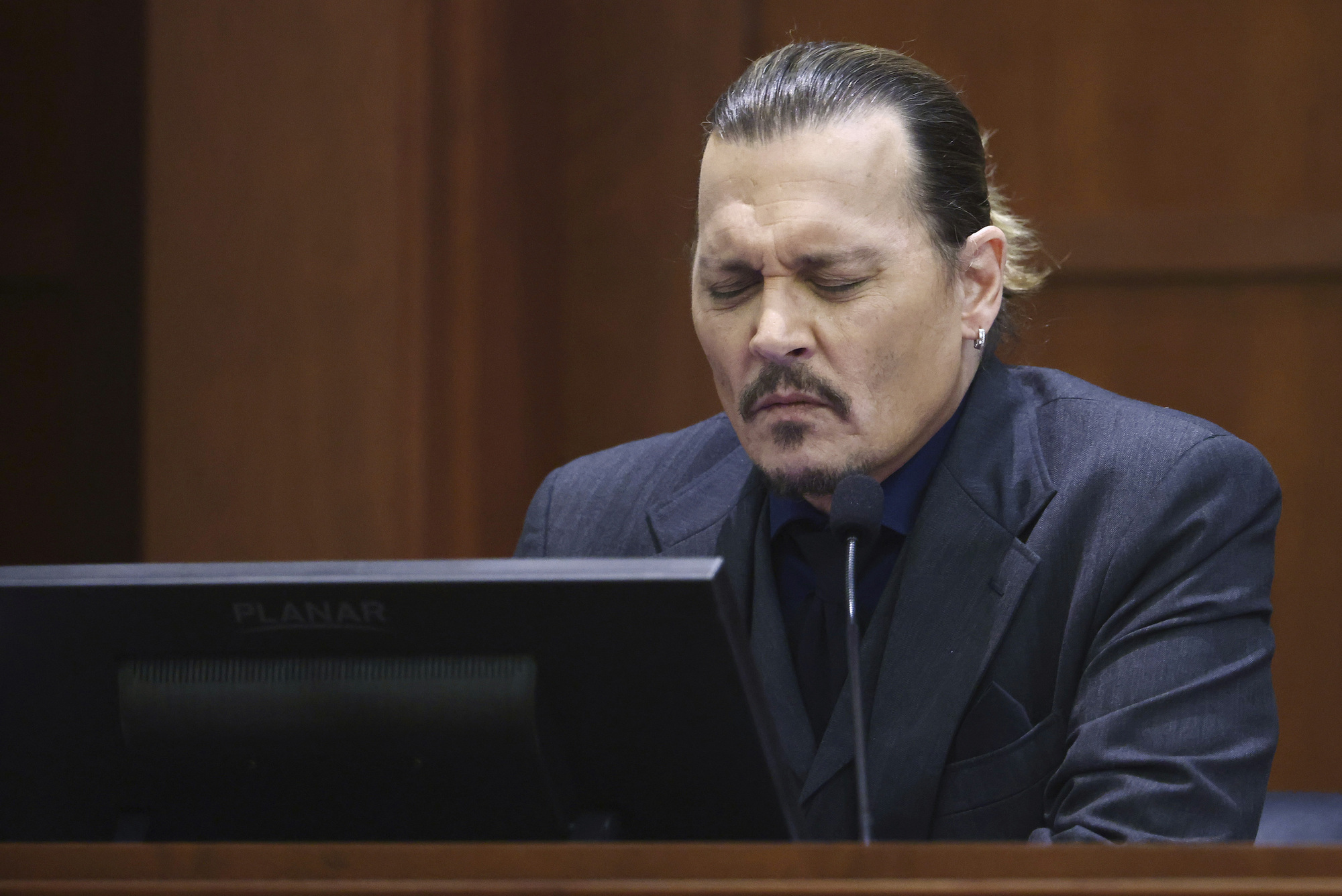
Actor Johnny Depp testifies at the Fairfax County Circuit Court on Thursday. In Depp v Heard, everything is coming out in the wash.  Picture: Jim Lo Scalzo/AP

Chances are fair you were on Google yesterday. And if you were, maybe you brushed up against the Google “doodle of the day” — the ever-changing image on the homepage celebrating the anniversary of a major scientific discovery or the birth of a famous inventor.

Yesterday’s one was a little more doomsday than doodle. It showcased several time-lapse images from key places on our planet.

There was Google Earth imagery of Tanzania’s Mt Kilimanjaro — 36 images, one for every year, showing the glacier retreat at the summit of
Africa’s highest mountain.

You could see the passage of 1986 to 2020 in the blink of an eye.

You can see why an American libel trial between divorced movie stars makes for such compelling viewing, in contrast.

There was another one of a glacier retreat in Greenland, this time taken over 20 years, and then there was one of coral bleaching on the Great Barrier Reef. That time-lapsed evidence, however, ran only from March 2016 to May 2016.

Yesterday was Earth Day, hence the doodles. But elsewhere, the day seemed to pass over fairly quietly.

But what isn’t passing over quietly is that trial, the one between Pirates of the Caribbean star Johnny Depp and his ex-wife, actor Amber Heard. She filed for divorce in May 2016, after 15 months of marriage. Heard subsequently wrote an article for the Washington Post describing herself as a victim of domestic abuse.

Depp sued her for defamation to the tune of $50m — cue the libel trial currently ongoing in the state of Virginia. She countersued, to the tune of $100m. That libel trial has yet to begin.

But in the current one of Depp v Heard, the world is being served up, in acute detail, the up-close-and-personal and behind-closed-doors reality of one couple’s relationship.

Everything is coming out in the wash.

There is no complex political policy to get your head around. No profession’s lingo to get up to speed on. And there is no environmental evidence to overwhelm you into switching off.
This is not our monkey. This is not our circus. This is a Hollywood one. The tickets are free. The show is even available on YouTube. And many of us are critics at large.

We think the issue is binary, one of him against her, truth versus reputation-ruining rumour. There are text message exchanges, audio sound bites, and video clips for us to dissect and regurgitate. We take sides. Internalised misogyny often takes centre stage. Many of us are blind and deaf to our own misogyny.

With legal proceedings ongoing, the Depp v Heard trial is fast becoming a proxy one for gender wars.

“Which one do you believe? The man? The woman? Neither?”

“Who’s the victim? Who’s the abuser?”

“MeToo and MenToo — this is exactly why we shouldn’t believe all victims.”

It’s like the Grand National, with people racing to back either horse, as if their gender will be vindicated come judgment day. Finally believed. Or
finally relieved from accusation. In a court of law, on a global stage.

But this is a civil, not criminal, case, an individual not a collective gender one. He took the case against her. And she, in turn, has taken one against him.

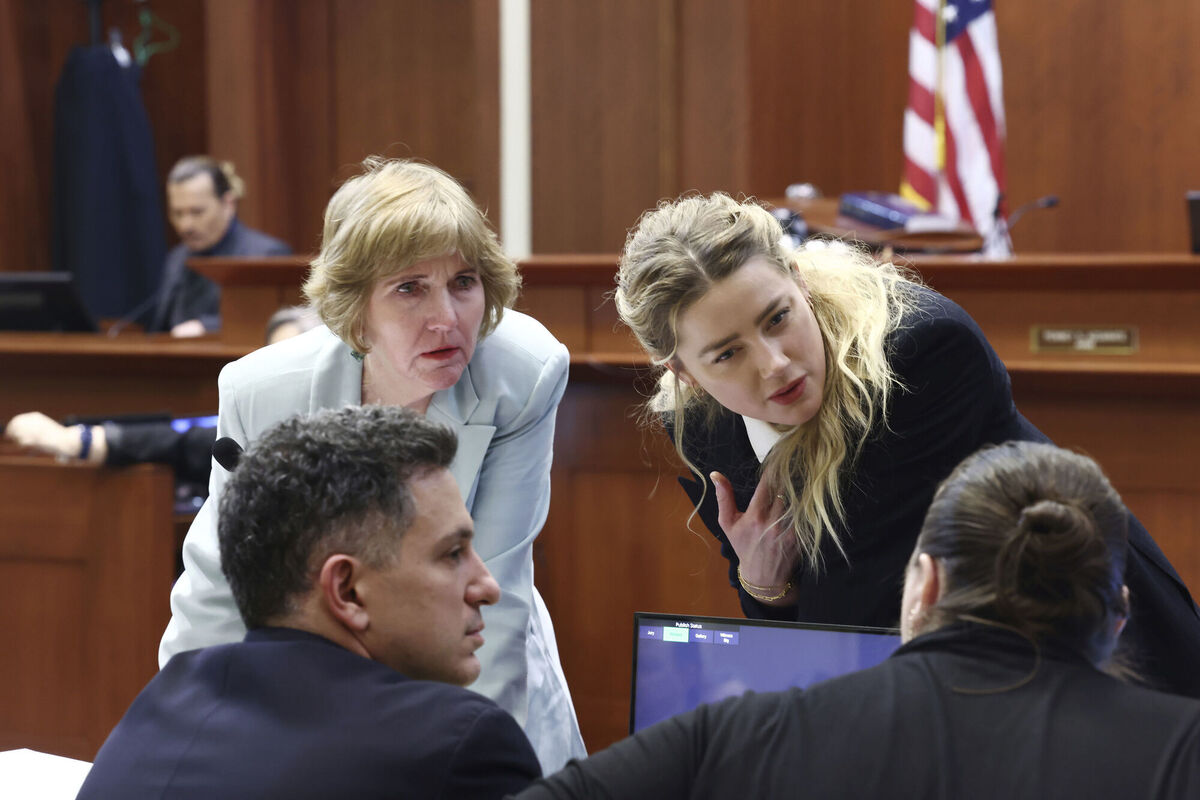
Actor Amber Heard speaks with her legal team as actor Johnny Depp returns to the stand after a lunch recess at the Fairfax County Circuit Court. Picture: Jim Lo Scalzo/AP

What is most interesting, however, is our interest in it, and why.

In an overwhelming world where we can feel powerless to Putin’s seemingly relentless destruction, the Depp v Heard trial is the low-hanging fruit of distraction.

It’s accessible. The intellectual barriers for entry into the conversation are low. And so much of it plucks at the strings of our prejudices.

It’s awful, but it’s someone else’s awful. Distractions don’t need to be nice to be distracting.

Climate change is our awful. Our children will clearly pay the price for our gross inaction. There was a time, not so long ago, when the actions of climate activists made regular headlines. Can we say that happens nowadays? 

And it can’t be assumed that our anxiety has lessened, but complacency or even collapse is a common default position when humans get overwhelmed.

The shortage of accommodation for refugees in our country is our problem. Marquee tents being used to house humans on our soil is also our problem.

The desire for distraction is palpable. If I am to consume one piece of news, is it to be the salacious story I don’t have to do anything about, or will it be the awful situation that I should do something about?

The low-hanging fruit of the Depp v Heard trial is an understandable answer.

This week, Ukrainian writer Tetyana Denford, who uses Instagram to communicate progressively about the war in her home country, posted a thread called ‘The easy (no cost) guide on how to be an ally to Ukrainians’.

She wrote: “Do Not Mute Us.” For those not on Instagram, to mute on that platform means to actively block out or switch off an issue you find uncomfortable for whatever reason. How very 2022.

But even Denford, in her request for our support, recognises our propensity to switch off.

“It can all be a bit too much, and we don’t expect everyone to always digest what we’re sharing. But we’re not asking you to share it all. We’re asking you to dip in and share things that inspire you and might inspire others,” she wrote.

Tiny actions can be a path out of paralysis. Even being a voyeur to the actions of others, such as the woman in Blarney seeking a bike on Facebook for a Ukrainian boy’s birthday, can be a path out of paralysis. Some forms of voyeurism are more useful than others.

By all means, follow the Depp v Heard, or the Kardashian-Ye saga, the need for distraction makes so much sense.

But dipping your toe back into affirmative action in addressing the problems of our day can help to relieve some of that existential tension too.

More in this section

Revoiced

Newsletter

Sign up to the best reads of the week from irishexaminer.com selected just for you.

Cookie Policy Privacy Policy Brand Safety FAQ Help Contact Us Terms and Conditions

© Examiner Echo Group Limited