Daniel McConnell: No urgent threat to Coalition but it’s the little things ...
An ominous sense of looming dread has begun to engulf the Government about the year ahead
Daniel McConnell: No urgent threat to Coalition but it’s the little things ...

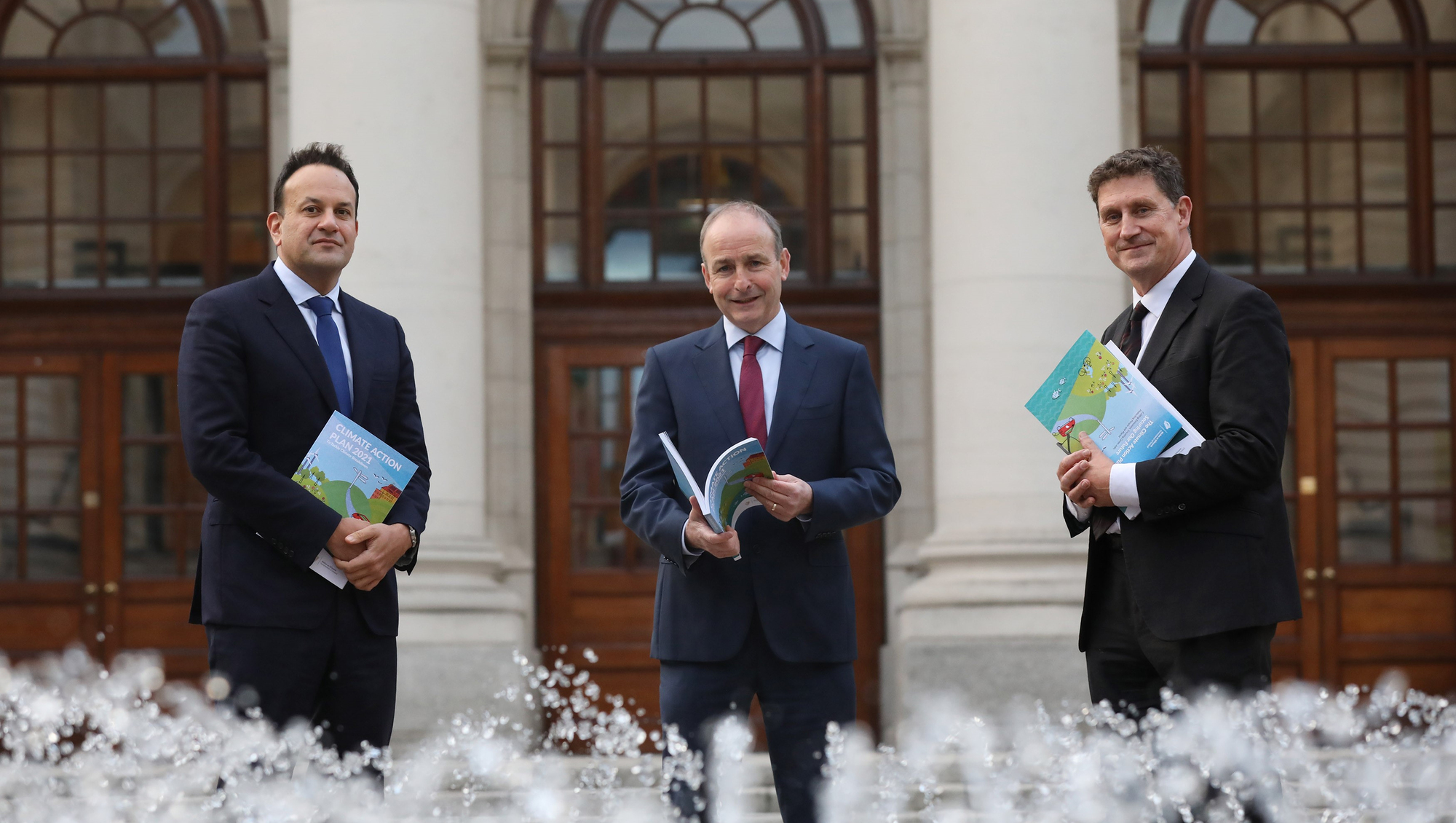
Tánaiste Leo Varadkar; Taoiseach Micheál Martin; and Green Party leader Eamon Ryan. While the workings at the top level appear to be harmonious, the cost of living crisis has the potential to engulf the Coalition ahead of the transition of power. Picture: Julian Behal

On one level, this historic three-party government has proven to be remarkably stable since its formation almost two years ago.

Despite a difficult start and a rocky transition from the Taoiseach’s office to the Tánaiste’s for Leo Varadkar, the three leaders have now settled into a dynamic with which all sides are comfortable.

But while the workings at the top level appear somewhat harmonious, an ominous sense of looming dread has begun to engulf the Government about the year ahead.

There is obvious concern that December’s switch between the Taoiseach and the Tánaiste could go awry in some way and lead to a collapse of the Government.

As part of that, there is the issue of the ongoing criminal investigation into the Tánaiste’s leaking of the draft GP contract and whether the other coalition parties would vote for Varadkar to become Taoiseach should that investigation still be live.

While it is my understanding that Fianna Fáil under Micheál Martin would seek to honour the deal to allow Varadkar return to the Taoiseach’s office, the same certainty is certainly not there when it comes to the Green Party.

While Eamon Ryan has a considerable amount of pragmatism since being in Government, several of his TDs have made clear that they could not, in good conscience, vote for someone who is subject to such an investigation.

Another issue causing concern in Government is the absence of any bounce in terms of support for the coalition parties from the ending of almost all Covid-19 restrictions last month.

An IrelandThinks opinion poll in last weekend’s Sunday Independent showed Fine Gael stagnant at 23% and Fianna Fáil becalmed at just 17%, a drop of 2 points on the previous poll in this series.

Worryingly for both parties, Sinn Féin under Mary Lou McDonald stands at 32% and is on course to lead the next government.

The poll also identified the most pressing issues in the minds of voters and 56% of those polled cited the cost of living as the item requiring most urgent attention. This number had spiked by 28% in just one month, overtaking housing and healthcare.

A cynic could argue that this slump in support for the two larger Government parties was behind the somewhat panicked scramble by the coalition this week to unveil its €450m cost of living package.

Why panicked? How else can you assess the situation when just a few short weeks ago, the offer of a €100 credit was deemed sufficient by the Government, only for that to be doubled now.

But those in Government would argue that the spectre of inflation is not likely to be as temporary as thought before Christmas, so it is legitimate to have looked again and the Government’s response.

Bouncing this analysis off some ministers, they sought to refute it saying the primary reason for doubling the credit was because of the long delay between it leaking to the Irish Examiner, being announced in November, and it being paid was deeply damaging.

It went from being a good idea which people would welcome to one people were beginning to see as a bit stingy, remarked one senior insider.

But when pressed, the political context of popular support could not be ignored.

Also, we know that Varadkar was the driving force behind the €1,000 payment to frontline workers by way of a pandemic bonus and had raised the hare in terms of payments going to retail workers only for the promises not materialise.

At his parliamentary party meeting on Wednesday, Varadkar hit out at the hypocrisy of the opposition parties who he said had challenged Fine Gael plans to put more money back in people’s pockets last year only for them now to accuse the Government of not doing enough.

Every day this week, the Opposition has majored on the cost-of-living issue in the Dáil at Leaders’ Questions, because they know they can inflict real electoral damage on the coalition.

It is easy to paint the Government as out of touch, tone-deaf and as not listening to the needs of real working families.

One such jibe from Sinn Féin’s Martin Browne of Tipperary on Thursday in the Dáil led Varadkar to respond sharply by saying such an attack was nothing more than a “cheap shot”, pointing to the fact that Fine Gael TDs are paid exactly the same as him and his Sinn Féin colleagues.

Whatever the truth of the matter, there is some concern within the Government ranks that just as it is dangerous to chase inflation with giveaway goodies, it is equally dangerous to chase votes in the same way.

As Varadkar warned in his pitch to be Fine Gael leader in 2017, when you seek to be all things to all men you end up being nothing to nobody.

Another fear in terms of the stability of the Government is the prospect of Fianna Fáil continuing to languish in third place in terms of popular support and whether that would precipitate a leadership challenge.

While there was a lot of talk about a heave in 2021, particularly in the aftermath of the disastrous Dublin Bay South by-election, it amounted to nothing.

I have since learned that a bunch of rebels, which included the likes of now exiled Marc MacSharry and John McGuinness had eight names on a list for a motion of no confidence.

I understand that Jim O’Callaghan and his chief ally John Lahart were approached to add their names, bringing the number to the required 10 to allow the motion stand, but they refused to go along with the plan, and it came to nothing.

Undoubtedly, the result in Dublin Bay South has given people pause for thought when it comes to O’Callaghan’s leadership ambitions, and in the absence of a clear alternative, ousting Martin looks increasingly complicated.

However, my sources in Fianna Fáil stress that the threat of a heave is not completely gone but there is not a clearcut candidate around whom they can coalesce.

For Martin, he is adamant he will be Tánaiste, and while he is insisting he will lead the party into the next general election, very few others share his view.

The upshot really is that now that the pandemic is over, the threats to the harmony of the coalition throughout the course of 2022 are mounting and distinct challenges are emerging.

While there is no immediate threat of a collapse of the coalition and a snap general election, quite a number of people this week have quoted Albert Reynolds’s famous line about it being the little things that can trip you up.

Given this Government’s almost unique ability to shoot itself in the foot since its formation, the prospect of a turbulence-free run into the transition of power are slim.

More in this section

Revoiced

Newsletter

Sign up to the best reads of the week from irishexaminer.com selected just for you.

Cookie Policy Privacy Policy Brand Safety FAQ Help Contact Us Terms and Conditions

© Examiner Echo Group Limited