Michael Moynihan: What’s happened to the nightclub in Cork?
The Cork club scene may not be what it once was, but veteran DJ Stevie G believes that if that if the will is there, it can adapt and change into something new
Michael Moynihan: What’s happened to the nightclub in Cork?

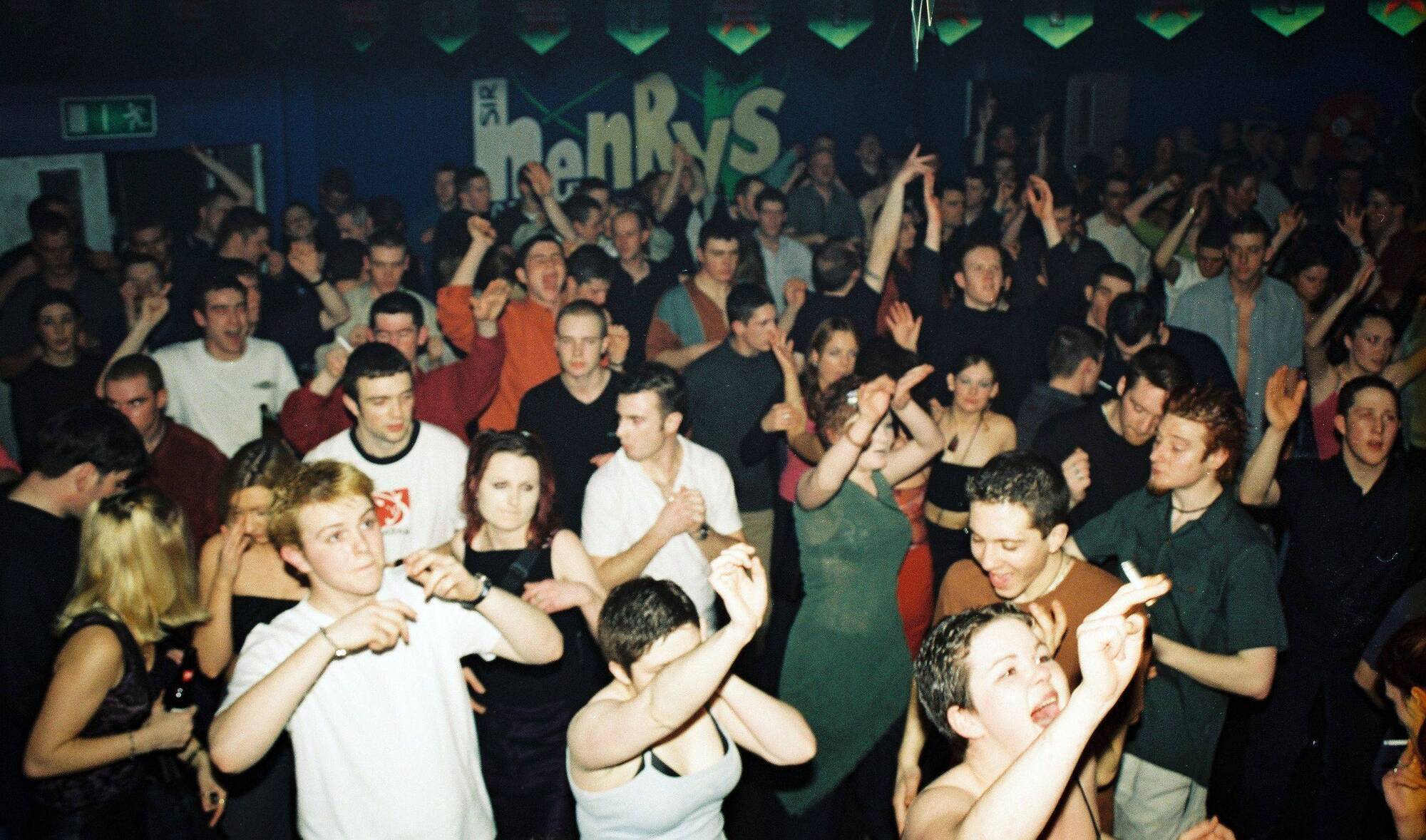
The Sweat crowd of Sir Henry's in the late 1990s. Picture: Luke O'Brien

Zoe’s. Chandra’s. Spiders. Henry’s. Co-co’s. No, this is not a definitive list of late-night establishments your columnist was turned away from, in his long-ago youth.

It’s a list of the nightclubs of a certain time (the 1980s) and a certain place (Cork), the likes of which are not available now.

And by that, I don’t mean to deploy the old young-people’s-music-why-in-my-day-we-had-tunes complaint. I mean these places are literally not available now.

Recent findings by the impressive Give Us The Night group showed that the number of nightclubs have declined by 84% in the last couple of decades.

There were 522 dance venues across the country in the year 2000, with 100 in Dublin; now there are about 85 across the country and the average number of venues per county has dropped from 19 to about three.

Your eyes do not deceive you. That means hundreds of venues have now vanished.

What’s happened to the nightclub? More to the point, what’s happened to the nightclub scene in Cork?

I turned to a man who’s played music in every venue in Ireland, surely: Stevie G — DJ, music promoter and producer — he nodded when I repeated the question to him. I think a lot of things happened at the same time, starting around 2000, the watershed picked out by Give Us The Night.

Cork DJ Stevie G has seen the highs and lows of the Cork club scene over the decades. Picture: Darragh Kane

“For instance, the euro changeover had a subtle effect on prices which people won’t remember unless they were there. Entry went from £5 to £7 to €10 to €15 within a couple of years.

In real terms, it wasn’t a huge leap but psychologically it registered as double the price. That had an effect.

“The late bar came in as well. Instead of people having to finish up at half-11 or whatever and set off for a club, they could stay in the late bar and drink on, and of course, people started to say, ‘wait, why am I paying a tenner to go to Henry’s when I can stay on and drink away here and I don’t have to pay that tenner?’

“The people who were into the music were going to head on to a club anyway, but for the floating voter, if you like, they weren’t going to budge from the late bar.

“There was a change in the music business, too, and 2000 is a good point to see that change start to happen — the celebrity DJ thing was huge then. There are great stories of those celebrity DJs making a fortune at gigs all over the world, but it was a bubble that was bound to burst, and it did burst eventually.

More recently, you have the change in how people meet each other, pure and simple. 

You don’t need the slow set in the nightclub to meet someone if you have Tinder or whatever you’re having yourself in terms of dating apps.

“So there are a few factors, and the pandemic has had an effect, obviously enough.

“There’s nothing it hasn’t affected, and venues where people congregated and danced together were bound to suffer.

"But it’s funny that one point you heard over and over again when the lockdown restrictions were eased was the ‘see you all in Copperface Jacks’. Which is a nightclub.”

There's also the great conundrum which is the Irish Relationship With The Drink, but Grainger adds a layer of nuance to this. Yes, when he’s working as a DJs he sees it: “People looking at their watches to see how long they have left for drinking, getting as drunk as they can until 2 am, when they’re left out onto the streets, hundreds of them, with the kind of results you can expect.

“And maybe heading off to a house party, which you could describe as an unregulated environment compared to a nightclub.”

But the extra layer, he points out, is the Irish Relationship With The Night-time.

“When you’re in town in the evening and you want to have a coffee — not a pint — where can you go? I’m not even talking about 11pm or 12pm at night, but 8pm or 9pm.

“Sometimes I go past Bean And Leaf on the Grand Parade, which opens until around 9pm some evenings, and it’s very busy because it’s one of the few places you can have a coffee or a tea that’s not a pub.

That’s very true of foreign nationals living in Cork — there are thousands of them, and thousands of them living in and around the city centre.

If they were living in their home countries they’d have places to go in the evening for a coffee and a chat but here, unless it’s a pub or McDonald’s, you don’t have much choice.

“And there’s a knock-on effect. If you had more people going out and sitting out drinking coffee or tea and chatting, you’d have a different environment. A better one, maybe.”

He also points to one of the striking experiences of walking the city’s main street in the evening.

“Patrick’s St was improved hugely a few years back — those wide footpaths are brilliant, the traffic plan was brought in, all of that, but if you go down the street at night-time, you notice how quiet it is. It’s like the South Mall.

“There’s very little in terms of pubs and restaurants on Patrick’s St, and it’s noticeable. A late cafe or coffee shop on Patrick’s St would draw the people I’m talking about, the people who are too young for bars and the foreigners who aren’t interested in the pub.”

That sense of interconnected issues — the lack of nightclubs linking up with the lack of night venues, pure and simple — is one that comes up again in discussions about the city.

Grainger points out that there’s rarely been as much empty space in the city which could be repurposed, particularly for younger kids to use (“Places like the Marina Market, which has the space for an all-ages disco”).

If he has a particular interest in seeing people dance, history is on his side. “That’s a common experience that people have always enjoyed. Historically people like to go and dance together, to have that experience.

What annoys me a lot with this is people our age saying: ‘well, clubs are dead, that’s it’ — because there’s a sense of ‘I had my fun in my time’.

“People need these spaces, and there’s a huge need for them. Ideally you could get some kind of cultural licence and run different things in these spaces — not just discos or dancing, but gigs and other events, without alcohol involved.

“I’m not sure how you’d get to do that, but where there’s a will there’s a way.”

There are spaces, there’s a will, there’s an interest. Surely there’s a way.

x

More in this section

Revoiced

Newsletter

Sign up to the best reads of the week from irishexaminer.com selected just for you.

Cookie Policy Privacy Policy Brand Safety FAQ Help Contact Us Terms and Conditions

© Examiner Echo Group Limited