Alison O’Connor: Trans rights and women’s right should not be an either/or choice
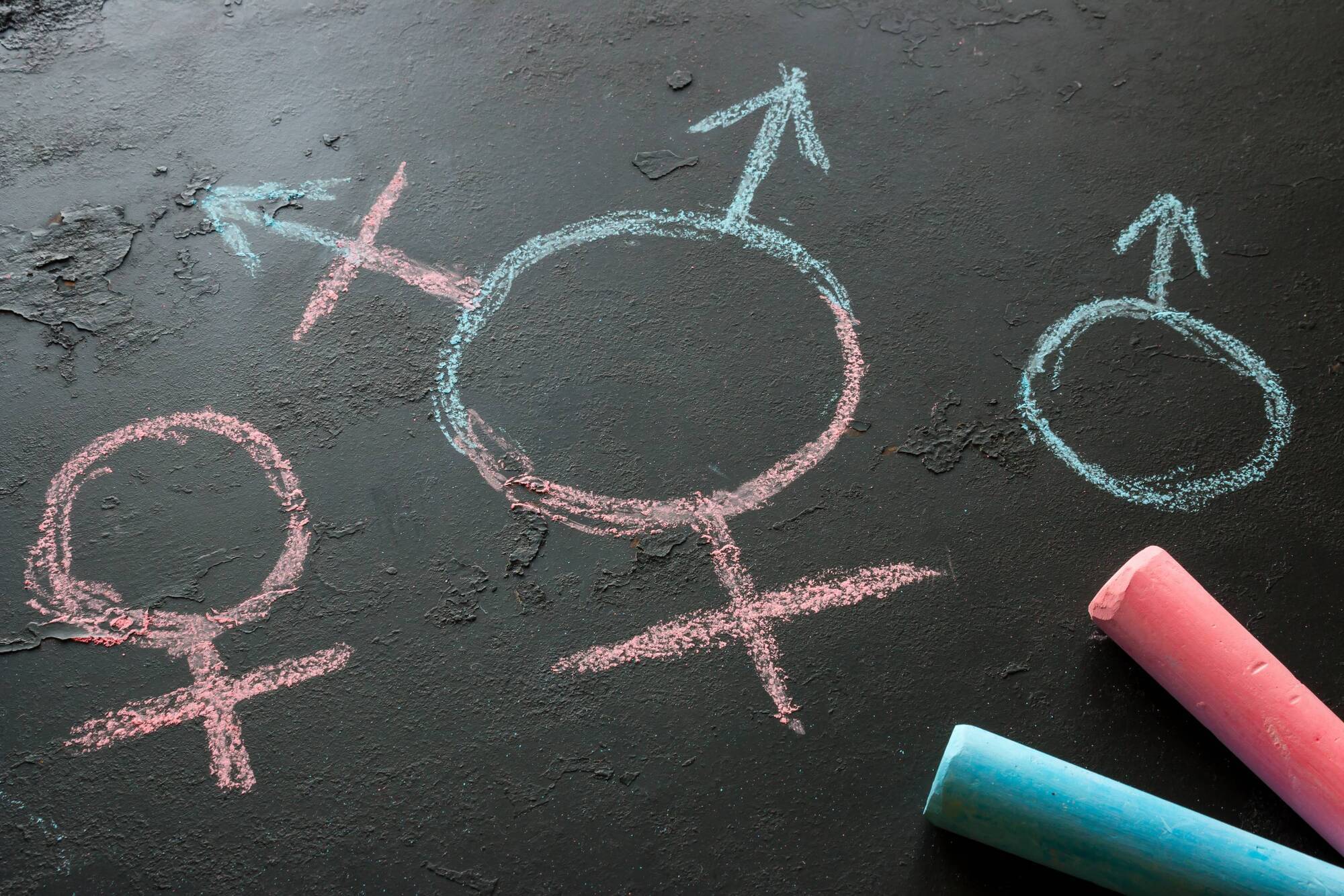
British Labour leader Keir Starmer has said there needed to be a ‘mature, respectful debate about trans rights’.
IT describes itself as one of the world’s leading general medical journals, published weekly in England since 1823, and The Lancet does indeed carry great weight around the globe —which is why its latest cover is so disturbing.
Released on social media, it was plain white with just a quote in the middle of the page: “Historically, the anatomy and physiology of bodies with vaginas have been neglected,” it stated. Underneath that posting on Twitter was the tagline: “Our new issue is here. On the cover ‘Periods on display’ and the cultural movement against menstrual shame and #PeriodPoverty.”
It all related to an article inside — including that quote on bodies with vaginas — that examined an exhibition that explored the taboos of periods and their history at the Vagina Museum in London.
The responses poured in, well over 7,000 at last count, so many of them strongly critical.
Two days later there was the ‘sorry if you were offended’ statement from Lancet editor-in-chief Richard Horton. He understood the strength of feeling it had provoked, stating the journal strives for maximum inclusivity of all people in its vision for advancing health.
“In this instance, we have conveyed the impression that we have dehumanised and marginalised women,” he wrote as part of a longer statement.
Our new issue is here! On the cover—'Periods on display' and the cultural movement against menstrual shame and #PeriodPoverty.
— The Lancet (@TheLancet) September 24, 2021
Plus, @WHO air quality guidelines, low #BackPain management, community-acquired bacterial #meningitis, and more. Read: https://t.co/eP1Lx7D116 pic.twitter.com/DchfiHnYEs

Is there irony, or not, in a leading medical journal using terminology on its cover that could be found in the lexicon of fictional serial killers of women, serving to only further dehumanise women who so frequently have poor experiences of the health services.
Around the same time the leader of the British Labour Party, Keir Starmer, responded to a question from a BBC interviewer that one of his party’s MPs was wrong to say that “only women have a cervix”. He was speaking about comments made by Labour Canterbury MP Rosie Duffield.
Starmer said that “it is something that shouldn’t be said” and “it is not right”. Duffield opted not to attend the Labour Party’s annual conference this week, following
online threats.
The Labour leader added there needed to be a “mature, respectful debate about trans rights” and that we needed to bear in mind that the trans community were amongst the most marginalised and abused communities.
Given the current mood music around that particular subject, he has two chances of a mature debate happening — slim and nil.
The fact that an elected member of his party chose to stay away from the party conference says so much about where things are at. Where you stand on what the MP said really does depend on your perspective and your ideology.
Also in the UK recently, Brighton and Sussex University Hospitals NHS Trust introduced terms such as “birthing parents” and “human milk” rather than referring to ‘mothers’ and ‘breast milk’.
The new terms are to be used when discussing pregnancy, birth, and parenting in literature, at meetings, and in general communications, although not in a one-on-one scenario. It was described as gender-inclusive language. In plain English, what it is is utter daftness.
In recent months here, when highlighting Covid-related restricted access to maternity hospitals some people, including TDs, have publicly referred to “pregnant people”. When asked, the HSE confirms it has also, unfortunately to my mind, used that term recently. Far preferable is how, in its literature on who should go for cervical screening, it states: “Women and people with a cervix between the age of 25 and 65 should go for regular cervical screening when it’s due.”
It may well have happened that a trans man gave birth here during Covid restrictions, but realistically the fingers of both hands would probably not all be needed to count the amount of times this has occurred, even in total in Irish maternity units. Yet almost 100% of women who are pregnant and giving birth are robbed of being properly called women.
Surely in a country where we have a catalogue of scandals that starkly reflect the poor standing and lack of agency of women in Irish society, especially in relation to pregnancy and childbirth, the dangers of that are obvious?
Feminism must be able to defend women and to do so from a position of truth, not fudging around the issues for fear of those people who go out of their way to be offended as they weaponise the genuine suffering of trans people.
None of the issues trans people face have easy answers. We have a duty to do our absolute best for the trans community, providing the healthcare required and all the necessary societal supports — but not at the expense of women.
By presenting it as a vicious either-or choice, we risk further marginalising and disempowering 50% of the world’s population.
TRANS rights supporters state that trans women are women. Full stop. It seems to me that so many of those who so vehemently espouse trans rights and argue for the admittance of those with male bodies into places of much-needed sanctuary for women — such as domestic violence refuges — have yet to have those experiences of life that open your eyes to the harsh realities of being a woman.
In my 20s and early 30s, I never even considered the issue of gender equality — if asked, I may even have dismissed it as being a thing, I’m ashamed to say.
However, age and childbirth, especially delivering two daughters, and motherhood, have brought me round to a place of flag-waving feminism. A quick flick through the headlines any day will provide further ample material for why it is necessary.
There is no doubt in my mind that I stand in solidarity with trans people — a group that has been shown to be incredibly vulnerable. However, simply asking questions on this topic is a modern-day heresy. It also seems there is a fear among ‘traditional’ media of taking on the issue because of how much it dominates ‘new’ media and what can be the viciousness of the exchanges and how they spill over into real life, such as the threats to Rosie Duffield or protests as a result of certain things said.
Taken to its logical conclusion, where would all this end?
We would do well to remember that in recent months it is women who have suffered so greatly from not having their partners present during antenatal appointments and at the birth of their babies. It is women who have suffered through the dramatic escalation in domestic abuse as a result of lengthy lockdowns, who continue to be vulnerable to rape and assault, who have suffered most in employment terms during the pandemic, and who struggle now to generate an income in this ‘new normal’.
Getting that message through and getting something done about it are difficult enough, without the very fact of them being called women being erased.

Cancel anytime
CONNECT WITH US TODAY
Be the first to know the latest news and updates