Clodagh Finn: Founder of Ladies’ Land League, Anna Parnell, to get poignant homecoming
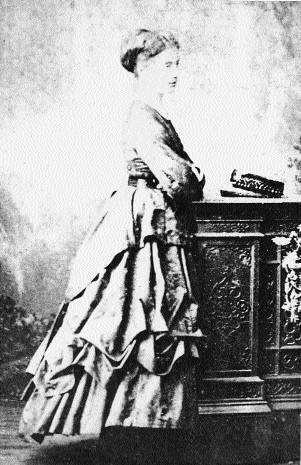
If anyone deserves a central place in history, it is the sister of Charles Stewart Parnell who mobilised ordinary women to take real action against landlord rule
Clodagh Finn: Founder of Ladies’ Land League, Anna Parnell, to get poignant homecoming

The ‘Irish Joan of Arc’, Anna Parnell, will be commemorated with a plaque at the Ladies’ Land League’s original headquarters at the AIB bank on O’Connell Street, Dublin, next Monday.

Anna Parnell, founder of the Ladies’ Land League, patriot, artist, and sister to Charles Stewart, is finally coming home. In a sense at least.

The ‘Irish Joan of Arc’, as she was described in her day, will be commemorated with a plaque at the League’s original headquarters at the AIB bank on O’Connell Street, Dublin, next Monday, exactly 110 years after she died by drowning off the north Devon coast in England.

At last, this 19th-century ‘new woman’ — “a radical, a feminist, and the first modern, militant Irish woman activist,” to quote historian Dr Margaret Ward — will be visible on one of the main thoroughfares of the capital city.

If anyone deserves a central place in history, it is this uncompromising political activist who mobilised ordinary women to take real action against landlord rule. 

Under her stewardship, the Ladies’ Land League politicised ordinary women, encouraging them to withhold rent and resist eviction while promising them support and relief.

When, in 1881, the women took over the reins of the Irish Land League while the men were in prison, it was considered a “most dangerous experiment”. 

And it proved to be just that as Anna Parnell and her sister Fanny, who was already fundraising and campaigning in the US, did what the men thought impossible; they established a militant force to challenge landlord rule.

Anna Parnell travelled around Ireland to speak at meetings where she encouraged women to come forward, rather than stay on the outskirts of the crowds picking up the crumbs from the men’s table, as she put it. 

A report in the Irish World enthused about her “cool and energetic management”, saying that she had called into life a power greater than Irish landlords, greater than the Irish police and greater than the English army.

It wrote:

Great indeed is the power of this young girl, whose slightest suggestion a nation will obey! A very Joan of Arc is she.

The passage was recalled by Dr Margaret Ward in 2018 at the rededication of Anna’s grave in Ilfracombe where the historian pondered the “truly heart-breaking what-ifs” if Anna Parnell had not been taken by the cruel sea on September 20, 1911, aged 59.

On that fateful day, she was taking her daily swim as usual when she got into difficulty. The local paper described, in detail, the frantic efforts to save her. 

An attendant ran along the sea wall with a pole but a wave pushed him over. Then, a boat was launched but it filled with water. A second boat was driven back by the tide three times before it reached Anna and took her ashore.

“Hot water bottles were applied, and the doctors, with PCs Bedford and Philpott, did all that was possible to induce artificial respiration for an hour or so. 

"By this time it was quite clear that life was extinct,” the Ilfracombe Chronicle wrote in September 1911, reporting on the death of a woman they believed to be Cerisa Palmer.

Days later, the same paper carried another report revealing Ms Palmer to be none other than Catherine Anna Parnell, sister of Charles Stewart whom it described as the “uncrowned King of Ireland”.

It went on to express its surprise at her criticism of her brother and the Land League, but several decades would pass before her manuscript — which set out why — would appear in print. “The Tale of a Great Sham: The fury of Anna Parnell at the Land League’s ‘great sham’”, edited by Dana Hearne and Margaret Ward, was republished last year.

The newspaper did, however, say that “Miss Parnell was a lady of great ability, speaking four Continental languages — French, German, Italian, and Russian — she was also a clever painter, and had considerable literary gifts.”

Anna Parnell's grave at Ilfracombe in Devon where she drowned on September 20, 1911, aged 59. Picture Lucy Keaveney

While Anna Parnell was deeply disillusioned with the treatment of the Ladies’ Land League, declared illegal in 1881, she continued to take an interest in Irish politics. 

Had she lived, Dr Margaret Ward believes Anna might have returned to Ireland. “If she had done so, she would have had an honoured place in the heart of the nation because she was remembered and honoured by women who would become important political figures in their own right,” she says.

In England, where she lived under an assumed name (her effigy had been burnt in England during the Land War) and in poverty, locals recalled a woman who wore practical short skirts and walking boots. 

That image echoes Countess Markievicz’s call to the women of Ireland in 1915 to “dress suitably in short skirts and strong boots, leave your jewels and gold wands in the bank and buy a revolver”.

Anna Parnell might have said something similar and been in the thick of Easter 1916 had she survived, Dr Margaret Ward believes. Instead, she was buried — as she had ironically prophesised in her poem ‘My Journey’ — in a grave far from home. 

While we can’t make up for past injustices, Dr Ward says we can ensure that the abiding memories of Anna are of a woman in her prime. Here are two vignettes from the life of that woman in her prime. 

As an art student in London in 1875, she listened to Charles Stewart Parnell’s debates at Westminster, writing articles from the “Ladies Cage” as she called the Ladies Gallery, the “mean, dimly lit den… reserved for the unenfranchised portion of the population”.

Later, in the throes of the Land War, she stepped out in front of the carriage of Lord Spencer, the Lord Lieutenant, held his horse’s bridle and asked if he had forbidden the building of Land League huts to provide shelter for some 500 people evicted in Limerick. 

She never sought the limelight though, believing the actions of particular individuals unimportant in history, except when they represented others.

The same could be said of Lucy Keaveney, a retired teacher and co-founder of the Countess Markievicz School. After hearing Anna Parnell’s story at an event organised by the Parnell Society to mark the centenary of her death in 2011, she resolved to visit her grave in north Devon.

The grave had been restored in 2002 by the Parnell Society, which added Anna Parnell’s quotation “The best part of independence: The independence of the mind”, but it had fallen into disrepair again.

When Lucy and her husband John visited Ilfracombe in 2013, it took them three hours to find the overgrown plot. They did what they could with a spade, some chippings and plants, to tidy it up.

Lucy Keaveney later spoke to former Arts Minister Jimmy Deenihan, which set in motion a chain of events that led to a government-funded restoration of Anna Parnell’s grave in Devon. Similarly, another series of events prompted by Lucy and involving Dublin deputy city librarian Brendan Teeling, Dublin City Council and AIB will come to fruition on Monday when Dublin Lord Mayor Cllr Alison Gilliland unveils a plaque on O’Connell Street.

It will be a poignant, if partial, homecoming for Anna Parnell. At long last.

More in this section

Revoiced

Newsletter

Sign up to the best reads of the week from irishexaminer.com selected just for you.

Cookie Policy Privacy Policy Brand Safety FAQ Help Contact Us Terms and Conditions

© Examiner Echo Group Limited