Clodagh Finn: Honouring Sophie – and the 18 other women murdered in 1996
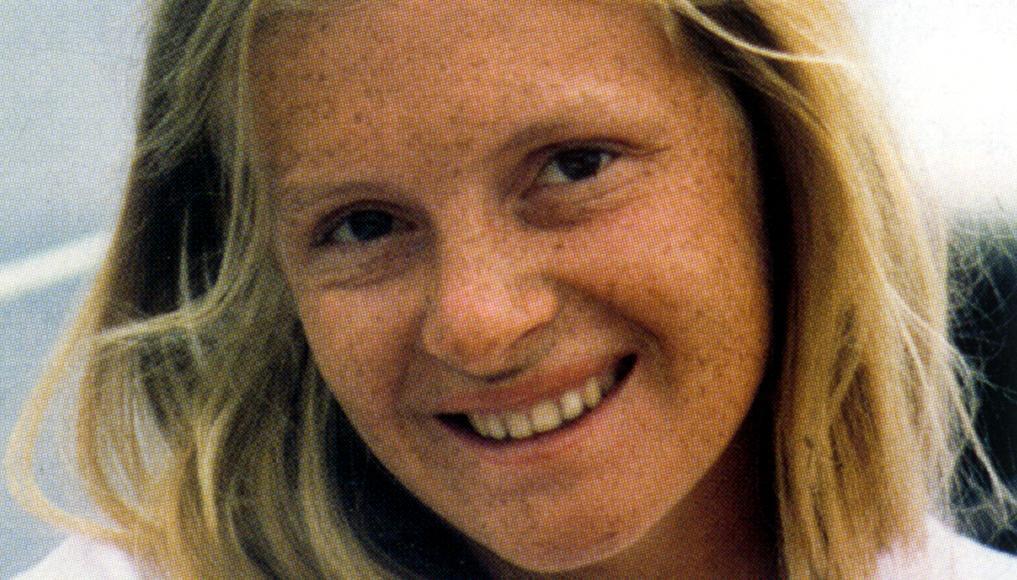
French filmmaker Sophie Toscan du Plantier who was murdered in West Cork on December 23, 1996.
Some 19 women died violently in Ireland in 1996, yet the case that stands out in the public consciousness is that of French filmmaker Sophie Toscan du Plantier who was murdered in West Cork on December 23. It has been the subject of several books, a podcast and now two upcoming documentaries.
Keeping the story in the public gaze is as it should be, of course, because no one has ever been convicted of her killing, in this country at least.
What tends to pass under the radar, however, is that no one has been held responsible for the deaths of two other women who were also murdered in Ireland during that same awful month.
On December 2, 1996, hospital worker Geraldine Diver was found strangled in her car in Clondalkin in Dublin. Her husband, John Diver, was tried for the murder but his conviction was later quashed by the Supreme Court because of “grave, obvious and deliberate” breaches of Garda regulations on the treatment of people in custody.

In 2006, at his retrial, a jury returned a unanimous verdict of not guilty. At the time, the gardaí said the case was closed and they were not seeking anybody else in relation to Geraldine Diver’s death.
No one was ever charged with the murder of Belinda Pereira, a 26-year-old woman who was found dead in an apartment in Dublin on December 29, 1996, just six days after Sophie Toscan du Plantier’s murder. I remember the case well because the only photographs available at first were faded and grainy. They were carried in newspapers alongside captions that summed up this woman’s life with nothing more than a lurid description of her brutal end.
Much was made of the reason for her visit to Dublin from London on Christmas Eve too.
One newspaper described her as a Sri Lankan “vice girl”. We might be more politically correct these days and say she was a “sex worker” but that does not take from the fact that we still tend to reduce murder victims to a few handy adjectives and a summary of their last violent moments.

When the gardaí renewed their appeal for information on the 18th anniversary of Belinda Pereira’s murder, they did something that should be a matter of course — they highlighted the lasting grief of those left behind. There was also hope of a breakthrough. The gardaí said that the person or people who killed her might have spoken about what had happened, “perhaps expressing sorrow and regret at having left a young woman in the way that they did”.
Nothing has come of the appeal to date. As we approach the 25th anniversary of her murder, the very least we can do is to rescue her and all those women murdered in 1996 from the brutality of their end, and remember them for who they were and all they might have been.
As Femicide Watch, compiled by Women’s Aid, put it: “Efforts should be made to report on the woman’s life and her loss, not just the traumatic and graphic manner of her death. Women and their loved ones should be afforded dignity in the reporting of femicide cases.”
Women’s Aid started monitoring femicide in Ireland in 1996, a year remembered for the sharp rise in violent attacks on women. In the years since then, 236 women have had their lives stolen, mostly by people they know. That is an average of 10 women a year.
The voices of those women are too often silenced in court, in official statements and in media reports while the story of the perpetrator elbows its way into the headlines.
That might explain why I was particularly struck by a line in the publicity about the new Netflix documentary on Sophie Toscan du Plantier. It came from producer Simon Chinn, who said this: “Sophie was much more than a victim of a murder. She was a mother, a daughter, a sister, a filmmaker and a writer.”
Her family has contributed to and endorsed . When it streams on June 30, it will not only tell the story of her murder but the story of the real woman at its centre.
Jim Sheridan’s new five-part documentary, due to air on Sky Crime later this year, promises to do the same. It too has had input from Sophie’s family and charts a search for justice that has gone on for almost half a century.
(Killer in our Midst), now airing on TG4, has the same kind of sensibility. It focuses on how bereaved families and communities continue with their lives after a murder.

The final episode, due to air on June 9, recalls the murder of Joyce Quinn, who was murdered in the Curragh Plains not far from her shop in Milltown, Kildare, in the same year as Sophie Toscan du Plantier. Her husband, retired army officer Ray Quinn, says the trauma and fear after his wife’s murder are still as raw and as real today.
Her killer, Kenneth O’Reilly, is in jail after receiving a life sentence but the prospect of his return to Kildare fills the Quinn family with dread. Ray Quinn is campaigning for a ban that would prevent him from entering the county if (or when) he is paroled.
He goes on to spell out the lasting effect that murder has on families: “When Joyce died it took the good out of life. Her death shattered us; quite simply, it was the end of happiness.”
It’s a side of the story that does not get enough airing but, on the evidence of these documentaries, it looks as if that might be starting to change. Ray Quinn also stresses the need to remember those who died as people rather than murder victims.
“Joyce was my childhood sweetheart, the love of my life from the time she was 17 years old. She encapsulated everything that is good in this world; diligence, beauty, integrity, loyalty, practicality, discretion, humour, passion and modesty.”
If he ever won the lottery, Ray Quinn says he would buy a glen with a small river running through it and plant native Irish trees; one in memory of every women who died violently since the foundation of the State.
For the year 1996, there would be trees for Marilyn Rynn, Joyce Quinn, Mary Molumby, Sandra Tobin, Noeleen Cawley, Alison White, Anne Marie Duffin, Martina Halligan, Angela Collins, Patti Bainbridge, Patricia Murphy, Veronica Guerin, Margaret O’Sullivan, Maura McKinney, Fiona Pender (missing presumed murdered), Janet Mooney, Geraldine Diver, Sophie Toscan du Plantier and Belinda Pereira.
It should not be up to Ray Quinn to fund such a project, but the State. It would be a very worthwhile act of remembrance in this Decade of Commemorations.