Irish funding has made space for women in Malawi
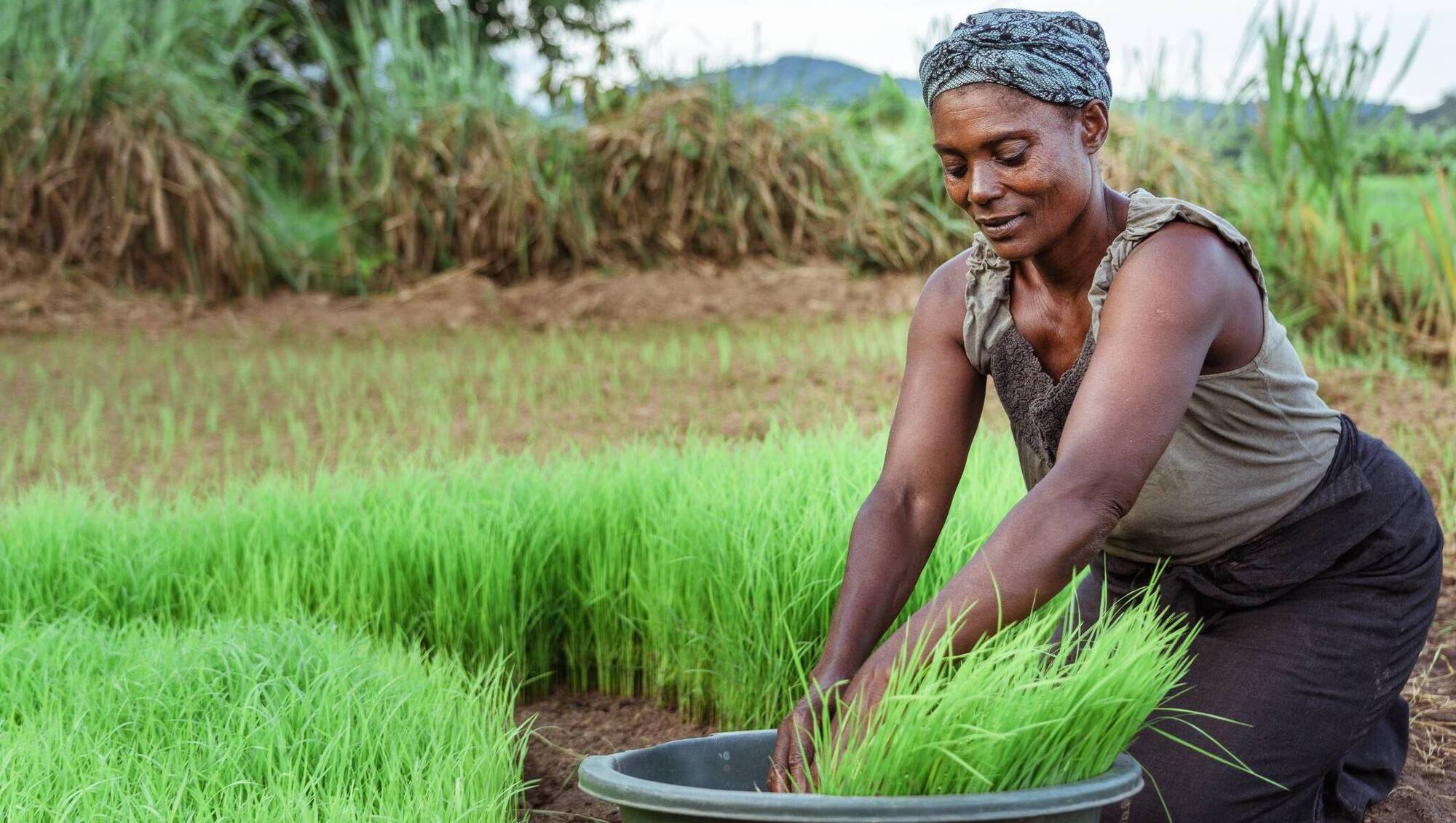
A female farmer in Malawi. Malawi’s National Action Plan on Women's Economic Empowerment (2025–2030) has seen positive results with microfinance and vocational training improving livelihoods.
In my lifetime I have witnessed a dramatic improvement in gender-based violence in Malawi. The past 20 years has seen many positive changes.
I live in rural Kalumbu in the Lilongwe District, and work as a maize seed grower. My community is heavily patriarchal, with some traditional norms still prevalent that are harmful to women and girls but even here, we now have female chiefs and women chairing community committees. Women can aspire and work towards leadership and decision-making positions.

Twenty years ago, only boys went to school. The thinking was ‘Why waste money on school fees for girls, when they will get married?’ I didn’t complete my education as my parents only had school fees for my brothers.
Women didn’t own land; the chiefs were the custodians of land. Men inherit the land, home, household and goods — if a woman’s husband dies, his male relatives inherit everything leaving the widow and children with nothing.
The Marriage Divorce and Family Relations Act (2015) has strengthened protections for women and girls but it will take time for legal and policy change to take effect, especially in rural areas.

In 1999, I lost everything when my husband and I divorced. I didn’t know the laws or policies to protect me. I stayed quiet and raised my children. Back then gender-based violence was an accepted part of life.
It was complicated by economic dependence: women and girls were often dependent on abusers for financial support, making it difficult to escape abusive relationships. Survivors often faced barriers in accessing justice, including limited access to legal services, inadequate law enforcement and lack of awareness about women’s rights.
The laws were there but only on paper — they didn't reach rural women.
Today, communities across Malawi are embracing equality. Women now have the right to full and equal protection under the law and the right not to be discriminated against based on their gender. Gender-based violence reporting has increased.
Communities are familiar with legal justice although it remains expensive, especially in the rural areas. The past 20 years has seen increased access to education for girls. In the past, most were married at 15 years old. But today they stay in school because they know their rights.
My own daughter got pregnant aged 16 but when she received counselling from the local Women's Forum she agreed to leave the child with me to rear and go back to school. She finished her education and she is a prison warden now. She participates in our awareness campaigns to encourage and motivate younger girls to complete their education.
Malawi’s National Action Plan on Women's Economic Empowerment (2025–2030) has seen positive results with microfinance and vocational training improving livelihoods.
For example, the Oxfam and Coalition for the Empowerment of Women and Girls programme funded by Irish Aid, has trained 30 gender-based violence survivors in tailoring which has enabled them to buy livestock including chickens and pigs, improving their livelihoods.
Personally, I have been trained and empowered. Now I am an activist; I can stand up and speak on behalf of women in my community. I can defend my rights and the rights of other women in my community.
At a macro level, Government commitment to fostering an environment where gender-based violence is not acceptable has been transformative. Various policy strands were implemented.
For example, nurturing political empowerment of women (National Strategy for the Political Empowerment of Women, 2024-2030), a National Gender Policy and National Integrated Early Childhood Development Policy (2025–2030).
At a local level, women were encouraged to run for political office through awareness campaigns. In my local district of Lilongwe we registered the highest number of female Members of Parliament in the national elections.
A Muslim woman won a seat in a non-Muslim community which would have been unheard of 20 years ago. Trust in women's leadership has also grown.
Prevalence of child marriages has dropped from 42% in 2019 to 30% in 2025 thanks to community engagement and school outreach. Local by-laws in five villages in the Kalumbu area which require parental consent and official verification of age before a marriage can be registered, has also reduced the prevalence.
Directly engaging men and boys has also had a positive impact. The National Male Engagement Strategy on Gender Equality, Gender-Based Violence, Sexual and Reproductive Health and Rights and HIV (2023- 2030) has been instrumental.
Fifty men aged 18 to 50 have been trained as gender equality advocates; 90% of these report changing personal attitudes toward sharing household chores and opposing violence. The use of story-telling and case studies has helped to show the positive benefits to communities of working to end gender-based violence.
The progress of the past 20 years in Malawi has been possible because of the power of partnership. The Irish Consortium on Gender Based Violence, a collaboration of NGOs, civil society, government and the Defence Forces has supported my community and others in reducing gender-based violence.
Now, 20 years on from when it was first established, the consortium’s focus is more critical than ever. The reality for many women in 2025 is very different to that of my community in Malawi.
One in three women globally have experienced sexual or partner violence in their lifetime, and every day 140 women and girls are killed by an intimate partner or family member.
Gender-based violence is not only a moral or human rights violation — it undermines economic growth, social stability and governance. Ignoring it costs countries up to 3.7% of GDP, according to the World Bank.
Now, more than ever, as global funding cuts take hold, we must stay the course and double down on our efforts. We owe it our daughters and granddaughters so that they can be safe from gender-based violence and face the future with hope.
- Alice Kachere, Malawian farmer and national co-ordinator of the Kalumbu Women’s Rural Assembly took part in an event in Iveagh House, Dublin recently to mark 20 years since the founding of the Irish Consortium on Gender-Based Violence (ICGBV) a unique Irish-based alliance of international humanitarian, development and human rights organisations, working alongside Irish Aid and the Irish Defence Forces. The consortium amplifies the leadership of survivor, grassroots and women’s rights organisations, and promotes high-quality programming and policy across humanitarian and development contexts.
- The ICGBV is currently chaired by GOAL. Members: ActionAid, Aidlink, Christian Aid Ireland, Concern Worldwide, Irish Defence Forces, GOAL Global, Ifrah Foundation, Irish Aid, Irish Red Cross, Oxfam Ireland, Plan International Ireland, Trócaire and World Vision Ireland.