Daniel McConnell: Unprecedented report on Seamus Woulfe had to pull its punches
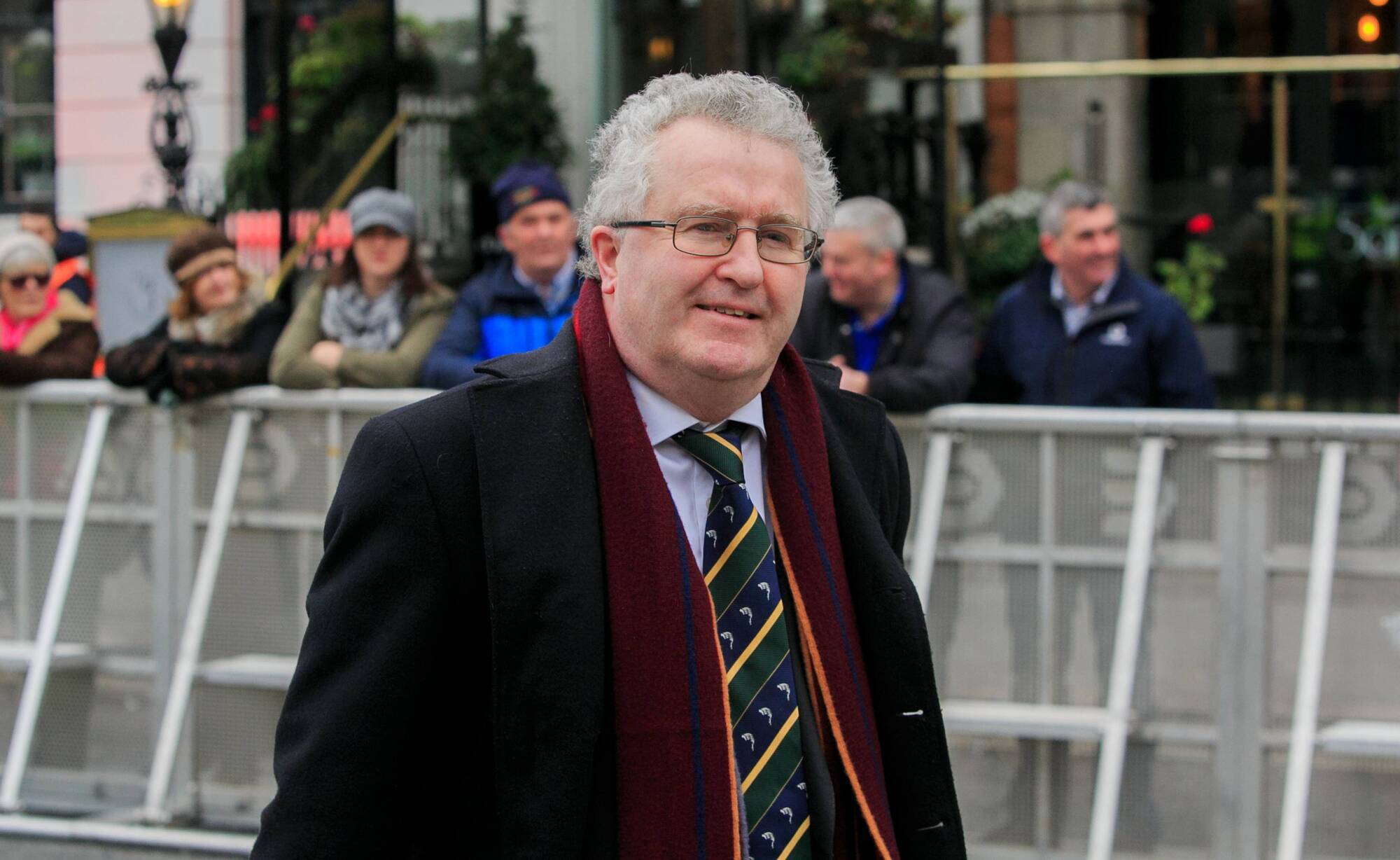
Supreme Court judge Seamus Woulfe. Picture: Gareth Chaney Collins
The fool’s pardon granted by ex-Chief Justice Susan Denham to Seamus Woulfe over his attendance at the Oireachtas golf event in Clifden has clearly angered the hell out of many.
While she concluded that he was not guilty of breaking the law, it is clear the 58-year-old Belvedere College-educated Woulfe was guilty of lacking basic cop-on and of bringing unwanted controversy and criticism upon him and the Supreme Court, which he has just joined.
Perhaps as her report had no legal standing, and as it was an unprecedented move by the Supreme Court to investigate one of their own, she had to pull her punches.
But the more one reads the report on Woulfe’s actions, the less satisfactory it becomes.
As Dr Laura Cahillane of the University of Limerick concluded, Denham’s finding that his removal would have been “unjust and disproportionate” was met with criticism, with many pointing to the lack of accountability for judges, and alleging this was an example of the elite looking after themselves.
And that is putting it mildly.
One suspects — and many learned members of the Law Library have expressed this view also — that Denham’s conclusions were as much a signal to the political class that the judiciary takes a dim view of moves to oust one of their own.
Her conclusions came in the wake of many political opinions, including from former Labour leader Brendan Howlin, that golfgate required the judiciary to “get their house in order”.
This has raised a number of interesting points.
Despite Woulfe’s frankly dubious defence that the event in Galway was a non-party event, the truth is that his presence there, where he was mingling with politicians, blurred the lines between the courts and the Oireachtas.
The Bangalore principles state that: “The behaviour and conduct of a judge must reaffirm the people’s faith in the integrity of the judiciary. Justice must not merely be done, but must also be seen to be done.”
Denham herself found that while Mr Woulfe erred in attending the dinner, a number of mitigating factors must be considered when considering his future on the court.
“Justice Woulfe did not consider separately the propriety, or if there would be an appearance of impropriety, for a judge of the Supreme Court to attend a celebratory dinner in a public place while there is a pandemic in the State,” she said. "He should have considered whether the community may regard the judge’s participation as an impropriety."
Such a blurring of lines has serious consequences, as the independence of the judiciary is a cornerstone of our democratic principles in this country.
Woulfe, a long-standing and well-known Fine Gael member and activist, was appointed Attorney General by Leo Varadkar in 2017.
Varadkar and his loyal ministers are known to be believers in Woulfe’s ability and performance as AG, and had no qualms about his political appointment to the Supreme Court, despite not having any previous judicial experience.
Others within the last Cabinet, even some in Fine Gael, are less complimentary about his tenure.
“Micheál Martin, in opposition, declared Maire Whelan [AG under Enda Kenny] was no Adrian Hardiman, but the very same could be said of Woulfe. A terribly nice and affable man, but was the happiest man in Ireland to be Attorney General,” is how one minister assessed Woulfe.
But his appointment as a Supreme Court judge was one of Fine Gael’s demands in the programme for government talks, and Micheál Martin was willing to pay that price to become Taoiseach.
But that decision is certainly open to question.
Was it appropriate for a man with no judicial experience to be catapulted straight into the highest court in the land?
Of course it wasn’t.
It was itself as dubious a decision as Woulfe’s decision to attend the dinner.
It was ironic that two of the mitigating factors that Denham took into consideration in giving Woulfe his pass was his lack of time on the bench and his lack of training.
The failure of Woulfe, Denham concluded, to reflect upon whether his attendance as a judge of the Supreme Court might cause controversy or bring the court into disrepute should be seen in the light of the following: he is a newly appointed judge; he has not yet sat on the bench as a member of the Supreme Court; he has not had the benefit of any introductory programme for judges; and there was no judicial guidelines or code of conduct.
What has also garnered attention was Woulfe’s decision to “dig in” and fight his corner, as opposed to falling on his sword as many called on him to do.
As alluded to above, given the unprecedented nature of her report, he probably felt he had no choice but to retain counsel and contest the points raised.
In citing the lack of guidelines in place, Denham had another pointed dig at the Government.
A system of proper accountability for judges is still a year away, despite Denham and current Chief Justice Frank Clarke’s repeated calls for action years ago.
It falls to justice minister Helen McEntee to introduce in law these new guidelines as to how judges are to behave under the umbrella of the Judicial Council.
The absence of such structures meant the Supreme Court had to call upon Denham to address the maelstrom of controversy caused by Woulfe’s presence at the event in Galway on August 19.
But the truth is, as has been pointed out, given its non-statutory and non-legal basis, if the report had produced negative consequences, there is no doubt Woulfe could have challenged such a report by way of a judicial review.
His retention of counsel during his engagement with Denham signals a real willingness to go that route, had it been required.
But, despite the finding of impropriety against Woulfe for attending, there was nothing damning enough in Denham’s conclusions that would warrant him challenging it.
With Denham stopping short of calling for his head, it falls to Chief Justice Clarke to deal with the matter by way of “informal resolution”.
Given what many have seen as Woulfe’s attempts to use the Chief Justice as cover, one wonders how gentle Clarke is likely to be.
Under McEntee, the Judicial Conduct Committee was formally established with effect from June 30, 2020, and is required to submit draft guidelines concerning judicial conduct and ethics within 12 months of its establishment.
“The outer limit for submission of the guidelines is set in legislation — however this does not preclude the earlier development of guidelines,” said a spokesman for the minister.
"The Minister for Justice would like these guidelines completed as soon as possible."
That process simply cannot conclude quickly enough, and is painfully overdue.
But, while Denham has cleared Woulfe, the ultimate responsibility of removing judges lies, under the constitution, with the Oireachtas.
And while there has been some noise around a possible move against Woulfe, in truth there is no widespread appetite for a removal process to begin, despite the considerable annoyance at the report’s findings within political circles.
Many have pointed to the sacrifice made by Dara Calleary, in particular, and to Phil Hogan, whose political career is effectively over, in contrast to Woulfe being able to carry on.
With questions already circulating as to his suitability for the Supreme Court, Woulfe’s actions, as laid out by Denham, have done his cause little good.
As a result of his own hubris and carelessness, Woulfe’s standing on the court has been badly damaged before he has even begun.