Louise O'Neill: Are we turning to pandemic art for relief?
At the start of this year, I was clearing out my writing room when I found a tattered piece of A-4 paper.
Louise O'Neill: Are we turning to pandemic art for relief?
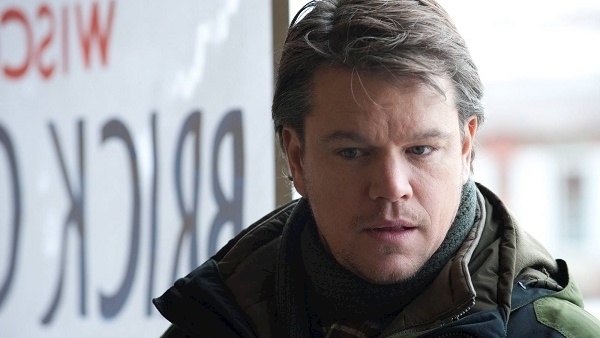
Matt Damon in the 2011 film, Contagion

At the start of this year, I was clearing out my writing room when I found a tattered piece of A-4 paper.

My terrible hand-writing was scribbled on both sides and when I looked at it more closely, I discovered that it was notes I had taken during my Post-Apocalyptic and Catastrophe Fiction class at university.

The date was April 1st, 2008, and the book we were discussing was The Road by Cormac McCarthy.

When I phoned my boyfriend later that evening, I told him about the page, how strange it was they were the only notes I had kept from my degree.

“I wonder if it’s a sign,” I said. “Maybe my next novel is supposed to be dystopian?”

Now, only three months later, I can’t help but wonder if this discovery was more of a warning of how 2020 was going to unfold.

I re-read the notes today and certain lines jumped out — how this book highlighted the ‘frailty/fragility of human society’, how capitalism and consumerism were responsible for the apocalypse, and how The Road could be seen as an, “allegory for the End of America.

The decline and fall of the Empire.” I wrote, “is this the end product of individualism?”

Many of us have been tempted to look to works of art to find meaning in what is happening now.

Streaming figures for movies such as 2011’s Contagion (in which a virus transmitted by respiratory droplets becomes a global pandemic) and 1995’s Outbreak (a medical disaster movie about an Ebola-like infection which is opened by a quote from the Nobel Prize winner, Joshua Lederberg, “The single biggest threat to man’s continued dominance on the planet is the virus”) have gone through the roof.

People are re-reading Emily St. John Mandel’s superb novel, Station Eleven, which was published in 2014 and takes place after a flu pandemic known as the ‘Georgia Flu’ has devastated the world.

A friend texted me recently, quoting Margaret Atwood’s The Year of the Flood, where a religious sect who survived a biological catastrophe preaches the importance of hygiene measures to avoid contagion.

“May I remind you of the importance of hand washing, seven times a day at least, and after every encounter with a stranger. It is never too early to practice this essential precaution,” Adam One says during the Festival of Arks.

“Avoid anyone who is sneezing,” he finishes ominously.

Perhaps we will have to stop Atwood from writing dystopian novels as they have an unsettling tendency to come true.

Despite my boyfriend’s best efforts, I refuse to watch Contagion or Pandemic: How to Prevent an Outbreak, the Netflix docu-series.

All I want to do is devour romantic-comedies and pretend I still live in a world where hugging, let alone the exchange of bodily fluids, is allowed.

It seems odd to consume pandemic-inspired pop culture when we’re actually living through one and I’m curious about the psychology behind it.

While writing Station Eleven, Emily St John Mandel said she “did have terrible awareness of the fragility of civilisation”, something that has become clear to us recently.

We didn’t realise we were quite so close to the precipice but these artists must have done, so perhaps they have more answers for us?

Maybe if we watch these movies as closely as we can, re-read these books, we will find clues, the trail of breadcrumbs that will lead us back to safety? Or maybe it’s a form of exposure therapy?

Psychologists believe many people enjoy horror movies because they offer the viewer a sense of control, placing a certain degree of psychological distance between them and the terrors happening on screen.

Are we turning to pandemic art for relief?

Is it to prepare us for the worst, showing us unimaginable suffering and forcing us to consider what we would do in order to survive or indeed, if we even could survive? (I, for one, know I would be dead within 2.5 seconds of a zombie apocalypse.)

In both Contagion and Outbreak, a vaccine to the virus is found; both have a ‘happy ending’ of sorts.

With human trials for a possible coronavirus vaccine still being months away, is this the hope we need to sustain us until then?

Turning to art for comfort is nothing new. Stories, and the act of story-telling, is an integral part of being human, and has offered us entertainment, consolation, and understanding for centuries.

Owen Flanagan, a leading consciousness researcher at Duke University, believes that, “humans in all cultures come to cast their own identity in some sort of narrative form,” and “narrative may also refer to psychological processes in self-identity and memory”.

From ancient legends and myths, from the idea that we are all descended from Adam and Eve, to animal sacrifices to appease the gods, we have always used stories as a way of explaining the world to ourselves.

And now, as we come to terms with a new world, one whose shape remains uncertain, holding a future none of us can quite imagine yet, maybe now, we need our stories more than ever.

Louise says

READ: I asked people on Instagram to recommend sexy rom-com novels and one name came up multiple times.

Having read The Kiss Quotient by Helen Hoang, I can confirm it is both romantic and very sexy.

The premise is a little odd (Stella, a successful and on-the-spectrum econometrician hires a male escort to teach her about dating) but the payoff is worth it. I read it in one sitting.

PLAY: My boyfriend and I are obsessed with the QuizUp app which allows us to play trivia games while we’re apart.

Perfect for these social distancing times.

More in this section

Revoiced

Newsletter

Sign up to the best reads of the week from irishexaminer.com selected just for you.

Cookie Policy Privacy Policy Brand Safety FAQ Help Contact Us Terms and Conditions

© Examiner Echo Group Limited