Time for firms to look west, not east
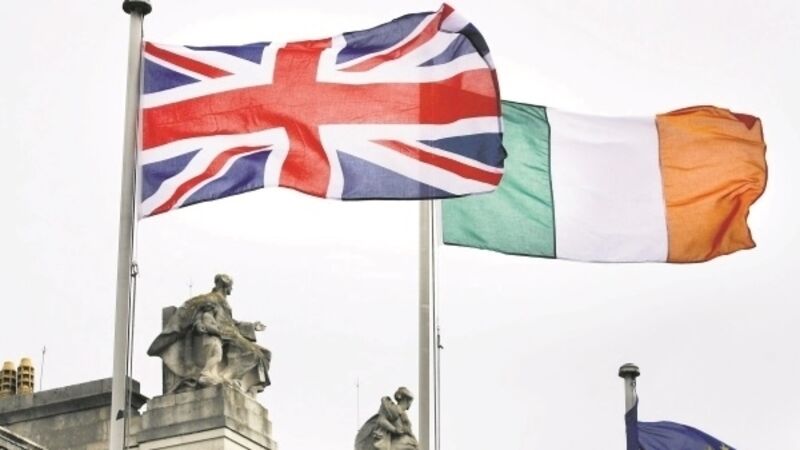
The theatre of the last few weeks in Westminster has meant that all our attention has been focused east across the Irish Sea. But that begs the question as to whether we should be looking west rather than east.
It is some time ago since that the then Tanaiste, Mary Harney, described Ireland as being closer to Boston than Berlin.

An inevitable consequence of Brexit is that for many Irish businesses, the Atlantic will become narrower than the Irish Sea. The main impact of Brexit on the UK will ultimately not turn out to be the difficulties associated with the trade in goods, because that is not where modern economies are most dominant, rather, the issue will be in the context of the trade in services.
From speaking to business executives in the US in recent days, their recurring mantra is how difficult it is to secure talent. The days of the open US visas for well-qualified professionals are in the distant past, and many professional services firms are reliant on short-term visa arrangements to attract talent from abroad into their US offices.
Brexit brings such problems back into the UK. No matter what the final arrangement between the UK and the EU looks like, it will be harder for professionals looking to work in the UK than it has been before. That's a major problem for services exporters like the UK, but it is also an opportunity for Ireland.
This is no way to downplay the disruption to the Irish economy which will arise because of our heavy reliance on Britain as a destination for goods exports, particularly agri-exports.
But just as we had to compensate in the past for changes in the international environment, we are going to have to get used to a new world order where Ireland can be a conduit to Europe for regulated industries such as financial services and pharmaceuticals.
Much is made of the Irish corporation tax regime, but the real competitive advantage in the coming years might not be tax, but rather the availability of skilled labour operating in an English-speaking regime with a common law system. Industries investing in Ireland will know that, under our legal system, the title they might hold to their office block or factory will be as good in 20 years time as it is now. That is not the case with many other territories.
However, unlike goods, the nature of services means that the flow must be two-way. We associate the IDA as the driver of investment into Ireland, but Enterprise Ireland as promoters of Ireland abroad will have just as vital a role to play. Service outflows ultimately support inflows, and the more activity into potential reinvestment destinations that can be achieved, the better for the Irish economy.
There is life beyond Brexit too. In time, I hope that we may look back on 2019 with a greater sense of amusement than regret, contemplating the sad pantomime that has been played out in the self-styled mother of parliaments.
Every crisis provides opportunity. While, arguably, we missed an opportunity to be leaders in the European context at the time of the accession of the 10 eastern EU states in 2004, we must not repeat that mistake again. The current initiative by the Irish Government to double foreign diplomatic representation is critical, because what is frequently overlooked - in terms of our diplomatic ties - is their capacity for generating economic links.
It's time to stop looking east and start looking west. What's going on at the moment with Brexit may be pantomime, but all pantomime audiences have to shout "look behind you".