Governments have failed but we also need to question our priorities

OUR health service is like a broken down banger. Various efforts have been made to soup it up and pass it off as a shinier, faster and better vehicle, with the equivalent of new wheels or electric sunroof, but it’s the engine that really counts and that is banjaxed.
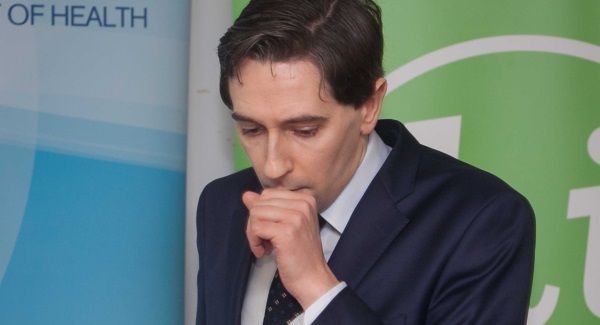
There is no escaping the sense of déjà vu as we find ourselves in yet another crisis situation. Health Minister Simon Harris described it as a “perfect storm” as more and more citizens succumb to a particularly virulent influenza. The thing is though that our health system exists in a state of almost permanent crisis; an event such as this simply pushes it into the territory of disaster.
Over the next few days there will be much talk of winter initiatives and special delivery units and new impetuses, but frankly anyone who genuinely believes any of the above will make a long-term difference, must be suffering from short-term memory loss.
Who’s to blame? Well we all are really. We haven’t gotten to this point overnight, but over decades. Of course the politicians bear much of the responsibility, but what they know is that the voter is more interested in a tax cut than a hospital bed, unless that bed is an acute requirement right at this moment. What happens when we are offered the choice between restoring a service and restoring pay? Well we might pay lip service to the former, but it’s the latter that we really want.
Why do we take to the streets in massive numbers to protest over water charges and not over such utterly appalling conditions in our health services?
We have a party in Government, Fine Gael, which abjectly failed on its promises to turn our health services totally around, as it did during the 2011 general election campaign . But it was not for that sin that we punished Fine Gael in the most recent election last March.
Before that, Fianna Fáil held the reins; what is there to report from that period except little better? We have a system that operates on the basis of apartheid. It discriminates between those who can pay for private health insurance and those who cannot. Mind you, it is a system that takes an equal opportunities approach of insult and inefficiency when it comes to accessing an accident and emergency department, whether you’re a private or public patient, and never more so that at times like the present when the already challenged system faces a major flu outbreak.

Minister Harris is bound to be feeling the pressure over the last few days as he tries to explain to those who are in need of hospital treatment, and their families, why they are facing war hospital-type scenes in their hour of need. But Simon shouldn’t feel too bad. After all, he is just the latest in a long line of Irish health ministers who have passed unspectacularly through Hawkins House. Of course, their hearts all individually sank when they sat in front of whichever Taoiseach it was of the day and were told that on the plus side they were in the Cabinet, but on the minus they were getting the health brief.
Afterwards they went out and bravely faced the media and uttered the familiar assurances that indeed they were delighted with their appointment and filled with a reforming zeal. Let Simon take heart from the fact that while a few of them came away with some “wins” — Mary Harney’s cancer strategy being a notable example — the majority singularly failed when it came to any meaningful reform of the system. He need only look to his immediate predecessor, Leo Varadkar, who shook the dust of the Department off his shoes with great relief last May, with not a lot to show for himself in terms of successes. Yet he now rides high in the Fine Gael succession stakes.
During our 2015 general election campaign, nobody really paid too much attention to what Fine Gael had to say on health — so poor was the party’s credibility after the utter failure to deliver universal health insurance. I remember attending the launch of the health aspect of their manifesto. If memory servers me, there was zero interest in their future plans, and questions from the media centred round topical health issues of the day.
Right now there are well over half a million people on our public hospital waiting lists, a number that is on a three-year upward trend.
It’s worth remembering that when they entered Government in 2011, Fine Gael announced a target that no one would wait more than nine months for inpatient or day patient treatment by September 2012. Needless to say, that target came and went and new ones set where the wait would be no more than 15 months. Shortly after his appointment, Simon Harris made clear that too was gone out the window. The newest ambition was to halve the number of people waiting more than 18 months.

During the general election campaign Fianna Fáil majored on the issue of fairness in society with leader Micheál Martin saying at the party’s manifesto launch that an economy can only be strong if it is built on a strong sense of social solidarity and if long-term investment is a priority. “’An Ireland for all’” means extra money in their pocket, lower childcare costs, a strong education system, a fair welfare structure and a publicly-funded health care system, he said.
Fianna Fáil’s research prior to the election told them these issues were important to voters and the party’s subsequent improved performance at the ballot box might incline one to think that people meant it. But listening to the debate on public sector pay over recent months, and the increasingly unreasonable demands from unions, you have to conclude that yet again the preference is for money in the purse or the pocket, rather than into public services.
There is no doubt but that the doctors and nurses trying their best to treat people in emergency departments these last few days are under extreme pressure. Aside from the current situation they are struggling continually in a system which does not have enough health professionals and has failed to attract more, despite recruitment drives. In truth, the best ad agency in the world would be hard pressed to put together a credible campaign that made our health system seem like an attractive option.
There is an irony though in that nurses are one of the groups seriously considering their industrial relations options after the generous deal given to their Garda colleagues just before Christmas. If they are successful we will, yet again, have more money going into pockets and not into a properly funded service.
In his latest ill-judged pronoucement independent junior minister John Halligan said on Wednesday the “chaotic” HSE should be disbanded. No it should not. It should remain in place and we should all raise our expectations and our demands and our sense of reality around how much money, and commitment, our public services need.
There is no short-term solution. Given the starting point it would probably take around 10 years to sort it all out. But it would be so worth it.

CONNECT WITH US TODAY



Be the first to know the latest news and updates