Shedding some light on cave mysteries holding stunning art created by early Europeans
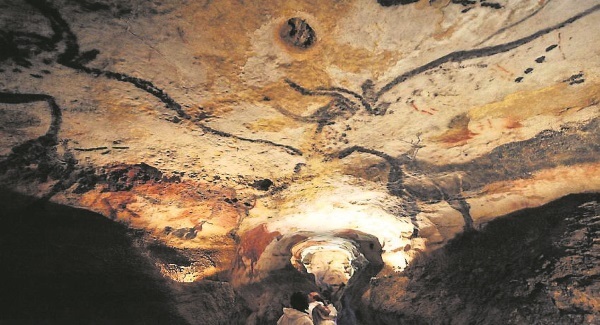
Damien Enright has some interesting artistic and historic insight into the cave artworks created by early European.

Shedding some light on cave mysteries holding stunning art created by early Europeans

In the case of caves, indoors is outdoors, and my outdoor resolution for 2017 is to visit at least three or four of the remaining accessible caves in France and Spain that contain stunning works of art created by early Europeans.

I will enjoy not only the beauty of the paintings but the wonder of them, along with the adventure of entering a world of prehistory where bisons and elks charged across landscapes and the human ambience was stone.

I’ve been meaning to make this pilgrimage for at least two decades, and had better do it soon. Already, three of the finest galleries of prehistoric art, Lascaux, Chauvet and Altamira, have been closed due to damage inflicted largely by human exhalations, surprising in these vaults, some larger than cathedrals.

I should have long ago visited those unique places where evidence survives of the human vision when the human world was young. I should have done it when I was young myself, when both they and I had suffered less usage. I danced around Stonehenge before they surrounded it with chain- link fences (for its own good) but missed Newgrange, when anybody who cared to do so could crawl into it. I missed these extraordinary caves as I drove past them in my old bangers of cars back and forth to Spain. How shortsighted, how stupid, how feckless!

In the early 1960s, I could have pulled in, hopped out of the car with a large flashlight and gone exploring, possibly with sons and daughters who would probably have been less gobsmacked than me (very young children, having no experience of the boundaries of human ability would not be particularly impressed if, say, the first white-bearded man they ever saw took off and soared into a tree and sat with the birds — after all, Santa Claus, who has a white beard, can fly — while those in their teen age years are often bored by historic artifacts.)

Anyway, I never made it to Lascaux or Altamira, and it is now too late; they are barred, and the opportunity has bolted. This was essential for their preservation. When the spelunkers and cavers first burrowed their way into these vast depositories of art (Altamira 1880, Lascaux 1940, Chauvet 1994) they were as pristine as when rockfalls sealed them off from outside life ten thousand years before.

The colours would have been vibrant — dyes from rocks and plants — and the spectators would have stood back, open-mouthed in awe. I say ‘spectators’ because, across the walls and cave roofs, herds of bison and galloping horses thundered, with woolly rhinos, mammoths, lions and bears, aurochs and ibex.

They would have picked out, with their carbide lights, hundreds of single images and huge, complex compositions, menageries of beasts jostling for space on great swathes of the walls and roofs above their heads. The Sistine Chapels of Prehistory, one might say, and each artist a singular Michelangelo, portraying the spirits of the creatures they were, perhaps, worshipping by depiction, their sustenance and staff of life.

As the millennia rolled, the paintings became more sophisticated. They had colour, and depth, three dimensions achieved by using the contours of the rock canvases.

All this was done 35,000 years ago. Similar perspective and expertise could not, I think, be found today. The skills and technology to work on rock, yes, but not the energy latent in the work. This was elemental, springing from an elemental contact with an elemental world.

The complex truth of why these animals were portrayed can never be known. Was it to honour the sprit of the creatures they relied upon for food, clothing and many other purposes? Was it to cast a spell over them, to make them run into the hunters’ traps and spears?

Was it simply to honour their beauty. Gorgeous flowers or stately trees or landscapes weren’t rendered and, as for depicting their own species, they portrayed themselves simply as stick men or boxes with protruding lines for arms and legs, minor creatures in an animal- dominated world. They sometimes left hand-prints to say they were there, but no faces.

Surely, had they wished to, these makers of masterpieces who, by the light of tallow torches or fires lit on cave floors, portrayed so well the musculature and latent energy of wild bulls charging, antelopes leaping, horses galloping could have portrayed in scrawled lines, stylised or photo-real, the muscles of a human shoulder, diaphragm or leg. Or, captured a face, as well-made as a chiaroscuro of Leonardo, a human image we could treasure, lighting the timeless dark? Why did they not?

x

More in this section

Revoiced

Newsletter

Sign up to the best reads of the week from irishexaminer.com selected just for you.

Cookie Policy Privacy Policy Brand Safety FAQ Help Contact Us Terms and Conditions

© Examiner Echo Group Limited