Higgins failed to seek Government advice before giving Castro eulogy
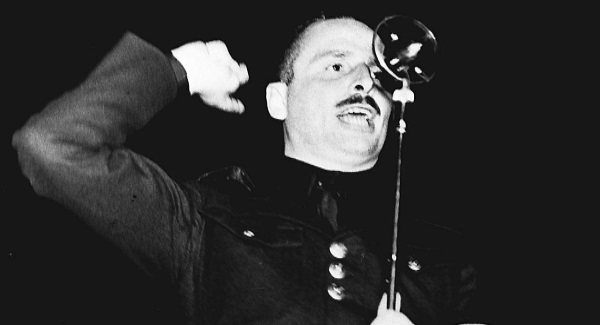

I COULD only think of Lady Diana Mosley last Saturday when I read our president’s rhapsodising of Fidel Castro. The great society beauty met Adolf Hitler; became enamoured with National Socialism; and left her first husband to marry the British fascist Sir Oswald Mosley. Reminiscing in a television interview much later about Hitler, who did things she regretted were “inexcusable”, she enunciated in an accent that could cut crystal how back then “the man I knew was somebody of whom one could not believe that”.
“Terrible things had happened”, but on dictators generally she mused that “people went to see them and found them charming”. It seems Fidel charmed Michael D. And Diana Mosley was right, most monsters can be perfectly charming.
What fascinates is the naivety of Higgins’ view of Castro. More worrying was the presumption on the part of our president to effectively set out the State’s position on Castro’s legacy at precisely the moment it became a matter of international contention.
It was always going to be thus at his death, but his death coincides with an unpredictable shift in power in the United States — a country with whom our vested interests are inextricably linked. Half-hearted excuses have been made for Higgins on the basis that he is entitled to his personal views and is a stout defender of human rights. Of course he is. But neither assertion deals with the point. It is not the president’s role to de facto, enunciate the State’s foreign policy. And foreign policy is an area where nuance matters and memories are long. This, for better or worse, is the prerogative of the elected government.
It is much more than mere convention. The Constitution specifically requires that “the President shall not leave the State during his term of office save with the consent of the Government”. Integral to this is that it is the Government not the president which leads in setting out Ireland’s position in the world. It is not superseded or abridged by the president’s “personal views”, whatever they may be.
To be clear, there would be no issue had there been simply an expression of sympathy. Instead, there was an entirely inappropriate eulogy, which set out the State’s position in ways that undermined the Government’s prerogative abroad and ignited political controversy at home. Last Sunday’s rejection by the Áras press office of widespread concern, cameoed a president who foolishly failed to seek the Government’s advice before he acted and refused to countenance well-founded public criticism afterwards.
President Higgins signs book of condolence for Fidel Castro https://t.co/Khkpzx56Cf pic.twitter.com/RZKBF2VpHB
— Irish Examiner (@irishexaminer) November 28, 2016
Wading into political controversy at home, was as ill-judged as intruding into foreign policy. Speaking in the Dáil on May 11, 1937 during the debates on the constitution, then Taoiseach Éamon de Valera said that “the president should never be involved in what you might call party politics or in matters where there are differences of party view”.
The differences in party view are very clear. For some the rose-tinted glasses required for a lifetime looking leftward, obscure the blood on Castro’s hands. Of course, he did good things. Even Lady Mosley’s friend did those. But Castro’s greatest achievement is that he survived. His Junta is in place. The graves have never been exhumed.
Even if Higgins’ naivety on Castro is fascinating, it’s still oddly commonplace. What becomes ever more apparent to me over time, is that the essential differences are not between Right and Left, but between liberal democracy, and those on the Right or Left, who fundamentally believe they know better how your life should be run.
In Ireland since the 1960s politics has played out as a comedy of manners, where corporatist socialists on the Left have made careers harrying a largely discredited corporatist Catholic State to their Right. The slogans were opposed but the urgent need to organise your life, on their precepts, display astonishing similarity.
Each requires its outsized heroes whose feet of clay are placed on pedestals. Surprisingly widespread elements of a now largely extinct, militant Catholicism in Ireland, once had considerable affinity for General Franco. Like Castro he died in his bed. But his power did not survive him, and neither will Fidel Castro’s.
Not to be outdone, Mao and Fidel arrived as if on cue. In the great tradition of the man on horseback, they enacted power in outsized ways and rode roughshod over their enemies. They succeeded in exhilarating fools, who mistook the civil right to protest in their own societies with participating as pretend-soldiers in solidarity with causes far away. Had they dared to protest there, they would instantly have been locked up or worse. In Castro’s Cuba it was frequently far worse.
The co-option of outlandish heroes to causes, the need for a self-promoting affinity with distant struggles, in ways that require little risk to personal comfort, is the comedy of manners played as parlour politics. It mirrors exactly the monumentalising of saints in societies that never reflected their virtues. It is about trainbearers who imagine they are wrapped in any cloak they help to carry.
So Fidel Castro, Yassar Arafat, Mao, and more were adopted by the Western left as they grew old and fat at the trough of capitalism, and remain now as icons of only slightly misspent, dishevelled youth. Because the lives they actually lived out were so pallid, and the promises they held out so unrealised, characters of stronger colour were required to distract from failure. It is fascinating how our president, a sociologist, was so sucked in by Castro. But as Lady Mosley remarked dictators can be charming, when you visit them. Living with them is another matter.
President Higgins: Criticism of Fidel Castro tribute unwarranted https://t.co/WQGEMm0W1X (DOD) pic.twitter.com/L86wp4rjzU
— Irish Examiner (@irishexaminer) November 28, 2016
Much is made of the achievements of Castro’s Cuba, its literacy and healthcare overriding its shambolic economy. General Pinochet, an equally odious but less romantic figure than Castro, left behind a country characterised by success of sorts.
Nobel Laurate, Milton Friedman, lauded the ‘miracle of Chile’ whose economy prospered under a perfect blend of neoliberalism and autocracy. Strangely, that Latin American ‘success’ hasn’t a place in the story book. Castro’s genius, besides his longevity, was that he was a rebel with a cause who was a master manipulator of others without one and who mistook his for theirs. Pinochet was an altogether more buttoned-up personality.
On Monday, the Taoiseach arrived in a Vatican he recently excoriated. Gerry Adams now prepares to be our man in Havana for the funeral of a ‘hero’ who never surrendered. You can see how Gerry must wish some of that washes off, on him.
Once he too was a freedom fighter. Now he marches against a public utility called Irish Water in one of the most rain-sodden countries in the world. Pope Francis is a Latin American caudillo in the Castro mode, charismatic in public, charming to guests but a brutal enforcer within. Projecting power is an alchemy of benignity and menace. It is about holding them in thrall.
President Higgins criticised for Fidel Castro statement https://t.co/07zCbHUEOG pic.twitter.com/wUQv3BhnvQ
— Irish Examiner (@irishexaminer) November 27, 2016

CONNECT WITH US TODAY



Be the first to know the latest news and updates