Leaves of autumn inspire season of goodwill in passersby
The leaves underfoot are dry as potato crisps, lighter and every shade from pastel yellow to blood red. They crunch underfoot; they blow around the yard in eddies and whirlpools, writes Damien Enright

Leaves of autumn inspire season of goodwill in passersby

Falling from trees, they’re sometimes caught by a breeze. As they fly past, I can’t help instinctively looking up for butterflies. Today, November 2, I saw a lone red admiral.

The sunny days and misty days of these unbroken weeks of dry weather have been inspiring, elevating and just plain lovely to see. When showers came on the thirty first day, another dry spell began within 24 hours.

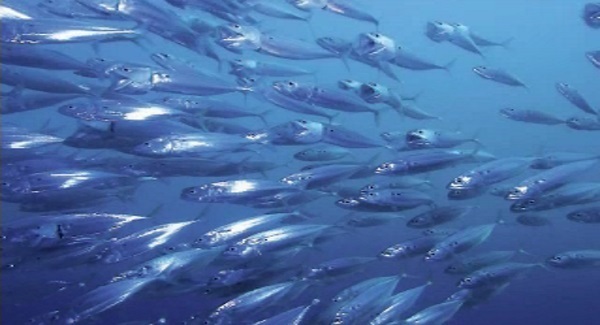
Out walking, everybody I meet is full of cheer. We talk of the summer that didn’t happen. We talk of the sea, not so many mackerel this year, no shoals coming up the bay and driving the sprat to throw themselves out of the water, silvering the rocks. No mackerel lying gasping on storm beaches, while porpoises patrol beyond the surf. No mackerel snatching the hooks on feathers, so that barely have the lures hit the water before they’re laden with fish.

However, while we summer anglers lament the passing of the “mackerel-crowded seas”, as WB Yeats called them, the fishermen rejoice. The Irish mackerel quota for 2017 was increased by 10,500 tonnes, €86m worth, at the international fisheries negotiations in Clonakilty, Co Cork in October. Ratified by the EU, Norway, Faroe Islands, Iceland and Greenland, the premise of the officials was mackerel stocks are burgeoning and the quotas are sustainable. I take it they are correct. However, those stocks must be staying far out to sea: year upon year, we catch fewer off the rocks and even fewer off the pier. Lower sea temperatures may be a contributory cause.

Meanwhile, Irish researchers have advanced scientific understanding of the great mystery of eel migration. Johannes Schmidt’s researches in 1920 concluded that Irish and other European eels left our rivers to swim non-stop to the Sargasso Sea off the Bahamas (6,500 km from Ireland, 9,000km from Greece) to spawn once before they die. It seems they may make the journey via the Azores, 2,000km from Ireland. The oceanic journeys of 44 four satellite-tagged Irish eels were monitored and one recovered tag showed a journey of 6,982km. Somehow, the eel had evaded the denizens of the deep during the 273 days recorded. Eel navigation to the Bahamas and the arrival of elvers on the coasts from which their parents migrated is another of nature’s miracles.

Not quite equalling the pinpoint accuracy with which swallows return from South Africa to the same barns, the restocking of the same estuaries and rivers by the tiny elvers is a wonder indeed.

Even more wonderful and sustaining than the creatures in it, the sea itself has not only nurtured Man through his childhood and sustained him into adulthood, but continues to do so. However, it is, we know, a depleting resource. Badly needed are international accords protecting the open, ungoverned oceans where the only limitations to exploitation and annihilation of entire species is the size of the boats and the length of the nets they carry.

It is good news then that, also in October, Russia and 36 other states signed an agreement to make Antarctica’s Ross Sea a Marine Protected Area from December 2017.

In this area, 72% will be a ‘no-take’ zone, prohibiting fishing; in the rest scientific fish and krill harvesting will indicate the impact of fishing. Presently, over-harvesting of krill endangers all marine life, while toothfish stocks are rapidly depleting. It was via the sea and its resources that Man colonised the furthest habitable reaches of our planet. In 2011, Australian and Japanese scientists found what is thought to be the world’s oldest fishhook in a cave in East Timor. Made from shell, it is 23,000 years old. Nearby bones from 2,843 individual fish reveal that Man was already deep-water fishing 42,000 years ago, catching oceanic species like tuna which could not have been caught inshore.

Such maritime skills, or genius, had enabled humans to cross hundreds of kilometres of sea to reach Australia 8,000 years earlier. The most remote Pacific atolls, pin-heads in the ocean, were found and settled by Polynesians navigating in ocean-going canoes 3,000 years ago.

Researchers excavating a 35,000 year old cave settlement in Okinawa, Japan’s southerly island, discovered charred remains of frogs, birds, small mammals and eels suggesting these early humans cooked food. They were also, possibly, epicurean in their tastes, evidenced by the size of lobster remains indicating that they were only caught in November, when lobsters are at their best.

More in this section

Revoiced

Newsletter

Sign up to the best reads of the week from irishexaminer.com selected just for you.

Cookie Policy Privacy Policy Brand Safety FAQ Help Contact Us Terms and Conditions

© Examiner Echo Group Limited