Bruised electorate reeling from a total lack of Fine Gael leadership

AT THE conclusion of her interesting report on how Fine Gael banjaxed their general election campaign author Marion Coy quotes the American poet Maya Angelou: “I’ve learned that people will forget what you said, people will forget what you did, but people will never forget how you made them feel.”
When thinking of the sort of emotions that Fine Gael elicited from people during that period of time it is a rather rude phrase that comes immediately to mind, but it is sufficient here to substitute “royally cheesed off” in its place. The Coy report goes into considerable detail as to how the party must, and quickly, mend its ways. But instead of noticing progress, as the Budget fast approaches, and a seeming freefall develops around national industrial relations issues, there is a strong sense of déjà vu.
The Angelou quote gets to the heart of the failings in the relationship between Fine Gael and the Irish voter. The party raised unrealistic expectations during what Coy describes as the “dour” election campaign, and those carry through now as unrealistic budget expectations, and a slew of daft pay claims. There is an alarming militancy in the growing threats of strikes and industrial action and high expectations of next Tuesday’s budgets.
But should we have expected otherwise when the Government party went into the last election with the generic message of economic recovery and how we were well able to afford to reduce the “hated” universal social charge. They reap now what they sowed then with their expectations and promises; the irony is that despite those promises they still lost 26 seats.
It is almost impossible to imagine what is going on behind the scenes with this budget — given the introduction of Fianna Fáil to the equation, with their confidence and supply arrangement. They want their imprint on the budget, but not so much that they will get into trouble over any aspects of it. It would be interesting to see if they requested to see it in its entirety, in advance. That would be a hugely tempting prospect, but it would then make it “their” budget as well. It’s a fine line they tread, but so far they’ve kept their balance rather skillfully.
Fine Gael remains on the back foot. That all important conversation of how ours remains an exceptionally fragile economy that needs more time to stabilise was never had during the election campaign. Now when they throw their hands in despair and say the money is simply not there for the increasingly ludicrous pay claims they are being hoist by their own petard.
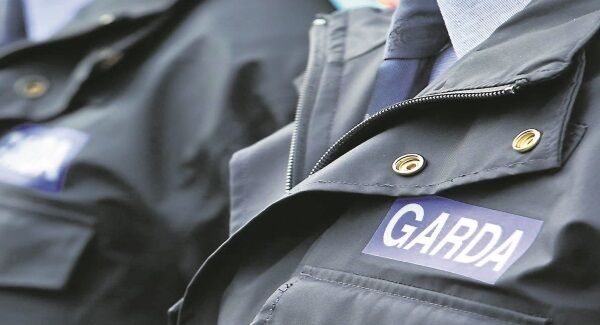
There is a real sense of runaway train about the current industrial disputes, and the need for pay restoration, not least with An Garda Síochána. It was in late July that the Minister for Public Expenditure and Reform Paschal Donohoe asked for views on the establishment of a public service pay commission. This is an independent advisory body to look at issues on public service pay. The closing date for submissions was the end of August.
The commission would not duplicate the work of the State’s existing industrial relations bodies, such as the Workplace Relations Commission and the Labour Court, nor would it interfere with the Government’s ability to directly negotiate with its employees. However the manner in which our industrial relations situation has been so badly deteriorating the commission’s speedy establishment would bring some much needed impetus. But we’ve no sign of it yet.
In a discussion on our worsening industrial relations landscape Siptu president Jack O’Connor said last week on Radio One’s Late Debate that he believed the Lansdowne Road agreement needed to be renegotiated.
Under that agreement, the Government has ringfenced €267mn for pay restoration this year, €290m in 2017, and €287m in 2018. Those amounts already take a massive wallop out of what is available to run the rest of the country, not least our health services, or to provide much needed housing.
But Mr O’Connor was firm in his view that workers are fully entitled to expect a payback when the economy “grows by levels and degrees that are way in excess of what was envisaged” when the agreement was negotiated. So there — whether you agree with it or not — was the union leader laying on the line what his members are entitled to now.
So where is the political leadership? There is a distinct lack of it from Taoiseach Enda Kenny as we face into this winter of discontent. It is worryingly reminiscent of how the Fine Gael leader handles certain matters — failing to take control when it is clear that he needs to do so, and then allowing a near calamitous situation to develop before he steps up to tackle it. There is no sense of him getting ahead of this issue.
That approach is complicated by the uncertainty that now surrounds his ongoing leadership of Fine Gael and therefore his appointment as Taoiseach.
Returning to the Coy Report on the general election performance, it states there was an acknowledgement the party had made some poor decisions and “its capacity to respond quickly and decisively to national sentiment was flawed”. The national sentiment back then was a mixture of many things. There was justifiable weariness and genuine exhaustion from the hardship of the recession, but there was also crankiness, unreasonableness, and a bloody mindedness excessively fuelled by many politicians on the Left.
Fine Gael did not just misread that situation, it failed in its responsibility, as the main party leading the country, to help shape a more positive and responsible sentiment that centred around what was good for the country and its citizens in the future.
Coy writes towards the conclusion of her report that in 2016 we may have had a more stable economic environment, but as a people we were, and are, still bruised and damaged. The damage is more than economic.
“People have less confidence in their futures; they have less trust in institutions; they are angry because their expectations for themselves, their parents and their children are no longer secure. Generalised anxiety is evident everywhere and there are many people who feel their anxieties are not understood.”
She lays it out to FG. If they want the support of voters they must build new relationships with them and those must be built around shared approaches to problems with “an acknowledgement that voters are not to be treated as unthinking pawns in an episodic electoral drama”.
Fine Gael’s problems did not begin in the lead up to the last election. As Maya Angelou tells it people will never forget how the party made them feel. In that case FG better quickly take on board the fact that the advice in this report is not just to be taken on board in the six weeks or so ahead of the next time they ask the people to give them a vote.
There is an alarming militancy in the growing threats of strikes and industrial action
CONNECT WITH US TODAY



Be the first to know the latest news and updates








