Britain to trigger Article 50: Date adds to doubts on Kenny future
In time, depending on the result, that vote may be recognised as another of the thousand cuts that seem aimed at draining the life blood from the European project. Like those faraway First World War battles fought over what was once the Austrian-Hungarian empire, between armies wearing spectacularly befeathered hats, the import of Hungary’s vote may not immediately stir us but maybe it should. It the opinion polls are accurate it is likely to prove another sad moment when a quickly turning tide leaves the largely liberal, humanitarian values that have sustained European peace and driven social evolution for more than half a century high and dry.
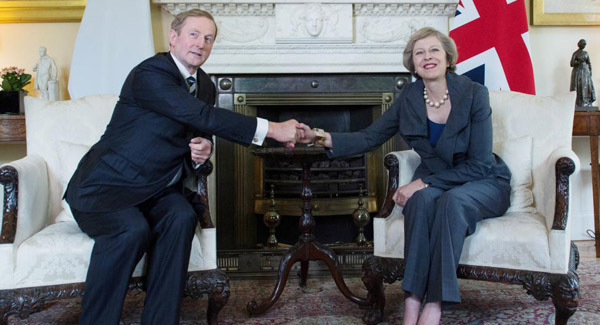
The vote, if it endorses the anti-immigrant hostility of the country’s prime minister Viktor Orbán, seems part of a creeping process rather than a decisive body blow to the EU. However, there is nothing creeping or distant, about yesterday’s announcement by Britain’s Prime Minister Theresa May that her government will start the formal process of Britain’s divorce from the EU by triggering Article 50 in March. Even though Britain’s relationship with the EU, especially the stridently isolationist and nationalist Tory eurosceptics, has been strained for decades the formal announcement that divorce proceedings have been given a date for a court hearing must provoke great disappointment.
Ms May’s announcement also confirms that a second vote will not happen. This think-twice-before-you-jump plea was energised by the fact that the margin of the vote to leave — 52% to 48% — hardly seems to carry the kind of democratic authority needed to legitimise such spectacular redrawing of maps. That Scotland and Northern Ireland will be dragged out of the EU against their wishes must sow the seeds for uncertainty and put political realignments unimagined before the June 23 referendum back in play and in a very active way.
It must irk Conservative eurosceptics, if they think about Northern Ireland at all and that is questionable, that by their secession from the EU they will bring the debate around Irish unity in from the extreme fringes of Irish life and right into to the very centre. They have done more for the prospect of Irish unity than Gerry Adams has in the 33 years he has presided over one of the many strands of Irish nationalism. This assertion stands despite the brave dismissals of DUP leader and NI First Minister Arlene Foster and her community. They have been, though they dare not admit it publicly, betrayed by the English nationalists they invested such great faith in.
Yesterday’s announcement is about far more than relationships on this small island. It will force us to reconsider our relationships with our nearest neighbour, with the EU, with America and probably others. We have to do this as a small, open economy still bruised by the transgenerational burden imposed on us by EU authorities when our banks used European investors’ money to bet the farm and lost. This is the biggest challenge we have faced since Enda Kenny was elected to the Dáil in 1975. The immediacy of the March date must sharpen the questions around his waning leadership.
CONNECT WITH US TODAY



Be the first to know the latest news and updates