Reducing food waste could save you €1000 per year
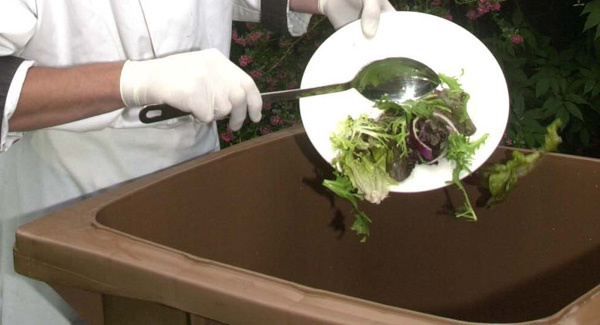
That’s the cost of food waste to some households. As the world struggles to feed an ever-growing population, renewed efforts are being made to reduce such waste. At the same time, ironically, studies show one-in-10 people in Ireland suffers from some form of food poverty.
Latest figures from the UN Food and Agriculture Organisation (FAO) show at least 1.3 billion tonnes of food is lost or wasted globally every year, in the field, during transport, in storage, in restaurants, markets, and homes.
In Ireland, more than a million tonnes is wasted, about a third of that in homes, costing around €440m. About 60% of it is avoidable and most could be saved with better management, according to StopFoodWaste.ie. The cost to households can range from €400 to €1,000. What’s thrown out is made up of leftovers, gone-off fruit and vegetables, and items which have passed their sell-by date. And the waste involves producers, retailers, and consumers. At present, about 50% of all rubbish is recycled in Ireland. But a big proportion of waste going to landfill is food. As it decomposes, it releases methane, a greenhouse gas.
It seems many people are confused by the terms, ‘use by’, ‘sell by’ and ‘best before’. A Food Safety Authority consumer survey found almost 40% of people will not eat food that has passed its best-before date, even if it looks and smells fine. However, best-before dates are meant to be a guideline only.
Food waste can be composted to make soil fertiliser and biogas which can be used to generate electricity. The Bia Food Initiative, under which businesses give surplus food to charities like St Vincent de Paul, in Cork, is a worthy and expanding project, as is the FoodCloud which works with 350 charities.
In France, following a campaign by shoppers and anti-poverty groups, a law has been enacted banning supermarkets from throwing away or destroying food. The hope is that other EU countries will follow suit.
In the US, businesses, government agencies and charities have combined to form ReFED to tackle the food waste problem. The US Department of Agriculture and the Environmental Protection Agency has set the first ever national food waste reduction goal which aims for a 50% waste cut by 2030.
The 412 food rescue group, in Pittsburgh, Pennsylvania, harnesses the power of technology to match food donors and beneficiaries and works with volunteers to make it all happen. The team collects fresh, healthy food that is not saleable but still perfectly good and distributes it to community organisations that serve the needy. In the Boston area, volunteers collect surplus from farms to fill hungry bellies. In 2015, they gleaned 66 crop types from 54 different farms.