Set a date for decisive vote on abortion - UN criticises Irish abortion laws
Fear and exaggeration are used to try and sway undecided voters. Already, almost two weeks before the first ballot is cast, there are suggestions that whatever the result is that David Cameron’s Conservative Party will be irrevocably split and that even if Britain votes to remain a member of the EU Tory eurosceptics will continue to agitate to leave the EU and to replace Cameron as their leader. EU membership may be the immediate issue but it is not hard to argue that is a symptom of a far wider, deeper cultural war or that we have our own version — or versions — of that social schism.
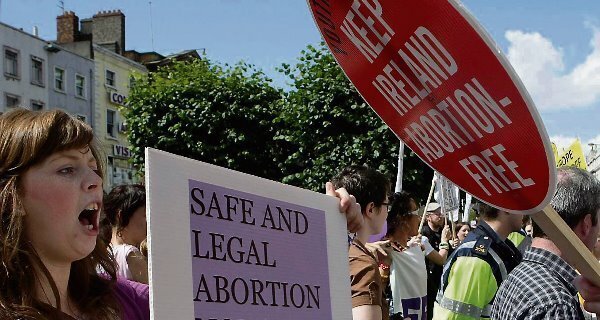
In so many ways, Britain’s nasty debate over EU membership runs parallel to Ireland’s never-ending, toxic division over abortion. The idea of compromise does not arise, one side is determined to prevail over the other. Each side is certain that it is right and that their opponents are, if not evil, then something pretty close to it. Neither side seems even interested in trying to consider the issue from the other’s perspective. Minds are closed and hearts are hardened.
Yesterday’s report from the United Nations that Ireland’s constitutional abortion ban subjected a woman tragically carrying a foetus with a fatal abnormality to discrimination and cruel, inhuman or degrading treatment will do little to change that position.
Those who favour abortion, limited or unlimited, will feel obliged to increase their demands for at least a chance to vote to repeal or modify the Eighth Amendment. Those opposed to abortion in any circumstance will reiterate arguments that have changed little since abortion was first an issue for Irish voters. The impasse will continue and the Government will give thanks that the summer parliamentary recess is on hand and that it will not have to engage meaningfully on the issue in the immediate term. This reluctance to engage is understandable because, like David Cameron, the Government, any government, will pay a high price no matter how any vote might go.
Despite this, abortion remains a reality of Irish life, albeit one we outsource. Over 3,500 women from the Republic travelled to Britain for abortions last year, according to recent British Department of Health figures. In all, there were 5,469 abortions to women resident outside England or Wales, compared with 5,850 in 2012 — 67% of them came from the Republic, 15% from Northern Ireland. Though these figures may be an underestimation the number of abortions carried out in Britain on foreign women – not just Irish – is at its lowest level since 1969. This issue needs to be resolved one way or the other and the only way that can be done is through a referendum. It is time to set a date in the not too distant future and prepare to accept the result — whatever it may be.