Hawks in flock — a sight to set birders’ hearts racing
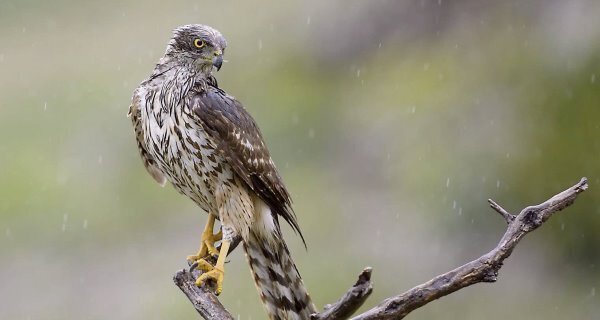
Flushed with excitement, they had just returned from the spectacle of a sky full of hawks, in flocks, flying north over the Straits of Malacca in annual migration from Sumatra to Malaysia, thence to Siberia to breed.
Raptors are, almost always, viewed as solitary birds, or are seen in pairs. Flocks of raptors, huge birds against the clear blue sky, were a sight to set their birders’ hearts racing. Oriental honey buzzards, (Pernis ptilorhyncus), birds with a wingspan almost as wide as my arms outspread constituted 90% of the migrants.
I could well imagine the sight of these huge birds soaring on the thermals. Beneath them, ships of all flags and sizes passed through the Straits; they carry over 94,000 vessels each year, transporting one-fourth of the world’s traded goods. For negotiating that stretch of water, I’d rather be a honey buzzard in the sky, than a duck on the water.
Annually, some 40,000 migrating raptors of 11 species make the crossing, most in mid-March. The lighthouse at Cape Rachado, a.k.a. Tanjung Tuan, less than 100 Km south of Kuala Lumpur, is the best viewing point.
The forests nearby, where the birds stop to rest and replenish, are, however, under threat from golf course developers. But there are thousands of protestors who see the value of the site, not only for the birds but for the local economy.
Strangely enough, honey buzzards, for all their size, largely live on bees, plundering the combs and eating the larvae, pupae and adults, of social bees, wasps and hornets, besides snacking on other insects and even frogs, mice and fledglings.
Like the common buzzard, increasingly present and breeding in Ireland, their size is disproportionate to their prey. Some of my West Cork neighbours have reported their shock at seeing these ‘huge’ birds swooping across the road in front of their car.
There is also a northern race of honey buzzard (Pernis apivorus). A few pairs breed in Britain and Northern Ireland. A note in my battered field guide tells me that I saw one “in Croatia, on motorway crash rail, 24 Sept, 2010”. Of this, I have no recollection whatsoever.
These days, the first swifts have arrived in the Canary Islands. I saw one rocketing between the bar at which I was sitting, and the sea over which the sun was setting, the other evening.
The rock doves around here fly pretty fast but this bird was faster, jet black, and a quarter of the size. I concluded that I’d seen the first Plain Swift of the year in Valle Gran Rey, La Gomera. I’ve seen two more since, so my identification was right.
The same bird could well have got a shock with the weather. The perception is that the Canary Islands enjoy constant sunshine. and temperatures never fall below 20C. Not so! One day in early March, the temperature was barely 2C above that of Bandon, Co Cork.
It was bizarre to see holidaymakers huddled in hoodies and anoraks on the beach. In 34 years of visiting the Canary Islands, I had never known it colder. Mount Teide, 25km across the water on Tenerife, was wreathed in snow to midway its height of 3,700m.
Perhaps the chill was a fortuitous acclimatisation for our return in two weeks time.
But since then, the Canarian weather has since cured. Wildflowers carpet the road verges and abandoned terraces, where these days only a few goats and their shepherds roam. Goat meat is extremely good here; the goats forage on rosemary and thyme, wild herbs and aromatic grasses.
Canaries are in bright breeding colours and singing their hearts out, as are blackbirds, blackcaps and ringneck doves, if non-stop repetitive cooing can be called song.
From home, I learn that the ravens have eggs in the nest and that the herons, in the tall trees between our house and the sea, are already hatching.
I received a photo of a warm eggshell, newly vacated, found on the forest floor by my son’s wife, a lovely bird’s egg blue. She wondered if it might be an offspring of our wild but regular visitor, Herr Ron.
He is, of course, more voracious than ever, now demanding food for his mate and chicks as well as himself.
Recently, his mate arrived in our garden and watched with evident envy as His Elegance gulped down by-catch fish, supplied by my son. But did she dare step nearer? No. His Elegance cast a warning eye upon her. “This is my patch!” it said.