With Luas at a standstill, it’s time to discuss future of public transport
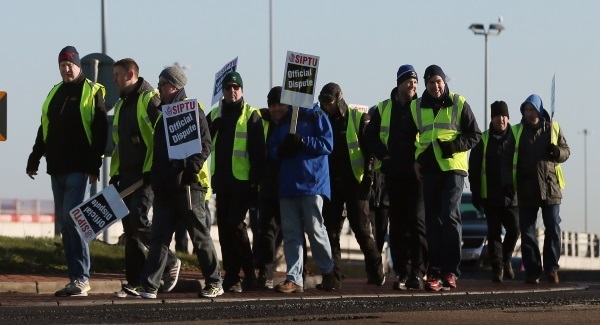

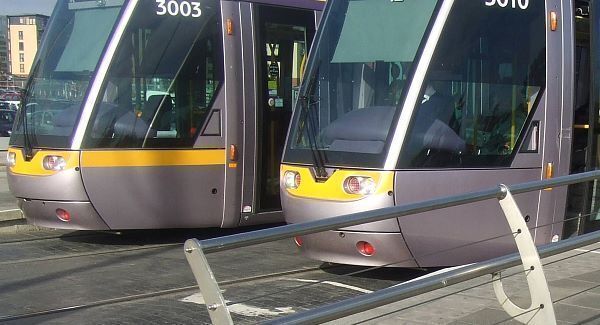
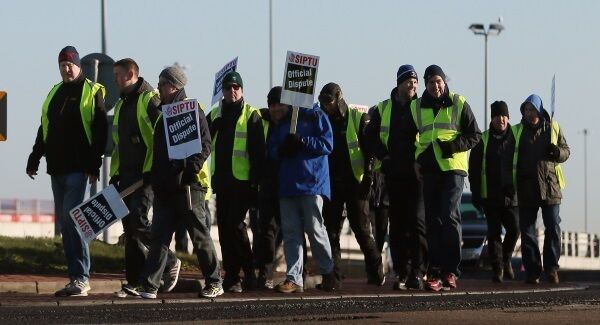
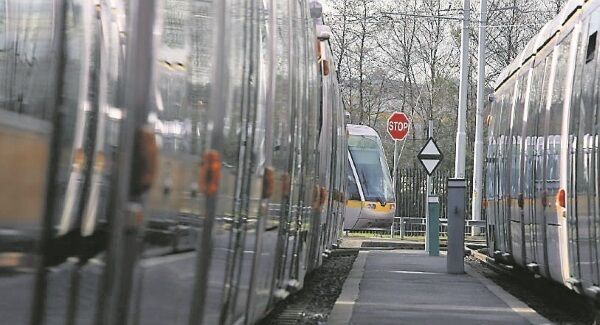
AS I WRITE, talks continued yesterday at the Workplace Relations Commission to avert a Luas drivers’ strike tomorrow, St Patrick’s Day. It’s all hands on deck to ensure people get where they need to be. More strikes are planned on Easter Sunday and Easter Monday, and on April 2, 3, 23, and 24.
There are worse things than a strike, however, including a flawed settlement. The bigger issue is not how to get from A to B, but how we are going to deliver investment in public transport over the next decade.
Amid talk of a housing crisis, too little attention is paid to underlying issues of land use and transport. Good transport links make places accessible to live and density is required to make services, including public transport, sustainable.
Tyrrelstown in Mulhuddart, Co Dublin, is near the Meath border and a case in point. Leave aside the nonsense about evil international vulture funds, evicting Irish tenants Famine-style, and look at Tyrrelstown on Google Maps for a bird’s eye view. In planning terms, it is an unconnected no man’s land. How was such a place ever built?
The parody about foreign vulture funds belies the backstory. Firstly every buy-to-let is a vulture fund. Secondly, while owned by us through the Government, Irish banks have been responsible for evicting tenants. Thirdly, Irish residential property badly needs large, long-term investment across the board, not least in long-term residential property rental.
The reason for threatened evictions in Tyrrelstown is because, modest improvements notwithstanding, Irish law barely protects tenants. The identity of the landlord is a sideshow and use of the word vulture is caricature for serious consideration of the real issues. So-called foreign vulture funds are entitled to avail of the same lax laws that happily facilitate every Mom and Pop buy-to-let hike their rents and kick out their tenants.
Building Tyrrelstown-type developments, beyond hope of a Luas line, facilitated marauding small scale investors to spill out of Dublin towards the Meath border and beyond. In a still largely unreformed scenario for tenants, Tyrrelstown is a very messy aftermath.
That’s why the Luas strike is more important strategically and more involved than meets the eye. The strategic issue is how we afford greatly enhanced mass transport systems in main cities, sooner rather than later. These both allow and depend on population density. Decisions about land use are central to opening up land for new development and constraining where development can go. In every respect, Tyrrelstown is a showcase of what went wrong from the get-go.
In the late 1990s a fundamental decision was made by the then government not to allow CIE run Luas and instead put the operation of this public service out to tender by a private company. Though not in the Department of Transport then, or Department of Public Enterprise as it was called, the Progressive Democrats deserve some credit. Along with the late Séamus Brennan’s decision to ensure the survival of Ryanair in opposition to a predatory monopoly owned by a then State-owned Aer Lingus, during his first term as transport minister, it was arguably among the most fundamental modern transport policy decisions made.
Everyone knew it too, which is why it was fought tooth and nail, before, during, and after, not least by the CIE group of companies and the trade unions.
The dysfunctional, but symbiotic, relationship between the CIE company management and the unions was the reason the Luas was put out of their reach, where effectively it remained until now. In retrospect there is an understanding in a more standalone Irish rail that its pull on further investment, let alone a new operating system like Metro North, is diminished by its industrial relations culture.
The unions, relatively reduced in the expanded economy of the boom in a weakness masked by social partnership, saw public services, as distinct from the public interest, as the Alamo they must defend to the last.
Brennan, in his second iteration at the Department of Transport in the noughties, provided them with another major battle when, in the teeth of opposition from vested interests, he split up the constituent parts of Aer Rianta into separate airport authorities. He failed, however, in putting operation of public bus services out to tender.
In tandem, Mary Harney was ultimately frustrated in delivering promised private hospitals, collocated with public ones. What is at stake in the Luas dispute is a very small part of a bigger, longer dispute between the public sector and the public interest and trade unions almost entirely preoccupied with representing the former at the expense of the latter.
Trade unions, while they may be the most conspicuous part of the opposition, are by no means the most important. They, at least, have the moral authority of existing to defend their member’s interests first. The same cannot be said of senior management across the public service, where, individual efforts aside, ultimately and institutionally favour embedded insiders and service deliverers against the innovation or disruption required to meet the needs of the public interest.
Politics runs right across all of this. The issue is not whether the Luas runs tomorrow, which is utterly unimportant, it is the cost base within the system when it is next put out to tender in 2019. That is the game, pure and simple. In a scenario where public investment may be back on the cards, who is going to control it? Embedded public sector companies can’t compete on price so the cost base has to be inflated all around.
This dispute is a rearguard reaction of threatened but still powerful vested interests. The move-on is that in our more disputatious politics, there is not only feral competition to master outrage in political terms that competition is mirrored within trade unions. The demise of Labour is paralleled by the rise of its competitors in unions like Siptu, which conspicuously failed to hang that party’s banner from Liberty Hall during the election. It is no accident this dispute coincided with a general election.
The two big transport developments next year are the opening of the new Luas Cross City line and the open tendering to transport companies, including incumbent public ones, of operation of a limited number of bus routes. The latter is small stuff but strategically pivotal. With different operators delivering separate parts of the public transport system, shutting the system down at all, let alone in one fell swoop, becomes ever more difficult.
In one sense, the Luas dispute is continuation of competition by other means. Laying the groundwork now for the terms and conditions of the 2019 Luas contract is the medium-term objective.
To be delivered in scale, housing depends on ramping up public transport capacity. One will not happen without the other. Public transport is the jugular of any large city. Its efficiency and cost is pivotal. It ties the whole thing together.
This dispute is a rearguard reaction of threatened but still powerful vested interests

CONNECT WITH US TODAY



Be the first to know the latest news and updates