Forming a government: Votes set the agenda, not politicians
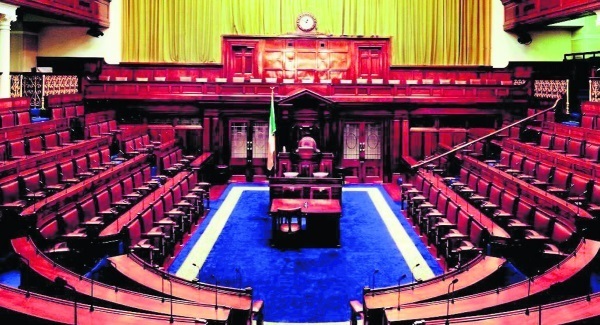
The conservatism, and psychological and emotional entrenchment of our main political parties often lags far behind the public mood, and the electorate’s enthusiasm — and gnawing hunger — for groundbreaking change. The once-in-a-lifetime mandate for reform given to Fine Gael and Labour in February 2011, was an example of that hunger, though, predictably, real reform was not delivered. We are stuck in a backward-looking construct again, even talking about Dáil reform as if the process, rather than the intent, was the issue.
The one-dimensional objectives of Fine Gael and Fianna Fáil — power at almost any cost (let’s not pretend there is any other) — have defined politics as tribal, rather than as a positive, transformative process. This polarisation has been destructive, petty, often nasty, and is the main contributor to the dysfunction of this society. There is hardly a problem — housing, health-provision, a creaking education system, a dreadful lack of preparation for climate change, rural and white-collar crime, the list is extensive — that could not be far better tackled by a united, centrist party, coalition, partnership, call it what you will.
There is hardly an overly-indulged, vested interest group — insurance and pension companies, public sector unions, the medical and legal professions, the disproportionately powerful farm lobby, the drinks industry, and, most especially the banks — that fears a government made up of just one of these divided-and-conquered parties. They know that, standing alone, neither party is a match for those powerful interests. Each is far too dependent on the tiny, decisive number of votes that makes the difference between power and oblivion in opposition, so they must tread lightly, no matter how pressing the issue or just the cause. Freed from those constraints, it is possible to imagine progress on a whole range of issues, by a coalition of moderates. And that is an increasingly attractive option for a good number of voters of both those persuasions. A weekend Sunday Business Post poll recorded that most Fianna Fáil and Fine Gael voters want a coalition, rather than another election — the obvious objective of Sinn Féin’s stormtroopers, who showed their hand so plainly when the 32nd Dáil sat for the first time, last week.
Despite Micheál Martin’s insistence that his party does not have a mandate to support Fine Gael, 57% of the Fianna Fáil voters surveyed thought they should compromise to form a coalition with Fine Gael. This, and the 72% of Fine Gael voters in the same pragmatic frame of mind, confirm that the electorate is again ahead of the politicians. They also suggest that the Fianna Fáil politicians’ no-deal clause in their manifesto was strategic, rather than principled.
Most politicians are lucky, if, during their career, they find themselves even once in a position to fundamentally reshape our world for the better. The 94 deputies — out of 158 — who make up the Fianna Fáil and Fine Gael parliamentary parties are in a position to do that. It would be something pretty close to a criminal betrayal if they did not at least try.
CONNECT WITH US TODAY



Be the first to know the latest news and updates