How I hooked up with a beautiful bonito on La Gomera
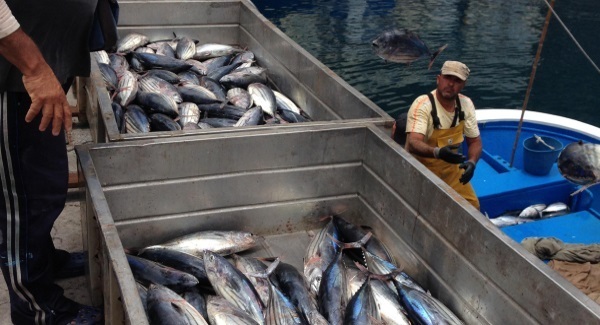
THE other morning, I was down at the pier in Valle Gran Rey, La Gomera, when a two-man open fishing boat pulled in, brimming with bonito (Sarda sarda), 50cm long, tuna-like fish as beautiful as their name (which means “beautiful”).
How I hooked up with a beautiful bonito on La Gomera

I bought one from the men aboard. I was sorry to see that its mouth was torn, (the mouths of all the fish in the glittering pile showed damage), sorry for the fish because of the pain it suffered, but happy for the local dolphins that they were in no danger of being caught in nets and drowning, as happens to 300,000 dolphins annually according to the Whale And Dolphin Conservation charity.

“Pole-and-line” is the favoured bonito and tuna-fishing method on this island. There was no sign of a net in that boat, or in any other boats in the harbour, only bunches of fishing poles standing upright, with short pieces of gut and large single hooks.

I recalled 20 or 30 years ago when the fish landed at the pier were big, Bluefin tuna, six to eight times the size of these bonito, winched out of the boats. Then, local fishermen would beat off across the Atlantic in the direction of Brazil, go after the big, valuable Bluefin for a few days, keeping the catch on ice, to be flown immediately after landing (if they were big enough and undamaged) in a ‘coffin’ of ice to Japan. Bluefin numbers have been devastated and the fishery is now uneconomic. The local boats are no longer fully decked and with a cabin for long voyages, but are big, open craft, half decked, with a high-pitched prow to plough the waves.

Meanwhile, the local seas are crowded with dolphins, almost as crowded as the seas off west Cork where, every time I go out with Cork Whale Watch, I see hundreds, possibly a thousand, of these animals charging toward the boat and riding the bow waves, leaping and cavorting like schoolchildren on sport’s day. Tuna nets aren’t set in Ireland’s inshore waters, so dolphins have no fear of capture and drowning. It is a tragic fate, and waste of marine resources, that dolphins, turtles and other fish get killed in tuna nets. Responsible canneries worldwide have now, largely, abjured tuna netting, but some major players, notably John West Ltd, persist. Greenpeace and other conservation bodies claim that 98% of JW tuna is netted at the cost of massive mortality to other species, notably dolphins, which often hunt alongside tuna and pursue the same prey.

Many major European canners, like FRINSA and Atún Claro in Spain, say they now refuse to process net-caught tuna which is a valuable catch and netting is the cheapest way of harvesting the fish in their thousands of kilos. In some fisheries, speedboats or helicopters go ahead of the fleet and spot the shoal; then huge nets are suspended to literally ‘wall them in’. In the process, every other marine creature in the vicinity is caught in between.

So-called FADs are also used, Fish Aggregating (or Aggregation) Devices. These large tethered buoys or raft-like objects are moored in deep water. Small fish gather beneath them, and attract larger predators. Pelagic fish like tuna, marlin and mahi-mahi are, by nature, attracted to floating objects in the open ocean, logs, seaweed rafts, flotsam and marine wreckage. Dolphins, smaller whale species, turtles, and other air-breathing marine creatures also.

Nets as big as two acres are pre-set below the FADs, and pulled when enough fish have congregated. Tens of thousands of dolphins are annually drowned as a result.

Most of the large supermarket chains now sell own-brand ‘sustainable’ tuna, and their cans carry a “line-caught” or “dolphin-friendly” logo. An obvious irony is that tuna thus labelled is enthusiastically bought by environmentally-conscious shoppers, but there is, in fact, no legislation controlling the use of the label.

It is surprising that those supermarkets who claim pro-active environmental awareness and that their own-brand is responsibly caught, continue to stock John West tuna.

Meanwhile, international controls guaranteeing sustainability should be applied to the harvesting of tuna, an oily fish, full of nutrition. Here in La Gomera, our straight-from-the-boat, pole-and-line-caught bonito was delicious, cut into playing-card size pieces and fried for one minute on each side.

Bought from the fish vendor, who comes up the valley in her small white van playing loud salsa music, a 3.25kg bonito costs €11. After beheading and cleaning, this works out at €4.25 per kg.

In Ireland, a kg. costs €26 or more, but distances to the fishing grounds are farther, and diesel in the Canaries is VAT-free.

More in this section

Revoiced

Newsletter

Sign up to the best reads of the week from irishexaminer.com selected just for you.

Cookie Policy Privacy Policy Brand Safety FAQ Help Contact Us Terms and Conditions

© Examiner Echo Group Limited







