As Irish fields drown, island terraces in the Canary Islands parched
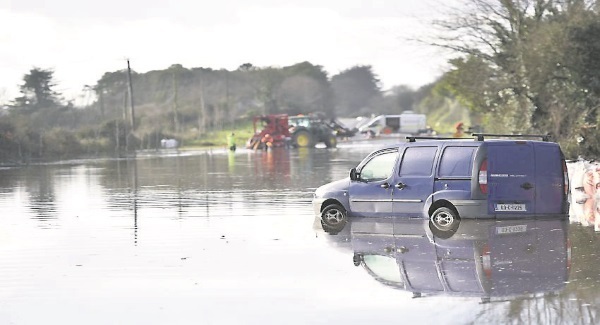
IN ALMOST every email I’ve received from Ireland, the UK, or Scotland for the last three months, my correspondents mention somewhere that the rain is beating on the windows as they write, writes Damien Enright

As Irish fields drown, island terraces in the Canary Islands  parched

Emails are often businesslike, perfunctory, minimalist things, and that the writers should take the time to tap out the weather report speaks for itself. In my mind’s eye, I see them cowering behind the curtains. In my mind’s ear, I can hear the hard drops pelting like buckshot off the glass.

Someone told me that in West Cork ditches were coming adrift and floating stately down sloping fields into the sea. We are, of course, a people given to hyperbole, but I can well see them, uprooted by continuous deluges, moving downhill like islands in the mist, their passage made easier by the slippage factor of beaten-down silage grass providing well-greased gradients where, were one inclined toward winter sports, one could sit on a tea-tray and enjoy tobogganing as one would on snow.

A drenching in a muddy channel at the end of one’s downhill racing might be a hazard: But one could wear a wetsuit which would, also, of course, keep out the rain. In the right location, it could even be wet and warm at the same time.

Met Eireann’s Monthly Weather Reports on the Internet described November as “wet, windy and very mild nearly everywhere”; December as “extremely wet and warm everywhere” and from the incomplete reports, it seems that January, as yet not fully summarised, brought more of the same.

Early last week, checking out the Examiner for news of the latest weather, I saw that Storm Gertrude had moved on, and Storm Henry had arrived. “Henry” would seem a little genteel for a storm set to rage like Manaan MacLir on a bad hair day. Perhaps our son at home should arrange some sort of anchor for Ron, our free-loading incumbent heron.

But the flooding, and the relentless beating of the rain on the windows and the wind shaking the slates and the window panes is no joke, I know, and I sympathise with those of my readers who have been victims, suffering discomfiture and loss. I am a poor candidate for the cold myself.

Throughout January, when we lived in the mountains of Gomera, I was sometimes very much at one with my weather-hammered friends at home. At 1,000m (3,000ft) the climate is quite different from “down below” on the valley terraces or the benign banana belt by the sea. Arriving back in the mountains from a golden sunset by the sea, we sometimes stepped out of the car into a gale almost strong enough to knock us down, with cold, fast-drifting mist around us, and the palm tree heads tossing like Medusa in a tizzy. After battling our way to the house, the first thing was to light a fire.

The big woodstove soon warmed the big space of the lovely, stone-built house to the rafters. Firewood is abundant and free; forestry workers clearing areas burnt during the devastating fires of 2012, obligingly cut logs and stack them for the taking. The wood is charred outside but within is hard and red and dry, and burns long and steadily. About four nights a week, we had a fire.

Mornings were almost always beautiful, the air clear as glass, the sky blue, the sun the sole occupant of the heavens. In the meadow below the house, the leaves of the tall Canary palms shone as if shellacked, glittering as they stirred in a puff of breeze.

Beyond them, the laurel and giant heather forest of the uplands blanket the low hills in dark green ending abruptly at the rim beyond which is of sky meeting joining an infinity of sparkling sea, out of which rises El Hierro, a perfectly symmetrical, soda-bread shaped island 20 miles away, with a frill of cloud around its base and a few smudges of white villages visible through the binoculars. Canary birds are everywhere, singing loudly, and yellowing-up into breeding plumage.

The weather is topsy-turvy everywhere. My son living in Czech Republic says it is “shockingly warm”, and the few snowfalls quickly melt away.

In Gomera, everything is a month early. Almond trees are dense with blossom, and the vines are sprouting long ahead of time. Our mountain-house neighbour has been digging his spuds, an abundant crop. It hasn’t rained for 36 days, the resevoirs are half-empty and the farmers are deeply worried. While Irish fields drown, the fear is that the terraces will be parched unless some of the rain comes this way soon.

x

More in this section

Revoiced

Newsletter

Had a busy week? Sign up for some of the best reads from the week gone by. Selected just for you.

Cookie Policy Privacy Policy Brand Safety FAQ Help Contact Us Terms and Conditions

© Examiner Echo Group Limited