Konrad Gessner: Quincentennial of great naturalist

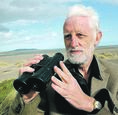
The violent events of Verdun, the Battle of the Somme and the Easter Rising, will be remembered in 2016, writes Richard Collins

Konrad Gessner: Quincentennial of great naturalist

However, we should also commemorate a man of peace, born on March 26 500 years ago this year. Konrad Gessner, the German Pliny, laid the foundations of modern librarianship and natural history.

Gessner was born in Zurich, the son of a furrier. A gifted linguist and classical scholar, he studied medicine in Strasburg and Basel. Teaching at the Carolinum in Zurich, he became the town’s medical officer. This Renaissance-man wrote, or contributed to, over 60 books, including a Greek dictionary.

As a Protestant, everything he wrote was deemed to be toxic by the Catholic Church and his works were prohibited. However, he remained on good terms, and corresponded, with people from both sides of the religious divide.

Gessner loved making lists and compilations. One of them described 130 languages and featured the Lord’s Prayer in 22 of them. In 1545, he embarked on an extraordinary project; to catalogue every book written in Latin Greek or Hebrew from antiquity to his own day. It took him four years to prepare this bibliotheca universalis, the distant forerunner of the great databases librarians use today. Indeed, Gessner can be seen as a pioneer of what we now call information technology.

In those days, doctors relied on ‘materia medica’, substances derived from plants animals and minerals, to treat patients. In his quest for remedies, Gessner collected rocks, gems and ‘fossilia’, objects dug from the earth. He created a garden containing a wide variety of plants and became, by the standards of the time, an accomplished botanist writing extensively on the subject. The Gessner-Garten, a medieval herbarium in Zurich’s Old Botanical Garden founded by a descendant of the great man, is named in his honour.

Gessner’s studies of animals led to his most celebrated work, the Historiae Animalium. As he had done for literature in the universal bibliography, he tried to gather together everything written about animals. In this sense the book is a ‘history’. However, it’s more of a reference work than something to be read from cover to cover. The five volumes, one on serpents appearing after his death, ran to thousands of pages, written between 1551 and 1558.

The title recalls Aristotle’s Inquiries on Animals. Gessner however, went beyond Aristotle and indeed every writer on zoology up to his day. Although he included material from the medieval bestiaries, bible stories myths and folklore, his approach to nature was unique for the time; he emphasised the importance of careful observation and accurate description.

Anticipating our modern field guides, the account of each animal was accompanied by an illustration. Entries were listed under eight headings. The first gave the creature’s names in various languages.

There followed a description of where the animal might be found, its ‘distribution and habitat’ in modern parlance. A detailed description of the creature was followed by accounts of its habits and food preferences. Elephants he noted, are chaste, afraid of mice and worship the sun and moon. His was the first published description of the familiar brown rat, which was spreading into Europe from Asia at that time.

Gessner treats of fictional animals such as unicorns, mermaids and basilisks; crosses between horses and cows, for example, were believed to exist back then. Their inclusion might seem to violate his insistence on accurate observation. However, he was writing mainly about creatures few of which he had ever seen and, as the historian of science Sachiko Kusukawa notes, ‘his primary aim as a Renaissance scholar was to compile everything ever written about a particular animal’.

Gessner died of plague on December 13, 1565 at the age of 49.

  • Konrad Gessner, the Beginnings of Modern Zoology. S Kusukawa in The Great Naturalists. Thames & Hudson 2007
x

More in this section

Revoiced

Newsletter

Sign up to the best reads of the week from irishexaminer.com selected just for you.

Cookie Policy Privacy Policy Brand Safety FAQ Help Contact Us Terms and Conditions

© Examiner Echo Group Limited








