A rhapsody of nature in the Bohemian hinterland
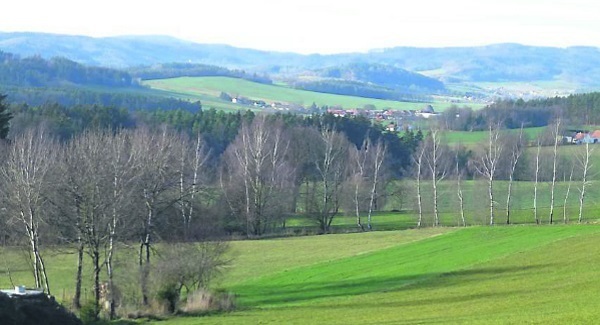
In this small city where we have been spending the festive season with my son and his family, the days are warm but it is cold in the evenings and one can get deeply chilled when standing around in front of one ancient church or another (often founded by Irish monks), watching nativity dramas with small grandchildren. This, in spite of the traditional hot, spicy punch dispensed in polystyrene cups.
It’s great walking weather and, in the countryside, one can ramble across enormous open fields that ascend, with no let or hindrance, to hills blanketed in conifers. Besides this Czech policy of “allemansrätten” (the Swedish law enshrining “everyman’s right to roam”) there are countless marked paths through forests and fields.
Lakes are almost always in view, shining like slabs of silver beyond lines of slim, vertical birch trees, dark against the light. Tall and silver, their thin, leafless branches overhang paths and water. They are almost emblematic of this region, 150km south of Prague and continuing, in a 60km wide swathe, to the Sumava Mountains National Park and the Austrian border.
Birds are scarce, (many of the blackbirds, thrushes, fieldfares and mistle thrushes have migrated by now, some of them probably to Ireland) but from the car we often see harriers and rough-legged buzzard in the fenceless fields stretching away from the roadside. At night, in fields edging small roads, hares are a common sight, standing upright, all-ears, as we pass, or loping leisurely into the dark. Deer are also seen.
Temperatures will drop fast from now on, not just drop but plummet. Yesterday, was 12C, today 4C. The forecast is then for 2C, then -1C. Brrr-brrr, indeed.
We’ve had no rain in our eight days here, and read reports of flooding at home with sympathy and awe. Sympathy for those unfortunate enough to live near rivers that burst their banks and lakes that spread over townlands, and awe for the forces of nature that they can so overwhelm all human efforts to contain them.
It is a cruel irony that while parts of Europe drown, others desiccate. I read in El Pais, the respected Spanish newspaper, that in a park in Almería, gazelles from the Sahara desert are perfectly at home. In the case of one species, it is their only home: the wild population is now extinct in Africa. Their success indicates how similar southern Spain’s climate is to that of Africa.
Almería is the driest region in Europe. This has been the case for millennia, but now a sea of plastic greenhouses, growing fruit and vegetables for export to the EU, covers 30,000 hectares of land. Deep aquifers are tapped for water. As they empty, the water pressure below ground level falls and water from the Mediterranean is drawn in, raising salt levels in the soil which, in time, takes it out of production.
Desertification progresses in places where excessive watering takes place. It now threatens five areas in Spain, including new olive groves in Andalusia, the pastures of La Mancha where rivers are drying up, and the Ebro Valley; also, the great grazing dehesas, the wildflower-rich fields with cork oaks that stretch from Salamanca to Huelva, where EU subsidies for cattle breeders have led to a surge in the size of herds.
Too much water is also hugely destructive, and is caused by human activity. In urban areas, our man-made, non-porous surfaces absorb only about 10% of rainwater back into the ground, compared with 90% in forests or fields. Heavy rain quickly overwhelms drainage systems. A UK-based company has created a “thirsty” or porous concrete which, it claims, can absorb 600 litres per minute per square metre.
This ‘tarmac’ does not have the normal top layer of fine crushed stone. Large pebbles form most of the surface, allowing water to drain through almost instantly. A layer underneath this draws the water into drainage pipes which would feed the city’s groundwater reserves. In times of extremely heavy rainfall, pavements and roads themselves would act like reservoirs, storing the excess and releasing it at a pace the ground could comfortably absorb.
CONNECT WITH US TODAY



Be the first to know the latest news and updates