Flirtatious dunnocks buck trend
The competition is fierce and a lot of energy is expended in dive-bombing rivals to try and get a good position. One result of this is that a lot of seeds and crumbs get dropped on the ground.
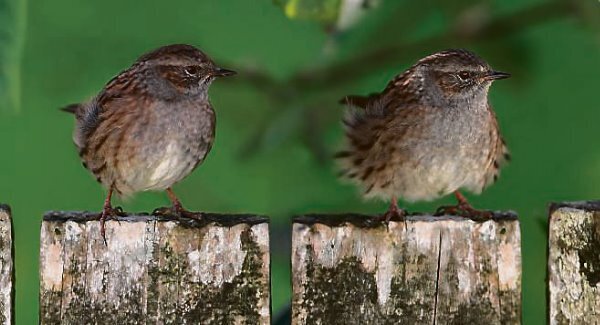
There is another cohort of birds that dislike the competition but concentrates on hoovering up the spilled morsels from the grass. It includes a female blackbird, two pairs of chaffinches and a sleek grey-brown bird with an odd stance, leaning forward with its head close to the ground, that scurries out of the bottom of the hedge in a timid, mouse-like manner. A dunnock.
Many years ago when I was a child first learning to identify garden birds, dunnocks were called hedge sparrows. They do look a bit like female house sparrows but are unrelated to them so the powers that control ornithology decided the old name should be phased out, and I’m sure they were right. The name dunnock comes from the old English “dun” or “dunn” and it’s a colour which is half way between grey and brown.
They were originally a woodland bird but they are one of those species that have prospered since they started to colonise gardens. Today, you will find that a square kilometre of leafy suburbia will contain 25 to 30 times as many dunnocks as a square kilometre of old woodland.
They are, in fact, commoner than you think but they are seldom seen because they tend to spend most of their time in the bottom of thick hedges, raking over leaf litter looking for small invertebrates. It’s only at this time of year, when invertebrates are scarce, that they overcome their shyness and come out to forage under my feeders.
Some fairly recent research seems to indicate that dunnocks are one of the most feminist of birds. In a couple of months when it gets to the season for small perching birds to proclaim ownership of a breeding territory by singing loudly from some vantage point it’s the female dunnocks that do this. In all other bird species that I’m familiar with, the males hold the territory.
Then the female dunnock further asserts her independence by taking at least two mates. She plays the males off against each other, teasing them and mating with all of them. She then uses similar tactics to ensure they all contribute to the hard work involved in feeding the brood. Genetic testing of dunnock eggs has shown that most nests contain the progeny of more than one male.
There is something intriguing about the fact that this bird looks so prim and proper and has a shy manner and yet manages to lead such an unconventional private life.