Storms come galloping
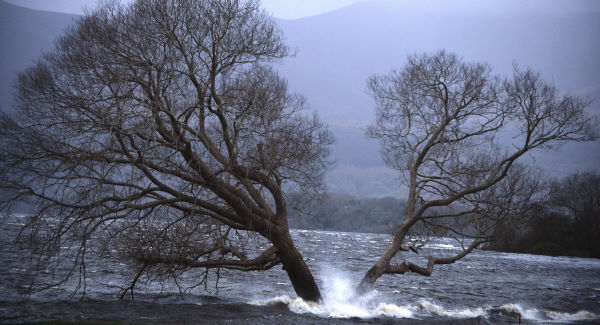
They reduce the incentive to venture outdoors and much of my interaction with the natural world has been reduced to watching garden birds through the kitchen window.
Every year gardens become more important to birds, and to other forms of wildlife too. The open countryside is shrinking. It disappears under motorways and housing developments, bogs are milled, hedgerows are uprooted, wetlands are drained and farmland becomes less hospitable to biodiversity. And when I look at the Government’s plans to increase agricultural output over the coming decade I have to believe that this trend will continue for some time to come.
On the other hand Irish gardens are becoming more attractive to wildlife as gardeners modify the way they manage them, concentrating less on eradicating wild things and more on encouraging them. If you go to any garden centre you will notice that the space allocated to wild bird food, nest boxes and feeders has increased considerably in the past few years. In most cases it’s now larger than the shelf space reserved for pesticides.
BirdWatch Ireland runs a garden bird survey in which people monitor their garden birds between December and the end of February and the data is collated and published. The survey has been running for 21 years so the data is now useful for plotting long-term trends in population sizes and behaviour patterns.
Last winter’s results contain some bad news and some good. Part of the bad news is the number of people taking part seems to be dropping. Only 684 surveys were returned, down from a high of around 1,000.
There was also a distinct shortage of siskins and lesser redpolls in gardens last year, including my own. However, this doesn’t necessarily mean that overall numbers are decreasing. It was a relatively mild winter with an abundance of wild seeds in woodlands so these small finches didn’t have to resort to nyger seed feeders in gardens.
There was better news about starlings. Their numbers had dropped so dramatically that they had shifted to the amber list but they seem to be making a comeback. The same is true of house sparrows. They certainly did decline here, though not quite as dramatically as in Britain, but they seem to be picking up again. Greenfinches also seem to be recovering from the dip caused by the outbreak of trichomoniasis disease.
The five commonest species recorded in Irish gardens last winter were robin, blackbird, blue tit, magpie and chaffinch. The rarest may well be a pair of garden choughs.