Beware flight of ivy bee
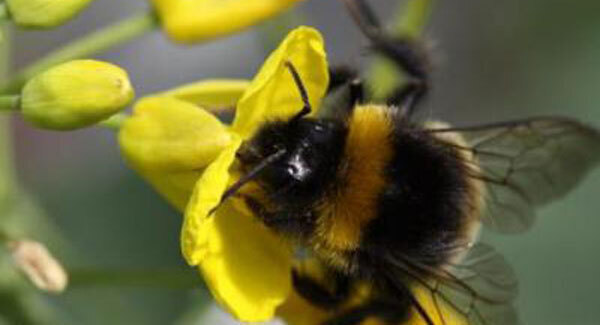
The National Biodiversity Data Centre in Co Waterford, which documents wildlife here, believes this species of bee will arrive here very soon. It flies at this time of year and can be found all over the south coast of England, south Wales, and the London area from September to early November.
About as big as, or slightly larger than, a honey bee, its autumn flight period matches the flowering of its favourite plant, ivy, from which it collects pollen. It nests in south-facing banks of light soil and you might even find it in your lawn, or garden. But the best chance of seeing it is, as the name implies, on ivy. Its back is covered by bright, orange-brown hair and its abdomen is circled by orange-yellow hair bands. It can be mistaken for a wasp, or a honey bee, but closer observation will show it to be a more delicate creature with a flatter abdomen and a brighter-than-usual orange stripe on fresh species.
First described as a distinctive species in southern Europe, in 1993, it is now widespread across the continent and is prolific in several countries, including Greece, Croatia, Germany, France, Spain, Italy, and the Netherlands. The ivy bee nests underground and, after mating, the female burrows a nest, lays her eggs and stocks it with pollen for larvae to eat. She also plasters the nest to render it waterproof. Adult bees die with the approach of winter.
The UK-based Bees, Wasps and Ants Recording Society says ivy bees are harmless and there’s no need to kill them or interfere with them in any way — a question of live and let live. Females can sting.
“But you’d have to pick them up and squeeze them for that to happen,” says the society. “The vast majority of swarms are made up of males which have no sting.’’
Another good reason for not harming ivy bees is they provide a positive example of survival at a time when other species have gone into serious decline and virtual extinction.
Richard Comont, data monitoring officer of the Bumblebee Conservation Trust, says there’s no evidence ivy bees have any negative impacts on native wildlife, but are filling a niche that was previously empty.
And now the question is: Who will be the first to spot an ivy bee in Ireland? Anyone that does is asked to take a photograph and email it to the National Biodiversity Data Centre for validation.
- www.biodiversityireland.ie