There is a ‘serious misfit between public interest and public service’
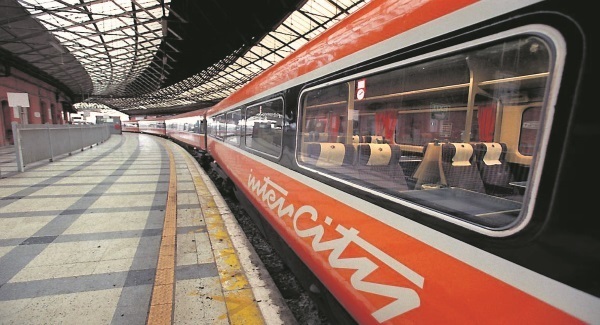
Talks began yesterday but there is still a threat of industrial action on rail services across the country from 6am to 9am on Friday.
If the strike goes ahead it’s unlikely things could be back to normal much before lunch time. That dose of chaos could potentially be repeated again on Friday, November 6, if the dispute is not settled.
Presumably most tourists and even some natives will be caught on the hop and left stranded. For those who are informed and can make alternative arrangements, it’s hassle.
It takes the public interest out of the public service, again. Some can’t make alternative arrangements. There are swathes of the commuter belt around Dublin and Cork where people without cars, or families with only one car, must use rail for work or college.
It’s not just commuters, it’s employers, it’s competitiveness and it’s abuse of a near-monopoly position. On a bank holiday weekend it hits tourism hard. But then, that is intended. If you are making ice cream, you don’t strike in the middle of winter. If you are providing public transport, Friday on a bank holiday weekend is best.
The talks which began yesterday afternoon may, at the last minute, avert a strike. I hope so, but the uncertainty only highlights the essential issue. There is a serious misfit between the public interest and the public service, of which Irish Rail is one example.
A lot of the trouble in Irish Rail originates from a feral competition for members between two trade unions, SIPTU and NBRU. Strategically, over the longer term it’s a lose-lose game for those same members.
Far from protecting, or even shoring-up, a unionised, public service provider, a lack of leadership from the same unions have progressively undermined the strategic position of Irish Rail as the historic monopoly operator of rail in Ireland.

The one major rail project - albeit light rail - now under construction is the LUAS extension. That public service is operated under licence by a private company. At its opening in 2004 LUAS was not entrusted to Irish Rail for a strategic reason.
Even a government up to its oxters in social partnership wasn’t prepared to put the future of an expanded rail network into the maw of State company, Irish Rail.
It’s a while ago but the black humour in official circles then, when industrial action regularly reared up, was to ask if it was actually called by the unions or by the management.
The suspicion was that there was a symbiotic relationship. Whatever the truth, a pivotal decision was made and Irish Rail and CIE more generally, permanently lost the light rail network, and with it a critical part of the power of its monopoly.
Similarly Metro North, if it is ever built, will be a public service operated under licence by a private operator.
‘Privatisation’ is a favoured term of abuse by trade unions whose members operate public services - usually at a premium compared to what is available in the private sector. The premium is sometimes in pay, usually in conditions, and always in pension provision paid by taxpayers and service users.
This year, when ‘austerity’ is allegedly over, nearly €4 billion will be borrowed, and eventually repaid with interest, to subsidise the provision of those same public services.

What is at play this week in Irish Rail, as previously in Dublin Bus, is the use of essential public services as levers to squeeze bigger subsidies out of the system, so these can be dispersed among its members as better terms and conditions. The sectarian relationship between different unions within Irish Rail fuels this. If you are the union that doesn’t ramp-up, you lose out on members.
There is little lasting basis for compromise and a lot of short term impetus to avoid it. The big picture over the longer term, however, is that the principle of public transport as a monopoly has been permanently punctured.
Pulling the lever of industrial action - either as disruption or the threat of same - fuels the impetus to ensure that public transport is provided through different operators. Where possible, this is an essential fail-safe for public services in the public interest.
The provision of public services, under licence by a State authority, is not privatisation of any sort. The inconvenient truth is that State-owned companies are not essential to provide public services. Ironically they are often an obstacle to the efficient delivery of them. We aren’t designing public services from scratch.
They are being developed incrementally in a pre-existing, complex institutional environment. While new rail services such as LUAS and a putative Metro North can be licensed to other operators, competition on Irish Rail’s own network is probably unrealistic for the foreseeable future.

The EU’s Fourth Railway Package would allow for eventual competition. However, our Department of Transport is strenuously resisting and is expected to secure an opt-out for Ireland on the basis that while what is being proposed might work on an interconnected continental system it cannot reasonably be applied to our limited, island network.
They have a point. The smallness and insularity of the Irish rail system underlines the importance of ensuring that as other public transport services are developed, they are operated separately. It’s the limited, but absolutely necessary, firewall against the carry-on of this week.
Buses, however, are a different matter to trains. The network is dense and it is public policy to allow open competition for licences to run 10% of public bus services. These would use routes, timetables and Real Time Passenger Information laid out by the National Transport Authority.
Licences won would be periodically retendered. The companies wining the business could be kept on their toes and it would be a way of holding the feet of the State bus companies to the fire.
It would undermine the capacity of relatively few public service workers to bring an entire public transport system to a halt. They know that, which is why putting public service bus routes out to tender has been fought tooth and nail; largely successfully to date.

Lower cost and more efficient operators would deliver public services more cost effectively. This would put further pressure on Dublin Bus to reduce their costs. Harnessing public subsidy is not only necessary to protect CIÉ wages now, it is necessary to protect the strategic perimeter of its still nearly intact monopoly.
This Government will leave office, as did the last, without any tangible delivery on putting bus services out to tender. Yes there is supposed agreement for now and the process has apparently begun. However, the crunch point will not be arrived at until well after the general election.
As sure as night follows day there will be one last almighty heave to prevent what has been promised for years but to date undelivered. Friday’s strike may be averted but bigger issues around provision of public transport are the proverbial headlights of an approaching train.