Beluga’s summer visit unusual
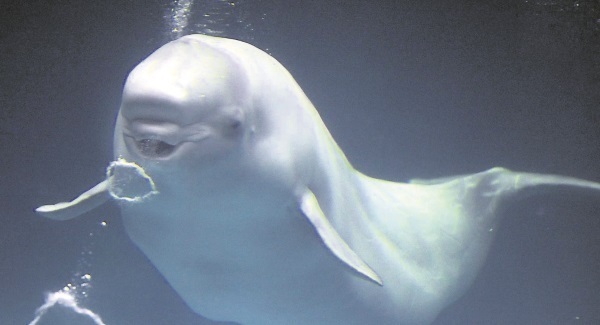
In December 1948, lighthouse keepers spotted what turned out to be a beluga whale off Clare Island, County Mayo.

Beluga’s summer visit unusual

It was the first, and for almost four decades the only, sighting of the species in Irish waters. Then, in June 1988, one turned up in Cork harbour. It could be seen from the seafront at Cobh. The recent visit of a beluga to the shores of Co Antrim, therefore, was a rare event indeed.

‘Beluga’ is Russian for ‘white’. Gourmets will be familiar with ‘beluga’ caviar, the roe of the great white sturgeon. The sturgeon, of course, is not a whale but a fish. The adult beluga whale is white all over, effective camouflage in the icy-cold arctic waters it frequents.

Moby Dick was not a beluga. Herman Melville modelled him on whalers’ tales of an albino sperm whale; such albinism is very rare. Belugas and sperm whales belong to the ‘toothed’ group of cetaceans. They have teeth rather than the sieves, known as ‘baleens’, which members of the other great whale group use to trap their prey. A sperm whale, the largest of the toothed family, can weight 50 tonnes. A beluga might reach 1.5 tonnes.

Whales are descended from a hoofed land-based creature which lived about 50 million years ago. Their legs became fins and the vertebrae of their necks fused together like those of fish. The beluga’s neck vertebrae, uniquely, are not fused, so it can move its head about the way seals do. Some of the baleen whale species have lost their dorsal fin but the more manoeuvrable toothed whales, which specialise in hunting fish, have retained this ‘rudder’. The beluga and the narwhal are unusual among the toothed fraternity in having no dorsal fin. Both hunt under the ice-shelf, where an upwardly protruding fin would be an encumbrance.

The lack of a dorsal fin has both good and bad consequences. Unable to swim very fast, a beluga is vulnerable to attacks by orcas and polar bears. On the other hand, being a slow coach has rendered it very much at home in shallow waters where orcas can’t reach it. It also means, however, that the Inuit, allowed to kill a limited number of belugas, can shoot it with rifles. These shallow-water skills make the beluga almost immune to a danger faced by most whales; stranding. The seal-like beluga seldom becomes trapped. Not surprisingly, it was the first whale species to be kept successfully in captivity.

Belugas are very gregarious creatures, concentrations of up to a thousand being recorded occasionally. Socialising has led them to develop elaborate vocalisations. The ‘canary whale’ is said to rival birds in the variety and beauty of its calls and songs. These can sometimes be heard above the water.

The absence of a dorsal fin, and the beluga’s generally unobtrusive behaviour, make it difficult for whale-watchers to spot. It’s no surprise, perhaps, that there have been only three recorded sightings here; most visits by belugas to our waters probably go unnoticed. Unusually for a whale with a penchant for the coldest waters, belugas will venture into estuaries and up rivers. The Cobh sighting is an example. Individuals have been recorded 1,000km from the sea. Canada’s St Lawrence channel has a well-known, but steadily declining, white whale population.

This summer’s sighting, and so some extent the Cork harbour one 26 years ago, are unusual for the time of year at which they occurred. Belugas frequent the cold seas fringing the Arctic icecap; it’s odd that individuals would venture so far south in summer, when sea temperatures here are approaching their highest. Add to that the effect of global warming; in the 68 years since the first beluga recorded here, overall sea temperatures have risen by three quarters of a degree. Ocean currents, it’s claimed, have become so erratic that pockets of cold sea water might be carried south from time to time, bringing the odd beluga with them.

More in this section

Revoiced

Newsletter

Sign up to the best reads of the week from irishexaminer.com selected just for you.

Cookie Policy Privacy Policy Brand Safety FAQ Help Contact Us Terms and Conditions

© Examiner Echo Group Limited