Hope and history can never rhyme if we rewrite bank guarantee saga

The Night of the Bank Guarantee.” Ba-boom, ba-boom, ba-boom, like Mama’s heartbeat. It’s punchy but reassuring and that’s the way we like our rhythms.
It’s a question of metrics. “The Night of the Bank Guarantee” is in iambic trimeter. Three couples of two syllables, unstressed, stressed, unstressed, stressed, unstressed, stressed.
It’s so catchy they call it “common meter” if it’s teamed with another line in iambic pentameter, which is four couples of two syllables. Like RTÉ’s favourite line of poetry, “The Night of the Blanket Guarantee.” The Night of the Bank Guarantee is not a “whodunnit” at all, as was wrongly implied by that fellow Michael Clifford in this newspaper last week. I bring my credentials as a Mistress of English Literature from Trinity College Dublin to bear on the issue and this is my verdict: the Night of the Bank Guarantee is an heroic poem in common meter.
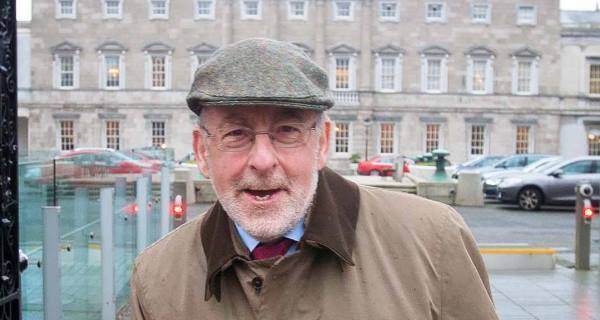
The truth doesn’t matter much as long as the meter is common. When the Governor of the Central Bank, Patrick Honohan, is addressing the Banking Inquiry yet again today, few will be listening for anything else but the ba-boom, ba-boom of “The Night of the Bank Guarantee.” I admit that I thought Honohan was being political in his January evidence to the inquiry when he seemed to give the impression that liquidating Anglo immediately would have let the country off the hook. Honohan was Garret FitzGerald’s adviser, after all. It was absolutely typical of Brian Lenihan to appoint a new Governer of the Central Bank, thus associated with the rival party at our moment of national crisis.
But in hindsight I don’t think the politicisation was Honohan’s fault as much as the media’s who headlined the soothing story that everything could have been different if different decisions had been taken on “that fateful night.” No one gave a hoot when Honohan came back to the inquiry in March and said the impression his evidence gave may have resulted from a “senior moment”–– that 80% to 90% of the losses to the country were unavoidable long before September 29, 2008.
Just as the substance of his comprehensive 2010 report to Brian Lenihan, The Irish Banking Crisis: regulatory and financial stability policy 2003-2008, has been ignored for one reason and one reason only: it isn’t in common meter. No one is interested in the conclusion that “it is hard to argue with the view that an extensive guarantee needed to be put in place, since all participants (rightly) felt that they faced the likely collapse of the Irish banking system within days in the absence of decisive immediate action. Given the hysterical state of the global financial markets in those weeks, failure to avoid this outcome would have resulted in immediate and lasting damage to the economy and society.” Bor-ing.
Honohan is mildly interesting when he says that subordinated bond and long-dated debt should not, on balance, have been guaranteed but that doesn’t amount to a huge hill of beans.
The “nationalising Anglo” narrative is put forward by many poetry-lovers on the Left as if this would have put the bank’s losses into a magical disappearing dust-bin rather than right onto the State’s books.
Honohan raises the idea as an option but then ruins it all by concluding that “it is hard to argue that the delay of five months in eventually nationalising Anglo Irish Bank had a major financial impact.” He says that the lending decisions which led to the huge cost to the Exchequer were made “long before the point was reached of the guarantee” and suggests we should have taken strong measures to cool our over-heating economy right through the mid-2000s. But that’s not catchy at all.
And the reason it’s not catchy is that it implicates us, the people of Ireland.
We are the people who gave Bertie Ahern a second and third term, though it should have been clear to any adult that the huge economic success of his initial period in Government was turning into a property Ponzi scheme. Not everyone partied. But many did. And most of us worked very hard too. We shouldn’t be going around wearing sack-cloth and ashes because we stuffed up in a few years of stupid property speculation. The real Celtic Tiger – beyond the four-wheel drives and the Botox – was about the hard work which transformed this country. Page 21 of Honohan’s report spells out this transformation: “From 1988 to 2007, real GDP expanded by 6% per annum on average, reaching double digit growth during 1995-2000. Unemployment plummeted from 16% in 1994 to 4% in 2000 – essentially full employment for the first time in modern history.” The bust brought us back to 2004 not 1984. We are building ourselves up again already and are beginning to fight for our different visions of what our new prosperity will look like.
The bust collapsed some peoples’ lives but it did not collapse this economy because very hard political decisions were taken when they needed to be taken. “The Night of the Bank Guarantee” blew holes in our democracy, happening as it did without a Cabinet meeting. But imperfect as our democracy is, it still sustained our society through one of the biggest banking crashes in recent European history and then offered us a peaceful general election.
It’s obvious that “The Night of the Bank Guarantee” should never have happened but there was no way this State could avoid the massive losses which our banks had incurred. The reason we continue to look for a fall guy in the room that night is because this reduces the players in the bust to the smallest possible number.
This narrative was first put forward by the Labour Party in opposition because they did not vote for the guarantee, a stance which made no practical difference because the vote was sure to pass anyway. That’s not surprising. What’s surprising is that our State-funded national broadcaster proceeded to accept this version of history and lead most of the media in baa-boom, baa-booming right through the crisis. Just type “notorious bank guarantee” into Google and you’ll see what I mean.
It’s not the first time total untruths have become established as founding myths. Apparently Lord Alfred Tennyson’s famous line in The Charge of the Light Brigade, “Someone had blundered” was complete nonsense. We can argue the toss as to whether “A terrible beauty” was really born in 1916.
The Night of the Bank Guarantee looks set to be recited in iambic trimiter as the reason we’re not as rich as we were because it is the explanation which implicates the fewest people. Sacrifice them in a banking inquiry and you’ve rewritten history so thoroughly that our children will never be able to learn its lessons.


CONNECT WITH US TODAY



Be the first to know the latest news and updates