This is about changing definition of marriage
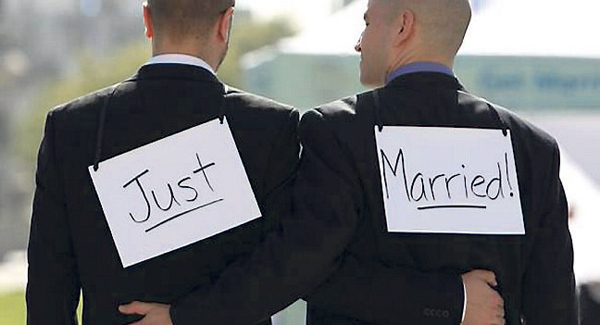
(1) In the name of ‘equality’, we are being asked to change the English language.
(2) We are being asked to change the custom and culture of centuries of nations, religions, and indeed of all society.
My wife and I are equal in all matters, save genetics. I cannot bear a child, but she could have. That makes us different, but still equal in every other matter. We were created, or evolved, ‘unequally’. And so will it remain, referendum passed or not.
My compact Oxford English dictionary tells me that marriage is: “the formal union of a man and woman”.
My Cambridge Encyclopaedia elaborates on that definition: “In anthropology, the legitimate, long-term mating arrangement institutionalised in a community.
If a union is called marriage, this implies that that husband and wife have recognised claims over their partners, often including material claims; and it gives the children born of such a union a special, preferential status.
Marriage also creates relationships of affinity between a person and his or her spouse’s relatives, and perhaps even directly between the relatives of husband and wife”
Osborn’s English law dictionary states, inter alia:
“Marriage is essentially the voluntary union, for life, of one man and one woman, to the exclusion of all others…”
Whether man is created or evolved, it has always been so, throughout the ages, and any effort to alter that situation should be resisted.
Once again, this is not about equality. It is about custom, which the law dictionary states is: “A rule of conduct, obligatory on those within its scope, established by long usage.
A valid custom has the force of law. Custom is to society what law is to the state. A valid custom must be of immemorial antiquity, certain and reasonable, obligatory, not repugnant to statute law, though it may derogate from the common law.”
Marriage is a centuries-old custom that we are being asked to change and, against all rational evidence, we are being asked to vote yes in this referendum.
I cannot, indeed will not.












