Man who sank Lusitania was invited here in 1966
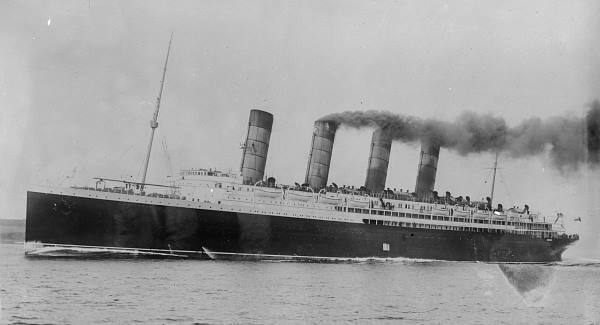
Attendees will include relatives of those who drowned, ambassadors, senior representatives of Cunard, and representatives of the State and the naval service. One victim, Alfred Gwynne Vanderbilt, who was the richest man in America in 1915, will be represented by his grandson and namesake, who described the torpedoing, of what was once the world’s largest passenger ship, as ‘an act of international terrorism’.
This sinking of RMS Lusitania is said to have prompted the entry of the United States into World War I, and this resulted in a quarter of a million US casualties, including over 58,000 American deaths.
The torpedo officer on the German SM U-20 who fired the lethal weapon, from a distance of 700 metres, was Kapitänleutnant Raimund Weisbach (1886-1970). He was subsequently promoted to the command of another vessel, SM U-19, which transported Sir Roger Casement to Banna Strand in April, 1916.
Waisbach was invited to Dublin by the government, as a special guest, to participate in the 1966 commemoration of the Easter Rising. Given the gravity of this tragedy, the massive loss of civilian lives and the subsequent global political ramifications, was this invitation to Waisbach inappropriate and motivated purely by naive opportunism and crude parish-pump politics?
Glenageary
Co Dublin
CONNECT WITH US TODAY



Be the first to know the latest news and updates