Junior Certificate reform row - Concern at impact on students
In today’s damning commentary on education, Ibec is dismissive of the Junior Certificate as “little more than a dress-rehearsal for the Leaving Certificate”, adding that “its over-crowded, rigid and subject-based approach has come to dominate secondary school teaching”. Calling for change, the organisation says there is a “grim familiarity to the rhetoric coming from the teachers’ conferences this week”.
It goes on to say “in contrast to many other professions, change seems to be instinctively resisted by the leadership of the unions, fears are exaggerated and benefits downplayed or worse, dismissed entirely. This is a grave disservice to the thousands of committed and professional teachers who are prepared to embrace change”. Harsh words, perhaps, but there can be no doubt they reflect a widely held view.
It has to be said that in contrast with her predecessor in this tough job, Ms O’Sullivan’s performance is popularly perceived as weak because she has watered down policy and given way on key issues, thus encouraging teacher unions to push for more and more concessions. So, it will be interesting to see what happens next week when the deadline comes around for teachers to participate in training for Junior Cycle reforms — in the face of union plans to picket them.
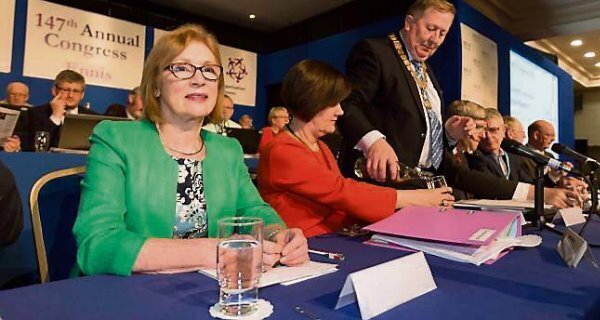
In a marked departure from her usually conciliatory approach, the minister was scathing in her criticism of teachers at yesterday’s TUI congress in Wexford. She rounded on them for threatening to prevent members from accessing professional learning. Indeed, most people would echo her s rebuke that this “sits uneasily” with their avowed commitment and openness to knowledge and learning.
The burning question is whether the union plan to finally slap pickets on training sessions has been triggered by hidden fears that more members than they would care to admit might by now be in favour of the kind of reforms which, according to Ibec, are vital if the system is to remain vibrant, producing the quality of student the country needs.
Describing the current junior cycle as “no longer fit-for-purpose”, it concludes that without reform, Irish students “risk falling behind their international peers” and urges teacher unions to work with the Government to implement reforms, which are “supported by business, parents, second level students, school principals and international experts”.
The big challenge confronting ASTI, the secondary teachers’ union, is whether its leadership is confident enough to risk putting the question of Junior Cycle reform to a vote of all members rather than leaving it up to a central executive to decide — an unacceptable and undemocratic process.
The minister has moved in a bid to find some way of resolving the dispute. However, students, parents, and the public at large have not seen much by way of concessions from teachers.
CONNECT WITH US TODAY



Be the first to know the latest news and updates