Why we need a balance that incorporates diversity in our media

IT IS usually seen as a negative when someone accuses you of bias. But when you’re a columnist a good dose of bias is a virtue — otherwise it can make for fairly boring reading.
Once your name appears over it, and people realise they are reading an opinion column, then that’s fine. What’s not so fine is the possible bias which could be brought to bear in the putting together of the rest of this, or any other newspaper, TV/ radio station or media website.
It can be as simple as a bias on the part of the editor — does he/she have a passion, for instance, for bird watching or philately, or is it an open secret that his/her hatred for the political left is matched only by a disdain for free marketers. I once worked in a newspaper where there was such trepidation about keeping on the good side of the editor that if he happened to mention that it was particularly cold coming in to work that morning the news editor would wonder if he should get someone to write a weather story.
Indeed a news editor from, say, Limerick, might resent stories which didn’t reflect well on his home place, or a deputy news editor might have a particular interest in tech stories because he/she was a computer geek. The point being that if you are human you will have your biases and those working for you will be aware of them and in a situation where you are covering current affairs it is important for everyone to be aware of them. It’s natural that an employee would try to please a superior but once it’s an acknowledged thing and is contained that’s usually grand. Then there is the bias of the individual journalist; good reporters are the ones whom you’d never guess which side of the fence they are sitting on, or have simultaneously upset both sides of the argument with their reporting. Over the entire operation is the owner.
Outside of the immediate newsroom there is what journalists know as the “other side of the house”, that is the commercial side, and both sides look with some suspicion at each other; each believing themselves to be the one that keeps the whole show on the road. There has always been a traditional firewall between the two sides where it was the job of senior executives to bear the commercial pressure, and ensure that it did not affect the editorial output and cause a bias, particularly a bias that the reader/viewer was unaware of.
Clearly this relationship will have come under immense pressure in recent years as the recession coincided with newspapers globally losing readers who went online to get their news free and advertising revenue collapsed.
This really came to the fore in the UK this week when the highly respected journalist Peter Oborne resigned as chief political commentator with The Daily Telegraph. He launched a blistering attack on the paper’s editorial guidelines over its lack of coverage on the HSBC bank tax story which he said was a “fraud on its readers”.
Oborne claimed the UK daily newspaper had deliberately suppressed stories about the bank. He wrote a long article on the Open Democracy website laying out his reasons for leaving, which the Telegraph called an “astonishing and unfounded attack, full of inaccuracy and innuendo, on his own paper”. A spokesperson for the newspaper said that the distinction between “advertising and our award-winning editorial operation has always been fundamental to our business. We utterly refute any allegation to the contrary”.
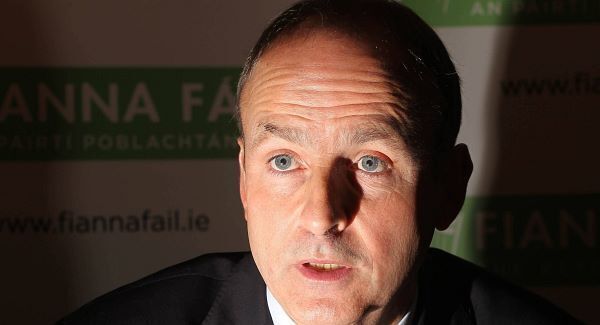
Interestingly, just prior to Oborne’s resignation this week I was reading a speech Fianna Fáil leader Micheál Martin had delivered the previous week to a UCC journalism conference. The subject matter was media bias and it was a well written, journalist friendly, speech.
He rightly said we have almost no serious discussion about the broad direction and standards of the media in Ireland. We should all be concerned about this because a healthy democracy needs an active, diverse and professional journalism, he said. “It needs people who have the time and the platform to create and facilitate work which is reflective, challenging and constructive.”
He spoke of the ways in which the media can become biased; including a bias which comes from a lack of diversity; from a short-term approach; from the de-professionalising of the industry; from an over-concentration on the centre and from a failure to value specialisation.
He believes we need to at least start valuing or distinguishing the role of journalism as a profession. “And just as we need to support good journalism we also need to speak out when we see developments in the media which are inherently biased — and support principles which work for greater balance.
“Perhaps the single greatest protection against bias is to have a diverse media and there’s no way of escaping that our media landscape is becoming significantly less diverse. Some of this is inevitable due to the economic factors I mentioned, but much of it isn’t. This matters a lot and it is not a comment directed at any particular entity. It doesn’t matter how open or self-critical a society you have, media diversity is essential to protecting it.”
Now reading this, it is a given that all the usual provisos apply about Fianna Fáil not being exactly pioneering in this area during their long years in office but Micheál Martin has a very valid point when he said he found it amazing that after four years in office the Government’s only policy on media diversity was to avoid having a policy.
“It has nothing to say about diversity within or between different media types. It has nothing to say about what levels of concentration of ownership are reasonable. Without having a national policy on this, developments are carrying on regardless. The concentration of media power into relatively few hands, both public and private sector, could have a potentially chilling effect. Whether or not an owner or controller imposes their views directly it is basic human nature that journalists will be influenced by how they perceive the interests of the people they work for or feel they may one day need to work for. The only way of combating this bias is through media diversity.”
HE MOST important thing we can do as citizens, he concludes, is to understand that we need a balance which incorporates genuine diversity in our media, and also the resources required to invest in those things which can only exist through professional journalism of the highest standard.
And so say all of us. I did feel there was an elephant in the room in terms of Mr Martin keeping the speech very non-specific and not giving examples.
I inquired as to why and was told simply that in that forum he wished to keep it general. So if that is the approach of the leader of the political opposition in this country perhaps it better also be mine. We’ll say nothing more.
READ NEXT: Review of Small Primary Schools: Empty desks no longer a threat

CONNECT WITH US TODAY



Be the first to know the latest news and updates