Remembering Auschwitz - Could it happen again?
THESE lines are attributed to an anonymous Holocaust survivor from Cologne in Germany and like all great prayers, like all great hopes and invocations, they almost speak over the head of any particular deity; they touch the core of what it is to be human.
They put hope and endurance at the very centre of the human experience. They, despite appalling circumstances, celebrate the eternal and essential belief that good will prevail.
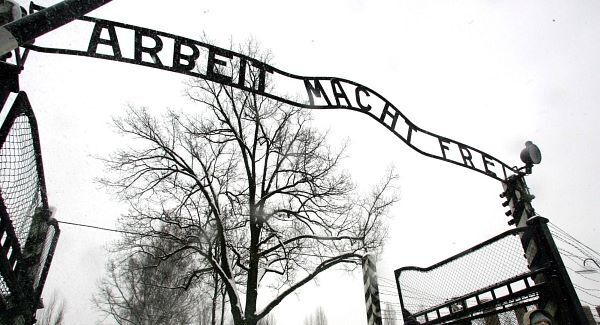
This week ceremonies are being held to mark the 70th anniversary of a moment in one of the most incomprehensible and dehumanising tragedies of this or any other time.
It is 70 years since Soviet troops liberated the Auschwitz death camp in Poland, though it is hard to think how anyone might be liberated from such an experience.
The Nazis killed up to 1.5m people, mainly Jews, between 1940 and 1945 in what was once a nondescript rural village about 70km from Krakow.
Auschwitz was just one of a series of murder factories stretched right across German-occupied Europe.
The frenzied abandon and enthusiasm shown by some of those whose countries had been occupied by Hitler’s Einsatzgruppen to join in the industrialised genocide is, even if at a secondary level, deeply chilling.
It shows that incandescent, irrational hatred can be such a powerful cancer in relationships and is not confined to any nationality.
Could Auschwitz, Dachau, Bergen-Belsen, Buchenwald, Sachsenhausen, and any of the other charnel houses happen again? Or more specifically, could they happen in Europe again?
The immediate answer must be a hopeful “no” but the fact that it has already happened — Omarska, in northern Bosnia which was run by Bosnian Serb forces and where hundreds died of starvation, torture, rape, punishment beatings or ill-treatment in 1992 — gives the lie to that entirely natural response.
That anti-Semitism, that age-old, hard-wired but irrational hatred, is on the rise — again — in Europe must be a cause for great concern.
That 7,000 French Jews are expected to flee to Israel this year raises the most difficult questions for that country and for the wider EU.
That Russia’s President Vladimir Putin has not been invited to Friday’s official ceremonies because of his country’s role in the increasingly volatile hostilities in Ukraine are hints that the veneer of civilisation could be broken again.
Radical Islam’s terrorist zealots add to that possibility as does the collapse of state after state in northern Africa.
These are valid questions, especially as EU unity seems set for a tremendous challenge — as ever the answer is the same — education, education, education. Those who would push history to the fringes of our children’s consciousness should be asked the obvious, challenging questions this week.

CONNECT WITH US TODAY



Be the first to know the latest news and updates