The changing face of our La Gomera paradise
In the interim, I merrily rambled over hill and dale in 14 different counties gathering walks for weekly publication in this space. Ah, the joy of walking!
In composing 120-plus itineraries, there would seem to be hardly a loop, bohreen or byway that I haven’t explored, usually with the help of Blessed Maria the Navigator (my wife, a map-reader of consummate skill and divine forbearance).
We have learned history galore; it is everywhere, on every Irish landscape. We have stumbled upon places of great beauty not previously known and have gazed in awe upon scenes of majesty to rival any on this earth.
Topping a ridge on the Beara or Macgillicuddy mountains, we, like Cortez and his men upon first seeing the vast Pacific, have “Look’d at each other with a wild surmise — Silent, upon a peak in Darien.”
Last month, we spent a fortnight on the unspoiled Canary island of La Gomera, our home-from-home. Happily, some damaged parts of the World Heritage forest, relicts of Europe’s primeval woodland, have begun to recover after the devastating fire of 2012.
On Gomera, tourism hasn’t taken over; indigenous life carries on. The sprawling high-rise resorts and square kilometres of apartment blocks of Tenerife or Gran Canaria are absent. In the Valle Gran Rey all but a few building left over from the 1960s are no more than two or three storeys tall and surrounded by greenery.
One can still be woken by cockcrow from the chicken-run behind the main roundabout (there are two, but parking is allowed only on the one aforementioned). A week before Christmas, guests at the best hotel (in the valley there are two, and one ‘bijou’) could have witnessed the birth of twin lambs in a pen adjoining the rear of the premises.
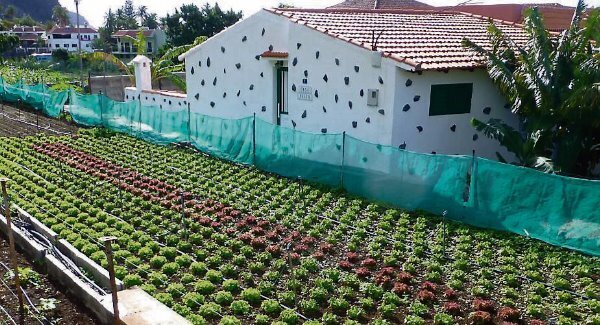
The major change in our 34 years experience is the replacement of many lowland banana plantations by neat and productive market gardens supplying the approximately 30, largely family-owned, restaurants catering for visitors that come seeking relaxation, fresh food and fresh air. Chickens, like the fruit and veg, are home-grown, and the eggs have dark yellow yolks. The fish come straight from the boats. Weather allows fishing most days, and the rich, volcanic soil delivers two or three crops a year, including spuds of delicious varieties.
While bananas still dominate the mid-valley terraces, the lower plantations also now nurture orchards of young avocado, mango and papaya trees. The long-term unemployed are, apparently, roped into organic gardening courses, and are seen tilling the land in teams. I hear no complaints; there is a profit-sharing incentive, I believe.
At Sunday mass, the parish church is nowadays only half-full and that half is 50% children. Many once familiar faces are no longer to be seen at their pews, quite possibly having ‘passed on’. It is always a surprise when I am enthusiastically greeted by someone who clearly knows me well but whom I can’t ‘place’.
Memorable this time was the bearded bear of a man who approached me with open arms and a face wreathed in smiles. He was home from Venezuela, he told me, and introduced me to his wife. I knew the face but who he was, I had no idea. Later, I remembered that he was the grandson of a neighbour, a chubby kid when I’d last seen him 20 years ago.
On our final evening, we came upon an exotic and previously unencountered menu item at a restaurant near the port. Gaelic Octopus, it said. We ordered it, curious to know how this eight-legged cephalopod would be prepared in a Gaelic fashion.
It turned out to be the Pulpo a la Gallega, octopus cooked in the Galician style, one of the tastiest dishes to be enjoyed anywhere in Spain. There was no reason to tell the restaurateur that the translation wasn’t quite right. Why cheat future Irish diners of the surprise?
Irish visitors to La Gomera are few, but increasing; valderee-valderah Germans are in the majority, hill-walkers, and nature-lovers. Ms Angela Merkel favours Gomera as a place to get away from it all; I have not yet had the opportunity to approach her on the subject of our national state of chassis, but will do so when I get the chance. I will, of course, deny our responsibility for everything.
CONNECT WITH US TODAY



Be the first to know the latest news and updates










