It’s time to break litany of despair - Renewing our public life
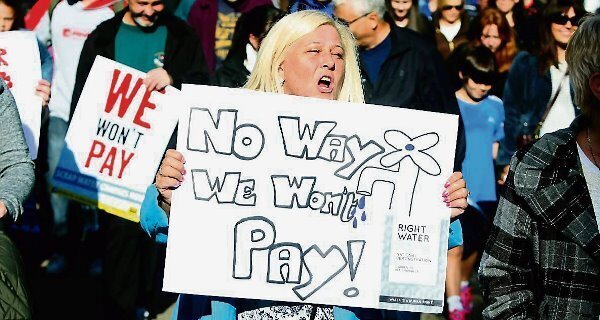
How wonderful it would be to be able to record that our Government had shown the basic, corner-shop business competence needed to establish an essential public utility — Irish Water — while, through effective communications, winning public support for the project. Rather, the sorry episode became a lightning rod for discontent on a range of disconnected issues and will sustain students of public administration calamities for generations to come. That it took an incomprehensible €85m in consultancy fees just to establish this vital entity and that it became apparent the semi-state company intended to exploit the bonus culture just added to the sense of a good idea gone wrong, of a new-dawn project hijacked by those in a position to do so.
In so many ways the Irish Water debacle epitomises the terrible, circular, self-defeating, Sysiphean bind of Irish public life. The fact that its chief architect was secure in a plum job in Brussels before even one leaking pipe was fixed or one water charge was collected once again — unsurprisingly — rewarded a catastrophic failure, one on a par with the spectacular pensions given to the utterly ineffective financial regulators of days gone by. The dysfunction, the skewed priorities and the counterproductive politicisation of a project so important to our country’s future that it should almost be above the Punch-and-Judy pettiness that demeans our public process was only too predictable.
And how wonderful it would be to record that this Government, elected with the most resounding reform mandate in the history of the State, had availed of that opportunity to force real change. That it has not, despite the accelerating economic recovery, drains the optimism from those who still hope that our political system is fit for purpose and can help deliver a renewed Republic. And how very wearying it is for everyone, especially committed and decent politicians of all hues, to see our political system tripped up by lethargy, conservatism, unrelenting sectional interests and very often the kind of delusion only the institutionalised can sustain. But what to do to make it relevant, effective and, dare it be said, admirable?
In recent days Taoiseach Enda Kenny has hinted that he might, if in a position to do so after the next election, use the Seanad as a way of introducing new blood and more real world experience into the cabinet. This would hardly be a game changer but it is a recognition that something significant must happen if our politics are to, as they should, serve the ambitions and beliefs of a population made cynical and jaded by an unending litany of failure and disappointment.
CONNECT WITH US TODAY



Be the first to know the latest news and updates