Concussion casts a shadow over sports
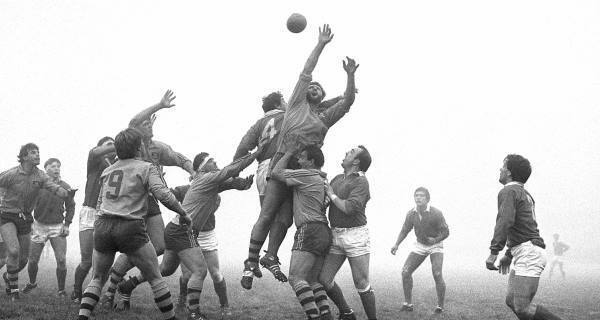
The only thing those gallant amateurs have in common with the players involved in the autumn internationals this weekend is that both sets of athletes have two arms and two legs. Compared to today’s professional behemoths those players, no matter how committed and well-prepared by the for-the-love-of-it standards of that time, seem more like robust set dancers than the tattooed wrecking balls targeting each other in this afternoon’s international games.
One of those wrecking balls, England’s Courtney Lawes, has been passed fit to face what may be the game’s greatest physical challenge — playing South Africa — despite being concussed against New Zealand as recently as last Saturday. It must be hoped for his sake, and for the sake of every other player in any sport who suffers concussion, that the protocols to assess whether a player is fit to return to competition after a head injury are as reliable — and as rigorously applied — as they need to be. If they have not been then the potential for life-defining injury is too high and no player in any sport, amateur or professional, young or old, should be allowed to expose themselves to such unwarranted risk.
American football may not have administered these tests properly in recent years and the toll on players, retired players, discarded players and their families has been extraordinary. So extraordinary that the ensuing tsunami of litigation may redefine the laws around who is responsible for professional athlete’s well being right around the world. To misuse a phrase — American football’s indifference to its players health has been, and will be, a game-changer.
Sensible sports administrators are not waiting for that change and are accepting the realities of today’s high-impact sports. A recent sitting of the joint Oireachtas committee on health and children was encouraged by medical experts to consider a zero tolerance approach to the issue. Medical representatives involved in Gaelic games, rugby, amateur boxing and equestrian sports spoke as one and said that continuous education to raise awareness among players, parents, coaches and medical staff was central to tackling the problem. This growing awareness has seen a spectacular rise in the number of young people reporting to just one Dublin hospital. Prof John Ryan, consultant in emergency medicine at St Vincent’s hospital, said the number of 14 to 18-year-olds reporting with head injuries increased by 41% between the 2012/13 and 2013/14 sporting seasons. Even if it is a concern that there are so many more case it’s reassuring that the problem is now more widely recognised.
All contact sports need to work to better understand concussion and protect injured players from risk. That obligation must be balanced with the idea that risk is a part of life and that the benefits of taking part in sport far outweigh the disadvantages. There are, at this moment however, good arguments for changing some of rugby’s laws to restore the balance between power and skill needed to play the game.
CONNECT WITH US TODAY



Be the first to know the latest news and updates