35 years on U2 still rattle and hum
I ONCE spent a month waiting for Bono. Every lunch of October 1981, I sidled into Golden Discs, on Cork’s Patrick Street, in search of the new U2 album.

35 years on U2 still rattle and hum

My family had moved to Cork a few months previously. School was a chore, life outside it had not yet fallen into a rhythm, but there was always that forthcoming album, U2’s second, hanging around like tomorrow’s promise.

The album’s title, October, was known and it had signalled that it would be released in that month.


As October wore on, and the shop assistants began to wonder if I was just an astute shoplifter, there was no sign of the album. When the calendar turned to November, I feared the band had broken up.

A few weeks later, the album did appear, and, half a lifetime down the road, U2 are still making music.

For the last few years, an awful lot of people have been waiting for Bono. It’s unlikely that many of them were angst-ridden Irish teenagers. Instead, it would have been predominantly people with an interest in the music business, and perhaps a middle-aged demographic searching the rear-view mirror for a dose of nostalgia.

The album, Songs Of Innocence, was released last Tuesday, in Cupertino, California, many miles from the northside of Dublin where the band grew up.

The circumstances of the release tell much about the world in which we live, and about how Ireland’s biggest musical export is conducting itself these days.

Songs Of Innocence piggybacked on the much-hyped launch of Apple’s I-phone 6. This was Apple’s show, the first major gathering since the death of its iconic founder, Steve Jobs.

The new man in charge, Tim Cook, did the honours, as 2,000 guests were suitably awed at the new strides in technology. Then, Tim brought out U2, and, after a little public chat with Bono, announced that the new album would be available for free to all customers of Apple’s ITunes music service. That’s a market of half a billion people.

The main photograph from the launch shows Bono and Tim both pointing fingers skywards, which, one wag noted, bore an uncanny resemblance to iconic shots of both ET and Jesus Christ.

The coming together of U2 and Apple is highly appropriate.

Both are well-oiled operations that combine creativity with serious business acumen. Both have shown a capacity to reinvent and endure in rapidly changing times.

Both have/had as leaders — Jobs died in 2011 — charismatic individuals full of attitude. And while Apple produced the original smart-phone, U2 are unrivalled as a smart band.

The deal with the new album says it all. The biggest upheaval in the music business in the last decade has been the loss of control over product, due to the internet. Where bands once made the bulk of their earnings from album sales, now they largely rely on touring. Album sales have plummeted in a time when illegally downloading music from the internet is a way of life.

So what do the band do? They effectively sell their album to Apple — for a reported €100m — which the technology firm then presents to its customers as a ‘gift’.

Great marketing, great result for U2, at a time when they couldn’t have held out much hope for album sales.

These boys know how to turn a buck.

U2 and Apple share another characteristic. Both have, as always, exhibited a quasi-evangelicalism in plying their wares.

Apple, under Jobs, presented its products as propelling man to a new frontier in freedom and communication, and whatever you’re having yourself. It may or may not have been cynical, but, like all these things, it’s unlikely the guy would have been able to carry it off unless he actually believed his own spiel.

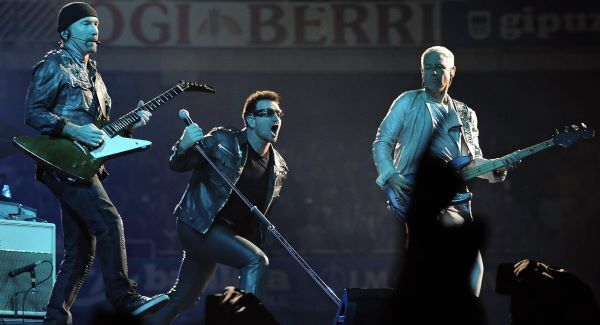
Anybody who has ever been to a U2 concert can attest to experiencing at least the faintest undercurrents of an evangelical gathering, in which catchy rock anthems can raise spirits as skilfully as any preacher. One of the enduring strengths of the band has been that, despite returning from the well of creativity with diminishing lodes over the years, the appeal of their live concerts has endured.

They still do it because the people keep coming back for more, and in droves that most other performers can only envy. So when Ireland’s biggest musical export of the last 30 years releases a new album, it’s worthy of note, particularly when it has been an inordinate wait of five years since the last offering.

Songs Of Innocence will inevitably be the subject of the same hype and begrudergy that have swirled around the band over the last three decades.

Already, some reviewers have proclaimed it the best album in years. Others have decried it as dross. These instant judgements never fail to fascinate.

Mao Tse Tung, who noted 200 years after the French Revolution that it was too early to declare whether it was a success, would have made a good album reviewer.

New music takes time to foment in the emotional wiring of the brain. Give it a chance.

One notable aspect of the album is how the material draws on Dublin in the 1970s, the formative years of the members, and particularly of Bono.

It has thus been cast as a highly personal album, but another interpretation might be that the band is leafing through life’s back pages, trying to journey to their younger selves, who had the creative impulse at their beck and call.

There ain’t no going back, but at least U2 can comfort themselves in the knowledge that they’re still managing to keep on keepin’ on, when most of their contemporaries, who emerged from the 1970s punk scene, have hung up their instruments, or succumbed to the perils of rock ’n’ roll Babylon.

And that’s the great achievement of U2. The band is still actually around after all these years. Ok, the music they make isn’t relevant anymore. Few, if any, teenagers thrashing around in search of direction from music were awaiting the release of Songs Of Innocence. The band is more a business than a diviner of the essence of rock ’n’ roll, and has been for some time.

But they are survivors in a fickle business, and that survival is in large part down to not just their acumen, but a fundamental decency that permeates their operation, allied to an unlikely capacity not to lose the run of themselves.

None of us is who we once were.

I no longer know that kid for whom the release of an album by an exciting new Irish band was such a big deal. U2 no longer represent what they once did, when they beat a new musical path across the world from the unlikely backwater of Dublin, Ireland.

At least they’re still around, though.

At least they can say, after all these years, that there are still a lot of people out there who were waiting for Bono. Not bad going.

More in this section

Revoiced

Newsletter

Sign up to the best reads of the week from irishexaminer.com selected just for you.

Cookie Policy Privacy Policy Brand Safety FAQ Help Contact Us Terms and Conditions

© Examiner Echo Group Limited