UKip success a response to federal Europe threat
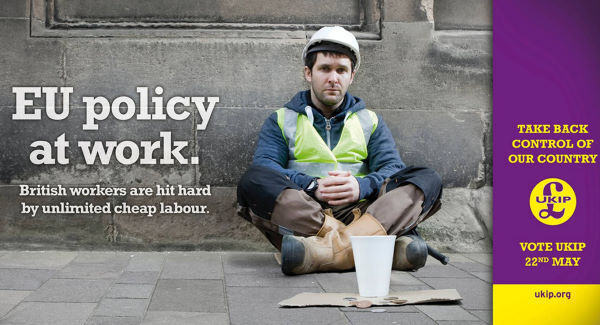
In response to Mary Murphy, of the European Studies specialist group, the threat of UKip is a democratic reaction to a federal Europe.

UKip success a response to federal Europe threat

Ms Murphy answers her question by stating that British votes are not in favour of closer economic and political integration.

While this may be surprising to academics, it is no surprise to politicians, as the EU has been sold to British and Irish voters as a common market since its inception, with more recent, broad, opaque statements, such as ‘pooling sovereignty’.

Only since the failure of the public advocation of a European constitution, in 2005 (voted down by French and Dutch voters), and the follow-on Lisbon treaty, which was sold as a technical fix to the bureaucracy of Europe, has it become clearer that nations working together means a path to a federal state.

Since 2007, a few European national leaders have publicly advocated such, but only in response to global events and the recession, and not for its innate value.

When treaty changes have been proposed, our politicians have used half-truths, such as a maximum of 12,000 migrants a year, and economic stability via a banking union, as opposed to the UCAES view of a great leap forward in European integration.

If, indeed, this is where Irish academics and politicians, as well as British leaders, wish to go, they need to publicly debate the advantages and disadvantages of such (mass immigration being the most controversial one in the UK). With the transition of the common market, it is the likes of UKip who have opened the discussion and shed public light on the true nature of ‘the European project’.

Therefore, even though we may not completely agree with all UKip policies, we owe them our gratitude in bringing the debate out of the political backrooms and the halls of academia.

We’ve had the EEC (common market) to partly thank (and not the EU or an EU federation) for the prosperity and peace in European nations since World War 2. The rush into a political union is a step too far for many, and is certainly not presently mandated in any European nation.

It is incumbent on our politicians and media to start this public discourse, long before any future referendum, in order to achieve such a mandate and use not the undemocratic methods of the past.

If not, we may be seeing another 1916 in the future.

Conor O’Sullivan

Bishopscourt

Wilton

Cork

x

More in this section

Revoiced

Newsletter

Had a busy week? Sign up for some of the best reads from the week gone by. Selected just for you.

Cookie Policy Privacy Policy Brand Safety FAQ Help Contact Us Terms and Conditions

© Examiner Echo Group Limited









