Unemployment falling - Alarm bells ring despite jobs advance
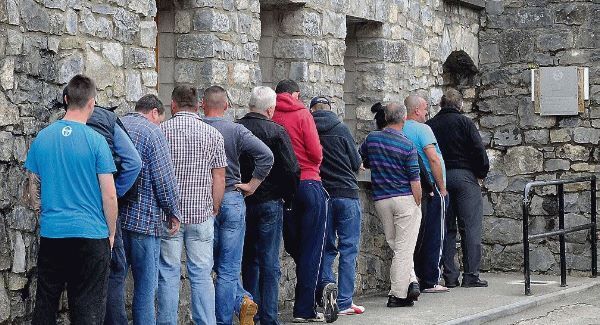
The latest Quarterly National Household Survey figures from the CSO could, in an ideal world, be better but the 11.5% rate is a five-year low and represents the eighth consecutive quarterly fall.
This is the lowest rate since the final quarter of 2009 and records an increase of 0.2% — 4,300 jobs — in the second quarter. Even if not spectacular the figures are reassuring and the cause for some, or even more, tentative optimism.
Figures show an increase of 31,600 on an annual basis, bringing total employment closer to the 2m threshold at 1,901,600.
The long-term unemployment rate fell from 8.1% to 6.8% in the second quarter. Long-term unemployment however, still accounts for 57.6% of those out of work compared with 58.2% a year ago and 61.8% in 2012.
The figures were published in parallel with figures on emigration which suggest that the great spring tides of emigration may be ebbing if not yet approaching a low water mark. Data covering the last 12 months show a 20% fall in the number of people emigrating when compared with the previous 12 months.
There may be many reasons for this, not all of them positive, but the staunching of the great drain on families and communities must be welcomed, especially in rural communities where, in some struggling towns, the absence of almost an entire generation is tragically apparent and hard felt.
Nevertheless, emigration remains high, with 40,700 people moving abroad in the year to April, compared to 50,900 in 2012/13. A total of 81,900 people of all nationalities left Ireland in the period, down 8% while 60,600 people immigrated, up from 55,900.
That so many people — four out of five — decided that, despite having jobs here, far away hills are greener must set some alarm bells ringing and be seen as an indictment of how we have organised society, how we reward effort, how we provide housing, education, healthcare or childcare.
Despite some progress in these areas, and despite the fact that some of these people went abroad to complete their education, we lag too far behind some societies in these areas. It would be dangerously smug to pretend that, in some instances at least, these are not decisive, pack-the-bag issues.
The gap — 48%— between public and private sector pay rates is probably influential too. The threat posed to recovery by public-sector unions behaving in dangerously irresponsible ways cannot be discounted.
Rail workers striking over a temporary pay cut of less than 2%; postal workers demanding a 2% pay rise to use a new online checking in system; teachers threatening strike action over a Government policy decision on junior cycle reforms all point to a disconnect, a disdain for the realities faced by their fellow workers in the private sector that is as dispiriting as it is divisive.
The jobs figure are very welcome but it would be very foolish not to confront the social issues and divide raised by the four-out-of-five emigration figure.


CONNECT WITH US TODAY



Be the first to know the latest news and updates