Windsor Castle best place to lay ghosts of the past
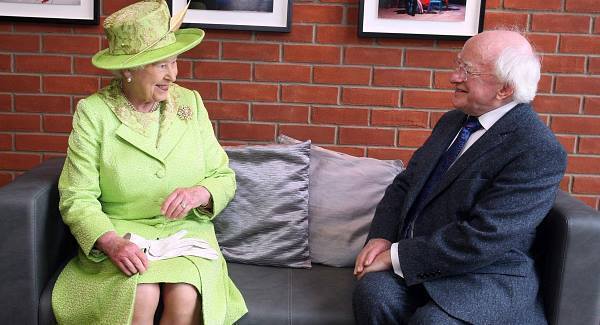
Given it has been haunted for more than 900 years, Windsor Castle was the perfect place to try and lay to rest the ghosts of a troubled past.
Michael D Higgins was feted like few other heads of state as the full dazzle and pomp of British pageantry was lavished on him during the first official visit by an Irish president.
In a transformative speech of substance the Queen apologised for a history of prejudice against the Irish and said she would stand with Ireland as it marked the centenary of the 1916 uprising.
Some carped that ‘isn’t it awful when the neighbours invite themselves over to your parties?’ but most realised a new era in Anglo-Irish relations had finally begun.
Just a few weeks after Sinn Féin’s Martin McGuinness was wined and dined at Windsor Castle, Gerry Adams saw a different side of British hospitality when he was held at a PSNI station and questioned over the disappearance and murder of mother of 10, Jean McConville, in 1972.
He denied involvement and was released.
Tánaiste Joan Burton showed she is a woman in a hurry when she took a third of a minute to tell an ex-Labour leader to turn the lights off on his way out of the Cabinet room.
An angry Mr Rabbitte, who is a year younger than the newly enthroned Joan, fumed he was sacked because of “age and chemistry”.
Ms Burton did not waste much time on the claim either, stating: “That’s what Pat said.”
Talking as if he had just stepped out of a spy film, Garda Ombudsman Simon O’Brien lit up the Leinster House air with incendiary references to “threats”, “covert black-ops”, and “secret reports” swirling around his organisation.
Directly contradicting Justice Minister Alan Shatter’s earlier statement to the Dáil, the ombudsman made it clear he suspected the body charged with policing the police had been put under electronic surveillance and he could not rule out gardaí being suspects.
Mr Kenny used his St Patrick’s Day visit to the US to perform a very odd version of Carly Rae Jepsen’s song ‘Here’s My Number, Call Me Maybe.’ The Taoiseach told a Washington DC audience: “If you’ve got a problem, or you have an issue, or an anxiety, or a concern or a proposition, or a proposal, I want to hear it. My number is a public number, you can call me anytime. Citizens in other countries find it difficult to figure out how anybody can ring the PM, or the Taoiseach in my case, and say ‘I want to talk to you’. Sometimes I don’t get a chance to answer all the calls...”
Trusting, Thatcherite Transport Minister Leo Varadkar blew the whistle on Garda chief Martin Callinan’s appalling treatment of whistleblowers by saying the men were distinguished, not disgusting. Failing to take their claims of misconduct seriously finally did for Alan Shatter.
Enda Kenny let slip that he had to meet the Attorney General in person to be informed about the fact gardaí had been tape recording calls at police stations for decades — because she was too scared to disclose the information on the telephone
Enda Kenny claimed he did not sack Garda Commissioner Martin Callinan, he merely sent an emissary to Callinan’s house at night to tell him of his displeasure at the bugging saga, and — coincidentally — Callinan quit a few hours later.
Leo Varadkar was suspicious of the strange chain of events, noting: “I have difficulty getting my head around it.”
Mary Hanafin gushed like a faded film star who had just been touched by the limelight again thanks to a cameo role in a B movie as she turned to journalists after winning a council seat and announced: “I missed you all!”
As the huddle of reporters which had swirled around her began to separate, the exhilaration at being the centre of attention again was almost too much: “Oh, I like being doughnuted — I haven’t been ina doughnut for so long!” she declared.
For her it was a comeback role; for Micheál Martin it was a disaster movie as after initially asking her to run, he begged her not to, threatened disciplinary action when she ignored him, then rolled over and whimpered when she won.
Thanks to YouTube, performer Panti Bliss delivered the most listened-to political speech of the year on homophobia in Irish society. It prompted Fine Gael TD Jerry Buttimer to tell the Dáil of his own experiences, stating: “I have been beaten, spat on, chased, harassed, and mocked, because of who I am. I have spent most of my life struggling and am finally at a place in my own country, which I love, to be accepted. In a tolerant, respectful debate, I will not allow people who spout intolerance and hatred to go unchecked.”
Independent TD Catherine Murphy demanded the mass grave at a former mother and baby home in Tuam be declared a crime scene. “We are hearing references to ‘burials’, when, in fact we are talking about bodies being disposed of in a septic tank. Clearly, these were not respectful burials — they were disposals, as though these children were subhuman. It is stomach-churning. If this septic tank was discovered anywhere else in the country other than beside a religious institution, it would already have been declared a crime scene. It begs the question of why, in fact, it has not been declared as such, which it should and must be.”
The Government is dragging its feet on a promised inquiry into the past horrors, while the UN delivered a damning condemnation of the “highly restrictive constraints” put on Irish women today, especially when it comes to seeking a termination.