Cormorants cause concern
Practically every buoy had a cormorant sitting on the top and the new green paint was already discoloured by droppings.
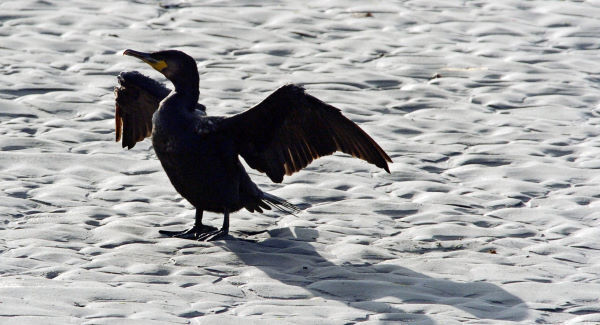
Many of the birds had their wings spread out in that characteristic cormorant pose. Their reason for doing this was a cause of great controversy at one time but more recent research has shown it’s not to help them digest fish or to regulate their body temperature. The most obvious explanation is the correct one. They are drying their wings. It seems cormorant plumage lacks the waterproofing oils of other diving birds; it has been sacrificed to give them more speed when they’re swimming under water after fish.
My contention that cormorant numbers are increasing on our inland waterways is based on personal observation and not backed up by any solid scientific research. The last time cormorants were counted nationally was between 1998 and 2002 for the Seabird-2000 survey. This looked at birds breeding on coastal cliffs, mostly on the south coast, the north west coast and in the Dublin area. It came up with a figure of between 5,000 and 6,000 breeding pairs in the country. As a result the birds, which have been legally protected since 1976, are ‘amber-listed’ in Ireland, meaning they are of moderate conservation concern.
The great movement of birds from the coast to our inland waterways is partially seasonal, quite recent and largely undocumented. It is almost certainly the result of over-fishing in our inshore waters leading to a situation where there are far more suitably sized fish in fresh water than in the sea. The cormorants are following the food.
This has made them hugely unpopular with anglers and the owners of freshwater fish farms. It is possible to apply for a licence to cull cormorants but it’s a bureaucratic affair and the request is often refused.
Many anglers are also shooters and this situation has resulted in a lot of cormorants being shot illegally. One contributor to an angling web-forum made the terse comment: “Cormorants may be protected but they’re not bullet-proof”.
This is a real dilemma. A cormorant can eat a couple of kilos of fish a day. If a hundred of them appear on a fishery the damage they can inflict is significant. Fish need protection as well as birds. And, ultimately, we caused the problem by our greedy exploitation of our marine fish stocks.
The May blossom is in full flower in hedgerows all over the country. It is, of course, the flower of the hawthorn, also know as the whitethorn. The blossom will eventually develop into red berries called haws which are an important winter source of food for birds and other wildlife. It is probably Ireland’s commonest native tree, though much of it was originally planted. Most of our field systems were created during the land enclosures of the 1800s and 1900s. Fencing wire was not available at the time so huge numbers of ‘quicks’, as hawthorn saplings are called, were planted to create stock-proof boundaries. Demand was so great that supplies of native quicks ran out and they had to be imported from Britain, so not all the hawthorn originates from native Irish stock. Some trees figure strongly in folklore as ‘fairy trees’, or their Christianised counterparts, trees associated with saints or Holy wells.

CONNECT WITH US TODAY



Be the first to know the latest news and updates