Is this rat the key to a long life?

WHO, on mature reflection, would opt to live forever? All might be well, at first, in eternal life but ultimately, tedium boredom and the slings and arrows of outrageous fortune would render existence unbearable.

Is this rat the key to a long life?

Thank God for death! Most of us, however, want to linger a little longer on this mortal coil. The ‘elixir of life’ isn’t within our grasp but research findings, revealed this month, suggest that significant improvement in life expectancy may be possible, thanks to a curious little animal.

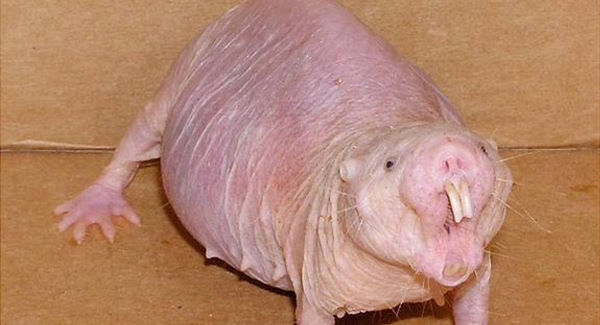
The naked mole rat, slightly larger than a mouse, lives in the tropical grasslands of the Horn of Africa. Its sausage-shaped body, with pink wrinkled skin, is supported by little thin legs. Two walrus-like tusks, enlarged teeth, project downwards, giving it a ‘Bugs Bunny’ look. Similar ones on the lower jaw are less visible. With tiny eyes, and hairless apart from whiskers, this rodent is not the handsomest of creatures but, spending its entire life in Stygian darkness, appearance scarcely matters.

Mole rats live in deep tunnels which can extend for miles. The air they breathe is foul, and oxygen levels are so low that any normal mammal would suffocate. The young are reared communally in a society resembling that of bees. In a large chamber, and supported by servants, the ‘queen’ produces litters of three to 12 pups every 80 days or so. Only one female breeds, just two or three males mating with her. All the other rats, in the colony of 75 to 80 individuals, are sterile. They spend their time gathering food and maintaining the tunnels.

This little creature has evolved specialist survival skills. There are no pain sensors in its skin and the animal’s breathing rate is extremely low. But the feature which most interests scientists is an ability to withstand the ravages of time. Individuals can live for up to 31 years, many times longer than other animals their size. A house mouse is lucky to see its second birthday and captive ones never exceed the age of four. Few brown rats reach three. Not only does the mole rat live ten times longer than its cousins, it remains fit and healthy into old age. Cancer is unknown among these strange rodents. Medical researchers concentrate their efforts on species susceptible to the disease. Could focus on a creature immune to cancer prove more valuable? Results just released suggest that it could.

The University of Texas Health Science Centre has colonies of mole rats living in artificially-created habitats. A team, led by Rochelle Bufferstein, has identified a protein which seems to be responsible, at least partly, for the mole rat’s longevity. The substance, known as HSP25, is also found in the tissues of mice rats and guinea pigs. However, the amounts in the mole rat are much greater than in the other species. The more HSP25 a species has, it seems, the longer it lives. The protein seems to act as a ‘chaperone’, recognising damaged or defective materials so that they can be removed before they harm body cells. It’s not the first such ‘quality control’ substance to be discovered.

Last year Vera Gorbunova, of the University of Rochester, identified a protein which seems to offer protection from cancer. This HSP25 discovery may ultimately lead to treatment for the diseases of old age, such as Alzheimer’s and Parkinson’s, in humans. These ailments result from the accumulation of defective proteins which HSP25 seems able to eliminate. The task now is to discover how HSP25 operates. If a human equivalent can be developed, we might live for centuries rather than mere decades.

Following the cancer research breakthrough in 2013, the naked mole was designated ‘Vertebrate of the Year’ by Science, one of the world’s leading research journals. The rodent deserves a similar accolade following this year’s discovery. Who would have thought that, breathing putrid air in a most unhealthy environment, such an unlikely creature would discover the ‘philosopher’s stone’?

More in this section

Revoiced

Newsletter

Sign up to the best reads of the week from irishexaminer.com selected just for you.

Cookie Policy Privacy Policy Brand Safety FAQ Help Contact Us Terms and Conditions

© Examiner Echo Group Limited