A lesser kestrel is a big deal
Lovely weather and lovely food, but a landscape dominated by medium-rise apartment blocks and hotels. Not a promising place for wildlife, but I had interesting encounters with birds, and added a new species to my ‘life list’. My first encounter was with a species I have seen before, but not often. This area was once a huge producer of salt. The industry continues, though salt declined in value as a commodity with the development of refrigeration. The salt was produced in ‘salinas’ — large, shallow ponds, which were constructed, or enlarged, artificially and into which sea water was pumped, normally by windmills. The strong sun then evaporated the sea water and the salt could be harvested.
The ponds of the salinas are still there and, as I was being driven from the airport to the apartment, they were full of greater flamingos. There is an expectation that these extraordinary birds should be pink. Some of them did show a faint, pink flush, but the majority of them were either white and brown, or pure white. It takes a greater flamingo some years of feeding on brine shrimps to achieve its full, adult plumage of red-wing coverts and pale-pink body feathers.
When I arrived at the apartment, which was on the fourth floor, I was chilling out and looking, through the window, at swallows, various gulls, house sparrows and starlings. Suddenly, something else flew in and settled on a balcony rail in the next apartment block. A small, slim and very beautiful falcon.
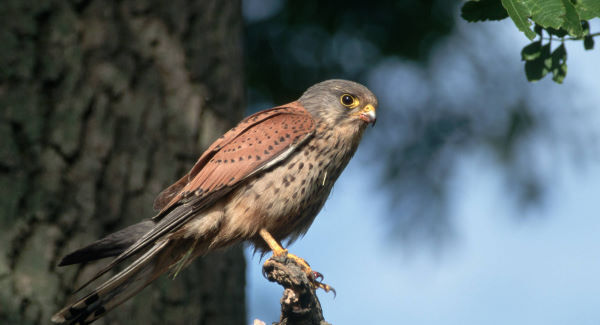
I had no binoculars with me and no field guide, but I had a good view of the bird and, at first, I identified it as a male kestrel. Then doubts began. There was something not quite right about it. It was smaller and slimmer than the kestrels I was familiar with, in Ireland, and there seemed to be subtle differences in the colouration.
It wasn’t until I got back to Ireland and went to my bird books, and did some googling, that I became absolutely certain that I had, for the first time in my life, seen a lesser kestrel. These birds look very like a slightly smaller version of the common kestrel, particularly the females, but they are not closely related. Their numbers are declining in Europe, where southern Spain is their stronghold, but they have a wide global distribution and are not regarded as endangered internationally. They mainly eat large insects and mice, and pesticide use is probably the reason for their European decline.
The ash is the last species of tree to break bud and come into leaf in the spring, and in most parts of the country this has only happened in the last few days. It prefers lime-rich soils, but is widespread in most parts of Ireland. It has the capacity to become Ireland’s tallest native tree and is our commonest large native species. It is the only Irish tree in the olive family. The seeds, known as ‘ash keys’, are an important source of food for birds and wildlife and it produces excellent timber, which, as well as being used to make hurleys, is employed in boat-building, joinery and for tool handles. It also supplies some of the finest firewood. Ash trees, particularly younger ones, coppice readily — in other words, if timber is harvested, the stump grows new shoots, which can be harvested again in ten to fifteen years. This makes it an attractive crop for hardwood forestry.
CONNECT WITH US TODAY



Be the first to know the latest news and updates